
Memories of Eastern Bay inspire debut story collection

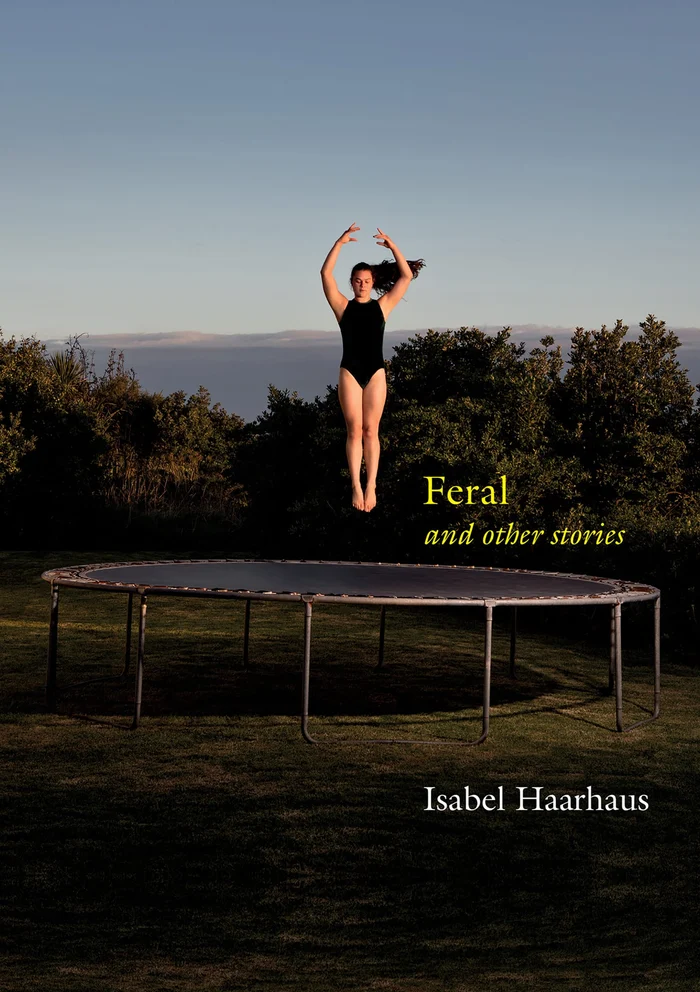
WILD AND FREE: Eastern Bay-raised writer Isabel Haarhaus has drawn on memories of her childhood in the region for her debut short-story collection, Feral and other stories. Photo supplied
Kathy Forsyth
The freedom and wild beauty of the Eastern Bay have stayed with writer Isabel Haarhaus since she arrived in New Zealand as a 10-year-old immigrant from the Netherlands.
Decades later, those memories have inspired several stories in her debut fiction collection, Feral and other stories, published by Otago University Press today.
Many of the 16 stories explore women and girls navigating a world where freedom and danger often exist side by side.
Now an Auckland-based high school teacher with a PhD in English literature, Haarhaus spent more than 10 years working towards the collection, fitting writing around full-time work and raising her children.
“I’ve written short stories for a long time and had them published in journals for quite a few years,” she said.
“I was an arts editor for a while and a journalist and an academic, and I’ve always written fiction, as well and poetry.”
The opportunity to publish a short-story collection came through Landfall, the literary journal associated with Otago University Press, which invited her to submit a manuscript for its short-story publishing series.
“They’re wonderful,” she said of Otago University Press, “and it’s been a really good experience.”
Haarhaus moved to New Zealand with her family in 1981, initially living in Kutarere and attending Ōpōtiki Primary School. Her father later established an IT business in Whakatāne, while she went on to boarding school in Auckland.
She remembers Ōpōtiki Primary fondly.
“Our school was just wonderful. We had teachers who loved us and everybody knew each other, and it was a very community-based school.”
When she arrived, she spoke only Dutch. Her principal encouraged her to read aloud every night, starting with Dr Seuss, then moving on to Roald Dahl and eventually Graham Greene. Teachers also helped her learn English by getting other children to act out words and situations.
School life could be wonderfully informal, too.
“Our bus driver used to sometimes stop at Waiotahe Beach, and we’d all jump off the bus and have a swim. And then all get on again and off we’d trundle.”
The Eastern Bay features in a section of the collection titled Other People’s Houses, which includes three stories set in the region: Guest, Killing, and Games.
Although the stories are not autobiographical, Haarhaus draws on the landscapes and experiences that shaped her childhood.
“Coming from Holland, it was quite startling different, wilderness and the beauty of it and the open spaces,” she said.
“I was 10 and I was into horses and animals and swimming, so I loved all that. I loved the freedom.”
But that freedom also carried risks: “Whether that’s almost drowning at the beach or, having to cross big distances by yourself, when you’re young and you’re exploring.”
And this helped shape her literary interest in the fine line between adventure and danger.
“I’m interested in working out and exploring what is safe and what is dangerous and walking a tightrope between risk-taking and real danger,” she said.
Another story, Roadie, follows a woman who takes her children on a road trip down the coast, seeking an escape from domestic life and a return to freedom.
The landscape becomes central to that search, while darker undercurrents run beneath its beauty.
Haarhaus often begins a story with something she has noticed or experienced, then pushes the idea further.
“I tend to kind of just push it further and further and kind of darker.”
The collection also explores the experience of being an outsider, a recurring theme in Other People’s Houses. Many of her characters are women or girls who find themselves excluded through circumstance or temperament.
With Feral and other stories now reaching readers, Haarhaus has already begun thinking about her next project, possibly a novella.
Feral and other stories is available through bookshops including Paper Plus in Ōpōtiki and Whakatāne.