Ngāti Awa opens more quality homes on Māori land

INSPIRING DAY: Te Tohu o te Ora o Ngāti Awa chief executive Enid Ratahi-Pryor, Kawarehe Trust chairwoman Erin Te Pou and Whakatāne Mayor Nandor Tanczos at the opening of the Kawarehe Kāinga Māori.
Diane McCarthy
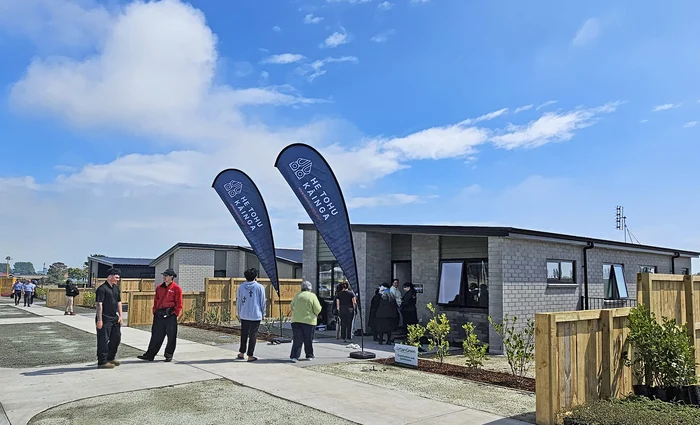
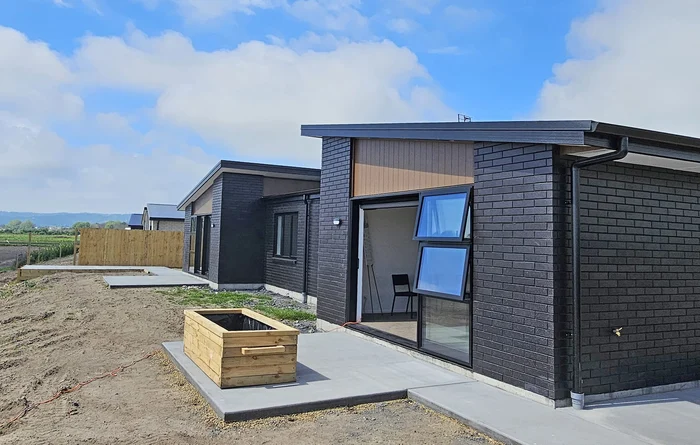
An opening ceremony for stage one of Kawarehe Kāinga Māori was held yesterday, with 16 new homes ready for tenants to move in and another 16 to come next year.
The two-to-four bedroom homes on Kawarehe Trust land on Huna Road have been built by the trust in partnership with Te Tohu o te Ora o Ngāti Awa, the social and support service of Ngāti Awa.
Te Tohu o Te Ora o Ngāti Awa chief executive Enid Ratahi-Pryor said the kāinga Māori provided warm, safe, affordable housing for whānau of Ngāti Awa hapū, built on Māori land, governed by Māori and surrounded by wraparound community infrastructure.
“Quality homes are the basic building blocks that contribute towards raising strong and resilient whānau and thriving communities,” Ratahi-Pryor said.
“The Kāinga Māori model addresses the housing crisis at its root. Not by inserting Māori whānau into a market that was never designed for them, but by building something better on their own terms, on their own land, for their own future.”
The new village is a continuation of the Whakatāne-based housing provider’s work to provide an iwi-led housing response that is grounded in whenua, whakapapa, relationships and heavily invested in long-term outcomes.
A previous village on Golf Links Road using the same model, Tūkōkeke Kāinga Māori, opened in March last year, and earned national recognition as a finalist in the social impact category of the Infrastructure New Zealand Building Nations 2026 Impact Awards.
The kāinga had enabled the iwi to offer tenancies at 20 percent below market prices, subsidised power through a solar energy programme and reduced water and internet costs as a result of social hubs being established.
Financial coaching on site, kohanga reo and other wraparound supports were also available.
Within 12 months of that project being opened, the first family moved from renting to owning their own home.
“That one whānau matters. They are the proof that the pathway is real,” Ratahi-Pryor said.
She said there were still barriers to be removed at a central Government level to enable Māori land to be developed.
“That’s what we must continue to fight for – the development of Māori-owned land.”
She acknowledged state housing provider Kāinga Ora for providing an opportunity for Ngāti Awa to purchase further land in Whakatāne for housing development, and urged other iwi or community groups to do the same for other land Kāinga Ora was divesting.
“These sites should not be going into private hands. If iwi can’t buy them, if Māori can’t buy them, community trusts should be buying those lands for healthy development.”
She finished with a message to the families that would be moving into the homes.
“These are your homes. Fill them with laughter, with kai, with many more mokopuna – because we can fit them, right?”
She also announced that Te Tohu o Te Ora o Ngāti Awa was planning a home ownership programme.
“Plant your mara, feed our people, sustain their minds, build your savings, because we’re also going to be launching a home ownership programme in the very near future and one day we hope to turn the key of a new home for you as you progress through our housing continuum.”
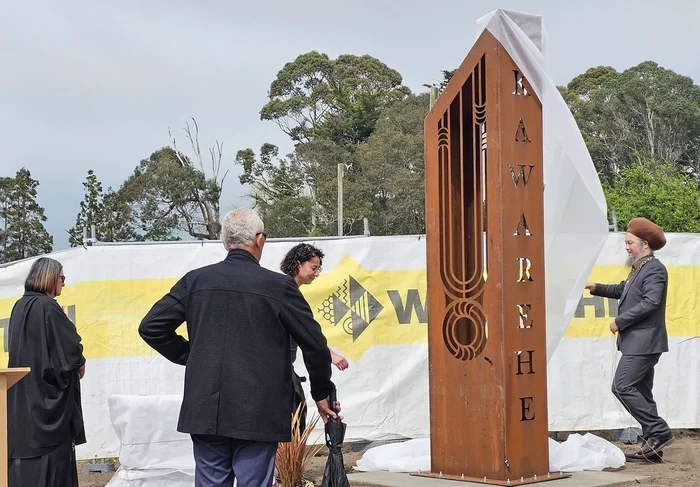
Mayor Nandor Tanczos was called on to unveil a plaque and pou on site.
He said it was a privilege to be there, describing the kāinga as “inspiring”.
“This is an amazing milestone. It’s a celebration of leadership, of partnership, and people coming together to make something really meaningful.
“Projects like this don’t happen overnight. They take enormous commitments, they take trust ... long-term thinking, integrated thinking, people working together and staying focused on shared value."
The Generation Homes houses have poutama pattern detailing in the brickwork and are surrounded by native plantings.
The layout of the village is intended to provide an environment where children can play, and families can grow their own vegetables. An original villa homestead is being converted into a community hub where residents can congregate.
Kawarehe Trust chairwoman Erin Te Pou gave a speech in te reo Māori, thanking all those who had worked together to create the village.
The trust’s land was freed up for residential development in 2024 as part of Whakatāne District Council’s Plan Change 8, which also included neighbouring property, Julian’s Berry Farm.