
Rest home breached code over care of elderly resident

Staff Reporter
A Whakatāne woman says she hopes the findings of a Health and Disability Commissioner (HDC) investigation into the care her late father received at a rest home will help prevent other families experiencing the same ordeal.
The HDC report, to be publicly released in October, found Bupa Mary Shapley Care Home breached the Code of Health and Disability Services Consumers’ Rights in its care of the woman’s father during the final months of his life.
To protect the family’s privacy, neither the woman nor her father can be identified.
Deputy Health and Disability Commissioner Rose Wall found Bupa failed to provide reasonable care and skill in several areas, including nutrition and weight management, wound care, pain management, falls management and end-of-life care. The report also acknowledged Bupa has since made significant changes to its systems and practices.
The woman moved her father, who was in his mid-80s, from Whangārei to Whakatāne in June 2021 so he could be closer to her. He entered Mary Shapley Care Home requiring hospital-level care and died in hospital in April 2022.
He had multiple health conditions, including severe osteoarthritis, prostate cancer and chronic leg ulcers.
A major concern involved the lack of appropriate treatment of his leg ulcers. After he was admitted to hospital, she said a doctor told her maggots were present in one of his wounds.
“I was disgusted. I didn’t want him going back to the rest home because they weren’t changing his bandages daily.”
The HDC report noted that between March 1 and April 15, 2022, maggots were found and removed from his wounds on five occasions. It found staff were unclear about how often dressings should be changed and identified irregularities in wound care.
“It should not have been unclear because the hospital said his dressings needed to be changed daily,” said the woman.
She said her father, who suffered from severe osteoarthritis, regularly phoned her in distress, saying staff were handling him roughly while moving him.
“He’d ring me at three in the morning in tears after they’d pulled his leg while trying to move him.”
Communication became increasingly difficult during a Covid-19 outbreak at the care home in March 2022, followed by a lockdown from late March.
“Dad would call me about eight times a day, and then the phone calls stopped, and I couldn’t get hold of him.”
When she asked to visit, she was told by the then manager only end-of-life visits were permitted and that her father was doing well.
“The next day the staff rang and said he wasn’t doing very well.”
After insisting on seeing him, she was shocked.
“He was a skeleton. He was covered in bruises and he hadn’t eaten properly for weeks. I was in shock.”
She demanded that staff call an ambulance.
“The ambulance officers asked why he was in that condition and when he’d last eaten. The ED doctor said he was cachexic.”
Her father was admitted for pain management and palliative care and died in hospital the following day.
The woman also raised concerns about pain management. She said her father had been taken off oxycodone shortly after he arrived at the rest home because it was causing hallucinations and impacting his cognition.
“They put him back on it two weeks before he died without my knowledge. At no time did they ask me or tell me that they were putting him back on it. And because he was on it, I did not get to say goodbye to him.”
The woman said her father was meant to undergo weekly physiotherapy, to keep his legs moving, but this did not happen.
“They had to put him in his coffin with his legs bent because they could not straighten them,” the woman said.
Other failures are highlighted in the report, including long waits for assistance to use the toilet, falls that were not documented and the failure to use appropriate lifting equipment.
The report also found significant shortcomings in his nutritional care.
A Mini Nutritional Assessment completed several months after his admission classified him as malnourished, but there was no documented management plan despite records showing ongoing weight loss.
The woman said his father was given a supplement, Diasip, but because he did not like it, no efforts were made to give him anything else.
“He hadn’t eaten in weeks.”
The commissioner found that although Covid-19 outbreaks created significant staffing pressures, they did not remove Bupa’s responsibility to provide the resident with a basic standard of care.
“There were several instances where this was not the case,” the report states.
Wall found Bupa breached Right 4(1) of the Code by failing to provide services with reasonable care and skill to [the resident] in relation to nutrition and weight management, wound care, pain management, falls management, and end of life care.
The woman said she and her sister were still suffering emotionally from the experience.
“I felt guilty because I felt like I had failed him. I put him in a place where I thought he would be looked after, and he wasn’t.”
Bupa apologised to the family and acknowledged the distress caused by the care her father received. However, the woman said the apology came too late.
“Only now that the HDC has made them, they’ve apologised.”
She hopes publication of the experience and report will encourage improvements across the aged-care sector.
“It’s not going to help my dad, but if it helps someone else and raises awareness for other families, and means residents are cared for properly, then hopefully this won’t happen again.”
Since the events, Bupa has introduced a range of changes at Mary Shapley Care Home, including new management, improved staffing ratios, upgraded electronic care records, enhanced auditing, revised falls prevention and pain management policies, additional physiotherapy and dietitian support, improved GP access and new technology aimed at strengthening communication with families. The commissioner has also recommended further staff education and ongoing audits to ensure compliance with care standards.
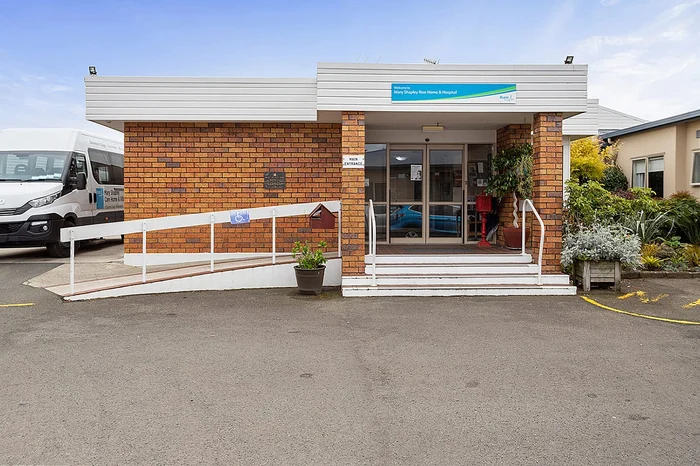
Bupa responds to HDC finding
We sincerely apologise to the resident’s whānau for the care provided at Mary Shapley and the distress this caused.
Our priority is to provide safe, quality care to every resident, and in this case, we fell short of the standards we expect of ourselves.
We also did not communicate with the family as we should have at important points in their loved one’s care, which made an already difficult situation harder, and staffing challenges during a prolonged Covid outbreak impacted the care we were able to provide.
We formally apologised in 2022 as part of our response to the HDC complaint.
Over the past four years, we have worked closely with Te Whatu Ora and made significant changes at Mary Shapley to strengthen care, clinical oversight and communication.
These include reviewing staffing levels, implementing electronic clinical records, and the Deterioration Early Warning System to help identify changes in residents’ health earlier, greater access to specialist clinical support through Bupa’s Health Hub, and a new GP provider.
We have also recently introduced our app Blua at Mary Shapley, giving families greater visibility of residents’ care and day-to-day life, and improved connection to the care home.
We know systems and technology alone do not deliver good care, our people and the way those systems are used every day are what matter, and our continued focus is on ensuring the right people and the right tools are delivering quality care at Mary Shapley.
We acknowledge there is still work to do, particularly in overcoming local recruitment challenges in the Whakatāne area. We are committed to continuing that work and ensuring the care, leadership and oversight at Mary Shapley consistently meets the standards our residents and their families should expect from Bupa.
Improvements explained
■ Electronic clinical records for all resident documentation, reporting, internal and external communication, monitoring and assessments. This provides greater oversight of resident care in real time and added assurance to care team members with prompts around incidents, such as correct processes for fall and wound management.
■ Development of clinical dashboard reporting to monitor rates of clinical indicators (i.e. falls, wounds etc) and focus on continuous improvement.
■ Simplification of the pain assessment tools, to ensure the right pain assessment tool is used for each resident.
■ Implementation of Deterioration Early Warning System (DEWS), a clinical decision-support system that helps care teams identify early and subtle signs a resident’s health may be declining and prompt further assessment or intervention by a registered nurse or GP.
Bupa has been an early adopter of the DEWS, and this was rolled out across all care homes in April 2026.
The system gives structure to observations, for example if a resident didn’t eat their breakfast, seems lethargic or a not as chatty, there are now structured assessments and clear clinical decision pathways, that our caregivers and nurses must follow.
The tool is proving invaluable in identifying early deterioration, enabling appropriate measures to be put in place and regular communications with families.
DEWS consists of three tools:
Quick-DEWS: Caregivers answer nine questions about each resident each shift. If changes are noted, the concern is escalated to the registered nurse (RN).
RN-DEWS: The RN conducts a full clinical assessment, generating a score and checklist to guide next steps, such as closer monitoring or contacting a doctor or nurse practitioner.
SBARR-DEWS: communication and critical thinking tool to standardise handover to primary or secondary care.
■ Introduced Bupa Health Hub, providing virtual clinical support and guidance to all care homes, including nursing, physiotherapy and a dietitian. Access to these specialists enables care homes, like Mary Shapley, to have more timely guidance for residents specific needs.
■ Mary Shapley has changed GP providers to further support our onsite requirements.
■ Blua is Bupa’s digital app that delivers transparency and connection between care homes and families. Families now have access to view the residents care plans and real-time updates on resident’s daily life including activity participation and personal care provision.