
ReliefAid volunteer returns from Syria

CAMP VISIT: Anne Bulley spends time with children participating in ReliefAid’s education programme in Syria. Photos supplied
Tamara Herdman
Whakatāne-based humanitarian aid volunteer Anne Bulley returned from Syria recently with a clear message – the war may be over, but the suffering has not ended.
Bulley, volunteer communications director for New Zealand-founded charity ReliefAid, spent eight days in Syria, travelling from Aleppo into Idlib province in the northwest – where most of the displacement camps are – before making her way south to Damascus.
It was her first visit to the country after 10 years working with ReliefAid and communicating from New Zealand with its Syrian team throughout the civil war.
The trip gave her the opportunity to finally meet the people she had worked alongside remotely and see firsthand what life looks like for Syrians now.
“The war has ended, but the suffering hasn’t.”
Bulley visited displacement camps where ReliefAid continues to distribute food and provide education programmes for children without access to schools.
She said many families remained trapped in the camps because their homes and, in some cases, entire communities had been destroyed.
Even returning to what remains of their former homes can be dangerous.
At one camp Bulley visited, she heard of several families who had returned home, but three children had since been killed after stepping on a landmine.
“Survive the war, survive living in a camp, go home, get killed.”
Humanitarian aid remained desperately needed, she said, but Syria was receiving less international attention and support now the conflict was no longer dominating headlines.
For Bulley, seeing the scale of destruction in person was very different from the photographs, videos and stories she had received during her decade working in communications.
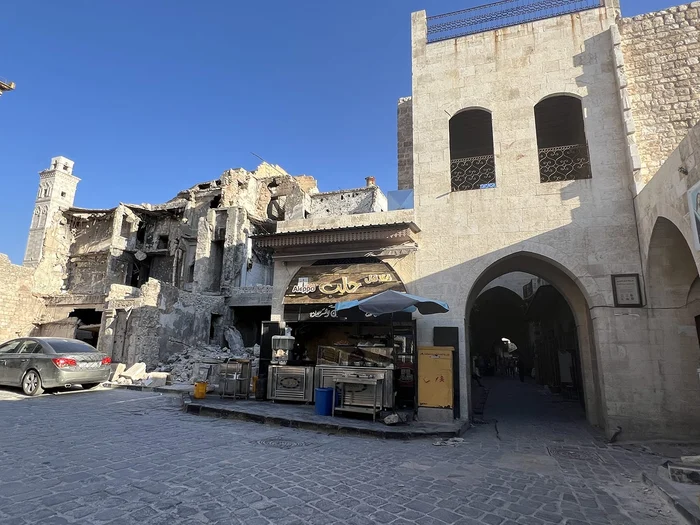
“I’ve been to Ukraine, so I’ve been into a war zone before, but just seeing that level of destruction where you see whole neighbourhoods just gone, was very sobering.”
One encounter that stayed with her was with a woman who had lived in a displacement camp for 10 years after fleeing her home under missile attack.
Bulley sat with the woman, her daughter and grandchildren in a tent in temperatures of about 40 degrees.
About 16 family members were living together in the tent, and the woman had spent the previous night harvesting.
“They had fled their home under missile attack and travelled for about 24 hours to get to where they were.
“Since then, they’ve just been trying to survive. And now they’re in this position where they can’t go home.”
Despite the hardship, Bulley also saw hope.
“Families can dare to hope again.”
She said Syrians she met were eager to rebuild their lives and reach a point where humanitarian aid was no longer necessary.
In some areas, land previously used for displacement camps was being transformed into permanent settlements, with houses, schools, shops and mosques being built.
This allowed communities that had spent a decade or more living together in camps to move together and begin rebuilding their lives.
Children were among those whose experiences particularly affected Bulley.
“What really struck me is that children are hungry and they’re hungry for food ... but they’re also hungry for education.”
Many had no school or toys and lived with the monotony of daily life in a displacement camp.
Yet, Bulley said, they were bright-eyed and eager to interact with visitors.
“They’re hungry for a future as well.”
The effects of years of conflict remained apparent.
Families told her children could appear fine until an aircraft flew overhead, triggering an immediate traumatic reaction because they associated planes with missiles.
Syria now faces the enormous task of rebuilding not only homes but schools, hospitals, power lines and water systems.
In Idlib, where ReliefAid works, one of the main industries had been olives and olive oil.
She said 4.5 million olive trees had been destroyed across Syria during the war, devastating agricultural land and livelihoods.
Before some agricultural land could be replanted, it also needed to be cleared of mines.
For families, finding work and securing better accommodation were among the immediate challenges.
Humanitarian assistance, development support and investment would all be needed to help Syria rebuild.
She said this was not the time for the international community to walk away.
“You’re not looking at a country that is always going to be dependent on humanitarian aid.
“You’re looking at a country that’s got the capability and wants to stand on its own two feet but needs that hand up in order to get there.”
One of ReliefAid’s Syrian team members summed up that ambition when he told Bulley he hoped to eventually reach a point where the charity was no longer needed there.
“He said,’ I love working for ReliefAid and I hope you’ll continue to work with us, but I also want to get to a point where you no longer need to so that you can put more effort into other war zones you’re working in’.”
Bulley never felt unsafe during the trip and was struck by the welcome the group received.
People would stop them in the street to say, “Welcome to Syria”, while others offered them tea and food.
“At one displacement camp, we took them in tea. And then the next thing they insisted on making us tea.”
After years in which international visitors largely stayed away, she said Syrians saw people returning as a positive sign for their country’s future.
“We could not have been made more welcome.”
ReliefAid continues to provide food and education support in Syria.
To donate to ReliefAid or find out more about its work, visit reliefaid.org.nz.