
Opinion: Everything about good local governance
.
- We should all be in favour of good local governance. But what good governance exactly means is open to various interpretations. You only need to read the Beacon from Friday, July 3, to find out our mayor’s and our local MP’s opinion, writes Whakatāne Action Group’s Peter Minten.
We, as the Whakatāne Action Group also value good local governance, but our observations, after attending or watching many public council meetings, are that there is room for improvement.
Let us start off with the operating deficit the council now has.
When the council adopted the 2026-27 Annual Plan, the term “operating deficit” was mentioned about 30 times in the meeting papers.
But nowhere to be found is what it exactly is, and more important, how big that deficit is.
This raises the question; how can you govern if you don’t know what you are governing.
Is the operating deficit $6 million or $10 million or even $20 million, depending on who you are listening to? But the operating deficit number is nowhere to be found in the meeting documents.
In principle, dedicating savings to reducing deficits is a good plan. It reduces future borrowing, but you should know what you are planning for, so you can intervene in the future when the plans don’t work out as the council had thought.
The deficit needs to go to zero, but you have to show the pathway towards it. The council has dedicated 1.5 percent of the 2026-27 rates revenue savings to lower the operating deficit.
Whakatāne harbour: Good governance? Why do we have public excluded meetings?
A lot has been written lately about the Whakatāne harbour in relation to the several submissions the Whakatāne Yacht Club has made for dredging a channel to their marina.
The council’s responsibilities regarding the entrance and maintaining a navigable channel are part of its Port Operational Plan.
The dispute with the yacht club has been written in policies WH2 and WH3 of the operational plan:
WH2 – “To provide and maintain a safe and navigable channel within the Whakatāne port area, from the harbour entrance upstream to the Whakatāne Yacht Club, so as to cater for all tides for vessels up to 25m in length and with a maximum draft of 2m …”
WH3 – “To provide and maintain a safe and navigable channel within the Whakatāne port area, to port facilities located upstream from Otuawhaki (including the Whakatāne Yacht Club), subject to equitable cost recovery mechanisms where appropriate.”
Is the marina included or excluded?
Council staff argue in their reports it is not, but for the very least, in our opinion, it is very opaque written policy.
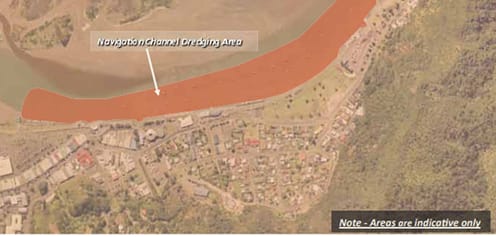
What contributes to the confusion is Appendix 22 from the Ports Operational Plan, which shows the navigation channel dredging area clearly includes the access channel to the yacht club facility.
But we guess the council is hiding behind the wording, “Areas are indicative only”.
Appendix 22 Ports Operational Plan.
A map on the council website shows the dredging doesn’t stop at the Otuawhaki Wharf, but runs all the way to the WYC Clubhouse.
What we also noted over the past eight months looking into this issue is that some council decision-making wasn’t made public.
During the council meeting on March 5, staff were instructed to get estimates for the dredging in order to create a proposal for the annual plan.
This changed , “apparently”, during a public-excluded meeting at the end of April, no minutes available, when a decision was made to invite the yacht club to make a contribution to the dredging costs.
Why was this hidden from the public? We have elected a mayor who campaigned on more openness of governance.
But, and this is the crux, the yacht club did make a proposal for a substantial contribution, but it was refused.
We are not sure whether this was a good use of all those people’s time. End of story, there is no money; so no dredging in the annual plan.
And what about the Harbour Endowment Funds? Council’s cookie jar or not?
There was an excellent piece published by former councillor Russell Orr on the Whakatāne Notice Board in which he explained the history and objectives of the harbour funds.
The Harbour Endowment Funds were created by Order in Council in 1976 when the Whakatāne District Council was created. The objectives are clear: “Clause (20) of the order says, “The fund is only to be used for ... The maintenance and development of the harbour, the maintenance and development of the harbour lands and any other purposes as the district council may decide”.
The sting sits in the “any other purposes as the district council may decide”.
This has led to a situation in which the council has treated the harbour endowment fund over many decades as its own cookie jar.
This was confirmed by the council’s chief financial officer telling councillors that he pays about $600,000 interest a year on loans made from/or against the harbour funds.
According to the 2024/2025 Annual Report, page 193, only $76,000 was left in the Harbour Endowment Fund at the end of that year.
With that amount you can’t even dredge 30 metres.
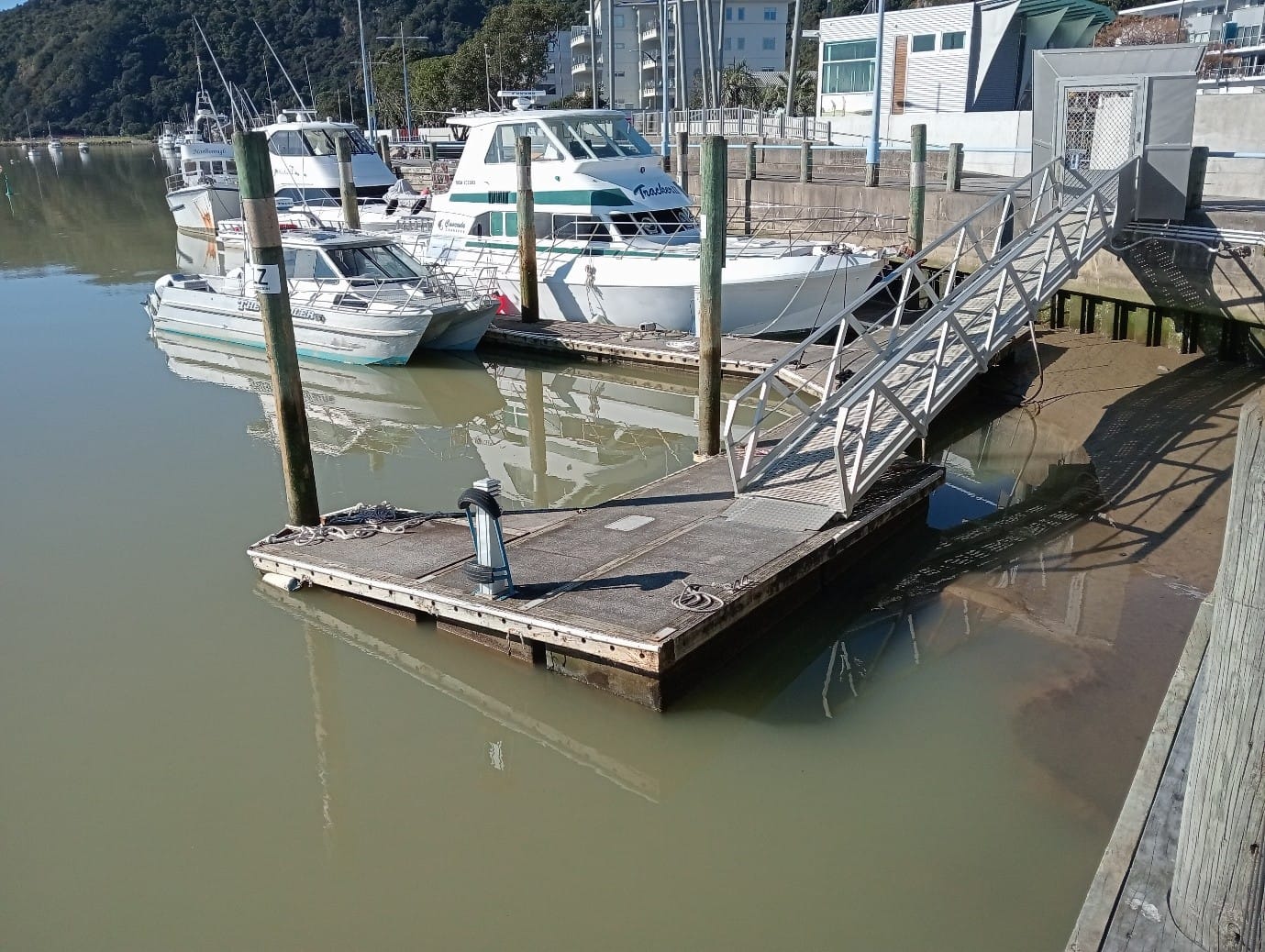
But in the meantime, not only private assets are endangered. Public assets like the Otuawhaki Wharf are under threat from silting, which the picture below shows.
This will undoubtedly lead to future costs because those pontoons cannot absorb frequent stresses caused by the grounding at low tides.
On top of this, Whakatāne has endangered its reputation as a boat harbour town for boaties as Councillor Lesley Immink rightfully mentioned during the discussions.
As Whakatāne Action Group, we are all in favour of good local governance.
Councillors should pressure council staff to give accurate information (what is the operating deficit in dollars?); make sure any policy wording is unambiguous (Ports Operational Plan) and the council makes sure ringfenced funds (Harbour Endowment Fund) should be used for their original objective before becoming the council’s cookie jar.
The Harbour Endowment Fund is now almost empty. The council is looking for a new type of contingency fund to deal with future (inflationary) setbacks out of its control. It has dedicated 0.5 percent of rates’ revenue to it.
In our opinion, this is the wrong manner to deal with that kind of situation.
When your expenditure increases through events outside of your control, the best way to deal with it is to look at the basics and revisit the project.
Can we reduce the scope? Can we find cheaper suppliers?
Is the project’s business case still current? You can apply good governance only on what is presented to you by staff. That is the council’s job in our opinion.
Does good governance just mean living within your means?