
Moore investigates unitary council functions
Diane McCarthy
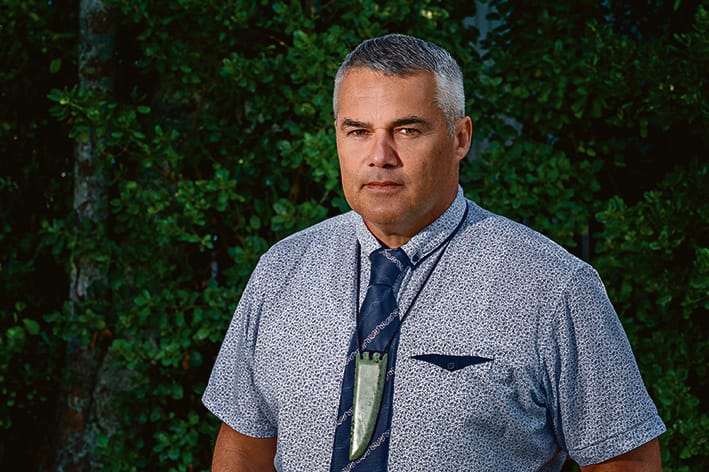
Ōpōtiki Mayor David Moore has come out batting for an Eastern Bay unitary council as a preference over Ōpōtiki district being merged with either Gisborne or Western Bay and Tauranga.
He is travelling to the South Island today with other mayors and councillors from the Eastern Bay to look at how Tasman District Council operates.
Tasman has been identified as a council that has a lot of similarities with how an Eastern Bay Unitary Council may look.
“We’ve picked that region because there are some very similar challenges.
“There are very few provincial unitaries that are functioning well, but one of them is Tasman,” Moore said.
“We have to consider what the public has said and there’s a very strong push for an Eastern Bay unitary council. Obviously, there’s also been a push to try and halt amalgamations altogether, but that would only mean putting it off and being forced into it later.
“We’ve got to keep our options open. It would be silly not to go and get as much information as we can.”
Moore said he has seen no evidence that a larger unitary council such as a whole Bay of Plenty council would be cheaper.
He said a working group made up of elected members and staff from Whakatāne, Ōpōtiki and Kawerau district councils had produced figures that showed an Eastern Bay subregion compared favourably with Gisborne district.
Gisborne district is one of the councils that is not having to amalgamate with other councils as it is already a unitary authority – one that combines district and regional council functions.
Gisborne district is similar in land area, population and Māori population to the Eastern Bay. Its council’s rates income was only $85 million compared to the combined income of Ōpōtiki, Kawerau and Whakatāne district councils, which was just over $100 million before regional rates were added.
“Their income is a lot less than the current rates that we charge,” Moore said.
Moore said despite only making up about 17 percent of the Bay of Plenty’s population, the Eastern Bay punched far above its weight.
It produced over 30 percent of the exports passing through the Port of Tauranga every year equating to about $1.83 billion.
“Even Ōpōtiki itself has close to $600 million that goes into the national economy. We’re in the news often for the wrong reasons, but we pump a fair bit through. The output Kawerau puts through for its size is incredible.”
Information distributed as part of the Bay of Plenty Regional Council consultation on Simplifying Local Government showed that, with current spending, and the way Quayside funding was distributed, rates would increase by over 58 percent in the Eastern Bay under a subregional council.
Moore disagrees that forming a council separate from Tauranga would result in increased rates.
“Regional council is a very large beast with a very high corporate spend.
“We clearly know that they are going to lose 30 to 40 percent of their functions through the reforms.”
These functions would become the responsibility of central government.
He said the Eastern Bay would also be entitled to share in dividends from the regional council’s $3 billion investment fund, Quayside Holdings.
“Quayside money belongs to the whole of the Bay of Plenty,” Moore said.
He said the three councils were doing their best to keep their communities informed and receive feedback on what they should do. However, with a proposal due by August 9, there is not enough time.
“We’ve been given a timetable that is completely unrealistic to get around to consult with our communities, but we’ve done the best we can.
“There’s a definite feeling toward an Eastern Bay subregion. But whether you can get it done by 2028, that’s quite unrealistic when you consider that Auckland took five years to get running smoothly.
“We probably need from 2028 to 2031 to implement it.”
He said one of the reasons for public resistance to amalgamation, particularly from Ōpōtiki and Kawerau was that the combined debt of the three councils would jump to about $14,000 per household.
“I think Kawerau’s just under $3000 now, Ōpōtiki is just over $3000. But it’s a damn sight better than my district being lumped with Gisborne or Tauranga.”
Tauranga City Council, for example, has $22,100 debt per household, while Gisborne is still recovering from Cyclone Gabrielle and other heavy rain events that have struck it.