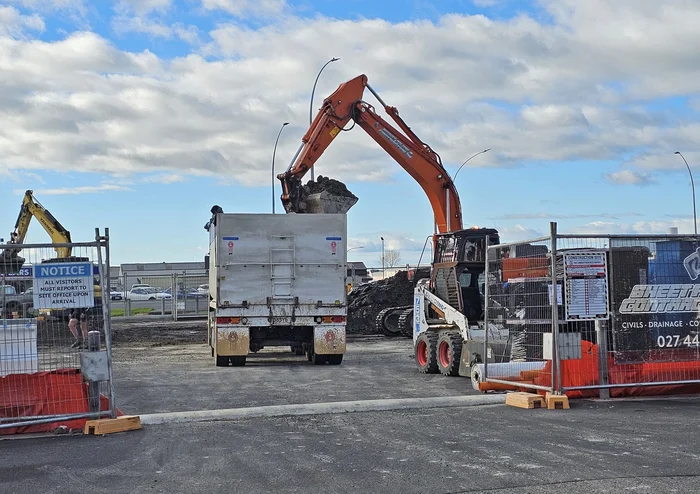
Health concerns from dioxin disturbance
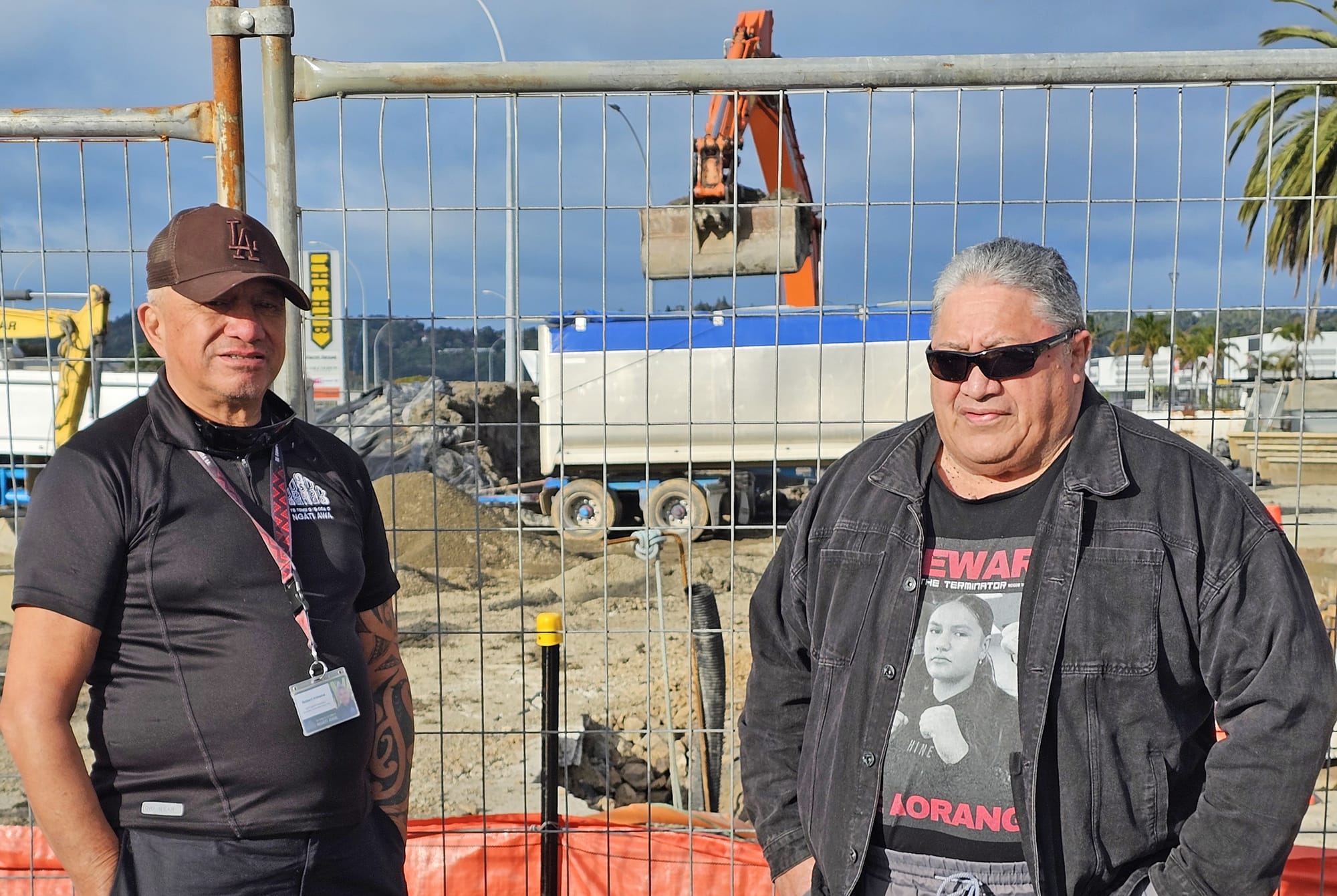
Against poisons: Robert Irimana and Kereama Akuhata from Ngāti Awa Social and Health Services’ special support service for sawmill workers and their families are concerned about disturbance of dioxin contaminated soil at the former Whakatāne sawmill site. Photo Diane McCarthy E6040-(9)HEAL
Diane McCarthy
Advocacy group Sawmill Workers Against Poisons (Swap) is surprised and disappointed it wasn’t notified about earthworks taking place on a dioxin contaminated site in Whakatāne.
Swap chairman Kereama Akuhata said the society and some nearby residents had serious community health concerns about the work on the historic sawmill site.
Earthworks required to build a new fuel station at 2 Phoenix Drive, between Bunnings Warehouse and State Highway 30, have been consented by Bay of Plenty Regional Council and Whakatāne District Council, with Contaminated Soil Management Plans in place.
It is a site Swap considers to be one of the most contaminated in the district because it is where, in the 1970s, treated timber was left to dry after being soaked in Pentachlorophenol (PCP) that contained dioxins known to be cancer causing.
Kereama said people working in and living near the sawmill and their families had high levels of cancer. Swap has been advocating for the past 40 years for better health care for these families and recognition that 36 sites in Whakatāne was contaminated from these activities.
He runs a special support service for former sawmill workers and their families who have been exposed to hazardous substances – at Ngāti Awa Social and Health Services.
Kereama said Swap had been contacted when Bay of Plenty Regional Council carried out earthworks on Mātaatua Reserve – another known contaminated site – to raise the stopbank recently.
The group was also involved in discussions around digging up the Keepa Road contaminated site for the failed commercial boat harbour project.
Kereama said they didn’t understand why they had not been consulted in this instance.
“I think we should be involved in all sites that have been contaminated and dug up. We are very disappointed to have only learned about this last week when a local resident called and told me they were digging a big hole on the old sawmill site,” he said.
“Many people around Whakatāne are well known for their knowledge about these contaminants.
“Whatever goes on in the town, they will usually contact Swap.
“We’ve had no notification or involvement from the council. That’s pretty shoddy work if you ask me. It’s the community’s health that I’m concerned with. Other people working in that industrial area could be impacted. The whole town could be affected.
“Dioxins are highly mobile once they get into the air. The wind picks it up and they can take it.”
Kereama intends seeking a Memorandum of Understanding with the councils to ensure Swap is part of the conversation around disturbance of any of the 36 contaminated sites they have identified.
Regional Council consents manager Ella Tennent told Local Democracy Reporting the disturbance of contaminated land was being managed in accordance with a Contaminated Soils Management Plan, which was required as a condition of the consent.
This plan set out the procedures for handling contaminated soil, including its transport to a Class 1 landfill at Hampton Downs.
The plan references environmental testing by consultants Pattle Delamore Partners (PDP) that identified low levels of dioxins on some parts of the site, as well as PFAs (per- and polyfluoroalkyl substances) in the groundwater, which had most likely migrated from the nearby paper mill.
These chemicals are known to be cancer-causing and to not break down in the environment.
While fill material over the entire site had some levels of dioxins to a depth of 1.5 metres, the underlying natural soil in the area where the earthworks were taking place did not.
This soil was able to be trucked to Paengaroa Sands Clean Fill.
Kereama said he had no confidence in the management plan.
“The dioxins that are in these soils are mobile in the air and cancer causing. They are immune system destructors.”
Whakatāne District Council also provided consents for the project, however, Mayor Nandor Tanczos said the earthworks part of the consenting and any provisions around contamination in the soil, came under the regional council’s consenting processes.
He is surprised the regional council and Swap do not have protocols in place for earthworks on contaminated sites.
“I have enormous respect for the work Swap have done and continue to do. I think the questions that they raise are really important because often these are the people who have been most impacted by the contaminants.
He said with Government reforms pointing to some kind of unitary authority in the future, it could be something for elected officials to consider.