Eastern Bay wahine named top scholar
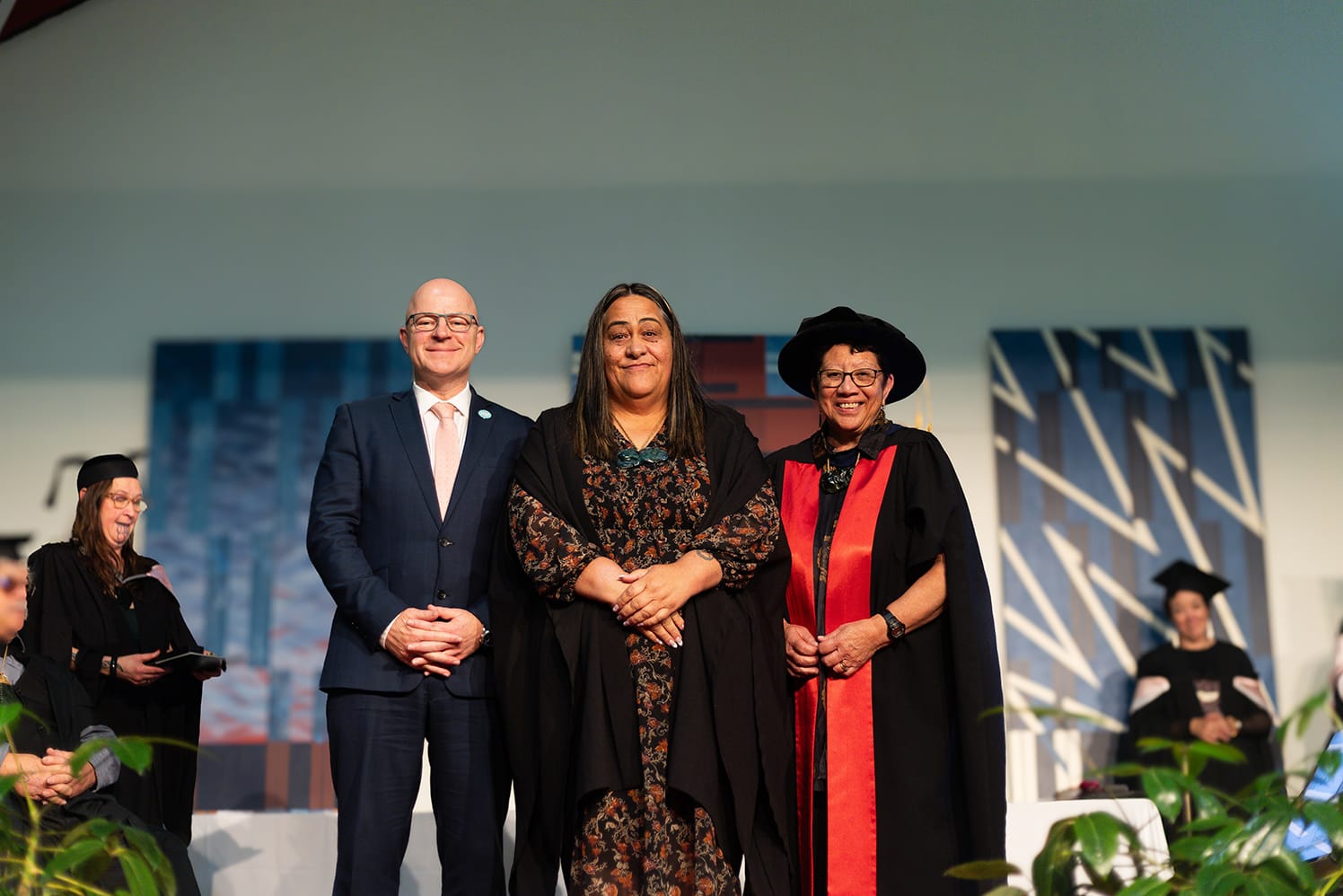
Proud: Matt Doocey, Minister for Mental Health, with Jo-anne Ramanui-Tahuri and Dr Cheryl Stephens at the Matatini Ora graduation ceremony. Photos supplied
Aston Palmer
The first cohort of New Zealand’s first gambling harm diploma graduated at the end of May, with 30 frontline Māori health workers and community champions completing the qualification and creating resources to support families.
Matatini Ora is an applied level 6 Diploma in Māori Public Health, Mental Health and Addictions, delivered by Te Rau Matatau in partnership with Poutiri Wellness Centre.
The Mokoroa cohort of 2025 explored issues and solutions for gambling harm in their communities and designed practical, localised tools to support families through prevention, education or support.
Graduate and top scholar Jo-Anne Ramanui-Tahuri, from Whakatāne, said one of the biggest lessons she took from the programme was learning to walk alongside people rather than trying to solve their problems for them.
“It’s given me the tools to walk alongside whānau, like going along with and listening to them and what they want basically when there is capacity for the clinicians and to make room for that.
“We don’t find the solutions for them as such. We walk alongside them and help them make their own plans, which makes it more achievable.”
Ramanui-Tahuri said her research project during the diploma focused on the connection between children using phones and digital devices and gambling-like features found in many apps and online platforms.
“The connection between kids on their phones and devices and the Temu spinning wheel and that kind of thing is in everything now.”
She points to examples such as reward systems and spinning-wheel promotions used by companies and apps that encourage users to keep engaging and spending money.
“It’s become so common that sometimes people don’t realise the links that it could have later on.”
Her research focused on raising awareness among parents and carers about the potential long-term impacts of these features and encouraging more time away from devices.
She said gambling had also become increasingly difficult to identify because of the rise of online betting and gambling apps.
“You could be in a staff room with someone who's on their phone, and you don't realise that they're gambling.
“It’s quite a silent addiction.”
Ramanui-Tahuri believes gambling harm is a problem in communities throughout New Zealand, including in the Eastern Bay.
The most recent Class 4 Gaming Machine Profits (Pokies) report from the Department of Internal Affairs showed $33,816.24 a day lost to pokie machines in Whakatāne.
She said gambling could have significant impacts on families and whānau, but support workers needed to approach the issue without judgment.
“Sometimes there’s a reason why they're doing it, whether it’s the cost-of-living affecting people and people trying to make their money go further.
“So, it’s got to be a non-judgmental way of looking at it.”
Ramanui-Tahuri has seen the effects gambling can have on families.
“I’ve worked in a pub in the past where I’ve seen the kids locked out in the car, sitting outside while the parents are gambling.
“Seeing the look on their faces when they walk out because they’ve lost their whole week’s wages; that kind of thing stays with you.”
Ramanui-Tahuri said those experiences, along with seeing members of her wider whānau affected by gambling, motivated her to enrol in the diploma.
The programme also highlights concerns around the accessibility of gambling to young people through phones and online platforms.
She encourages parents to monitor online activity and talk to someone if they believe their children may be at risk.
“Just keep your children safe online. Be aware of the risks, not only with gambling harm, but also there are a lot of online risks now for children.”
Ramanui Tahuri encourages people who need support through a gambling problem to call 0800 828 8050.