
Heating options considered for jewel in Kawerau’s crown
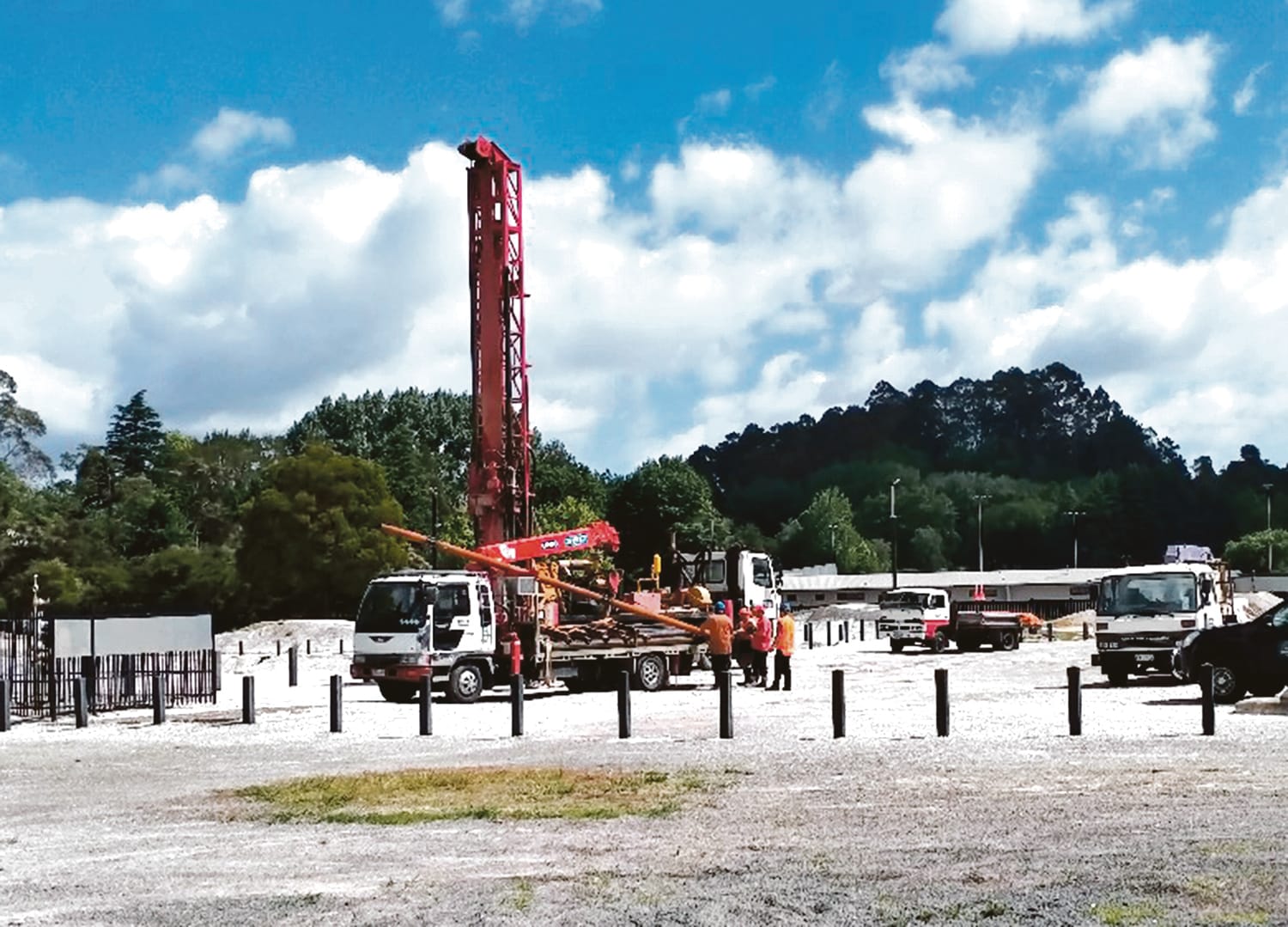
Bore drilling: A new steam bore was drilled in 2021 to heat the Maurie Kjar Aquatic Centre but even when working at full capacity it is not producing enough heat. Photo supplied
Diane McCarthy
Kawerau’s free, geothermally heated public pools may not be free or geothermally heated for much longer.
With its steam bore in the town’s geothermal field no longer capable of heating the Maurie Kjar Aquatic Centre pools to the desired temperatures of pool users, Kawerau District Council, which owns and operates the facility, has decided to look into a hybrid heat pump and solar-powered solution.
It was one of six options put before the council at its June meeting after extensive investigations by staff.
Investigations are also under way to look at introducing charges at the pool complex.
This is something requested by the council after feedback from the community during its annual planning, in particular, for out-of-town pool users.
Mayor Faylene Tunui said the decision to move toward a more user-pays system was being driven largely by the Government’s rates capping policy and what it considered core services.
“The Government decides what are core services,” Tunui said.
“Our Maurie Kjar, that is the jewel in our crown, is not considered a core service.”
She described the pool as “a facility that was originally started by the sweat and the hands of community people”.
The public pool, first opened in 1957 through a community-driven effort, has always been heated by geothermal steam bore and entry has always been free.
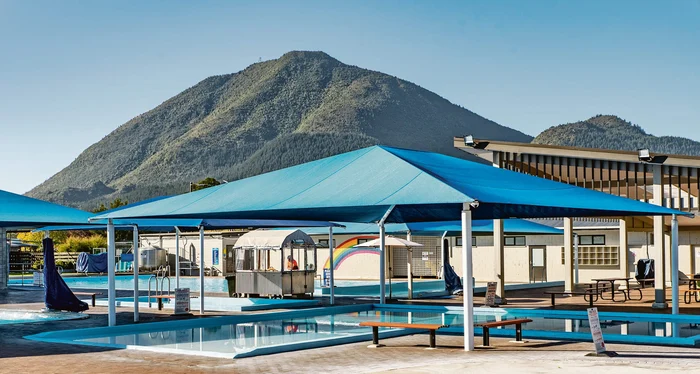
The pool complex includes a 25-metre pool and three smaller learner and play pools, typically heated to about 28-35 degrees depending on the time of year, and a 40-person spa pool, which was previously heated to between 38 and 40 degrees year-round.
The council has had ongoing issues maintaining these temperatures in recent years, in spite of having a new bore drilled in 2021. Multiple clean-outs of the new bore to remove blockages caused by silica and calcite scaling have been carried out, but even operating at full capacity the bore cannot maintain these temperatures, resulting in reduced use of the pool and discontent from regular users.
Recent temperatures for all pools have been around 13 degrees.
Bay of Plenty Regional Council, which monitors the geothermal system, has reported a significant natural cooling across the Parimahāna and township area of the Kawerau Geothermal System over the past decade.
According to the 2023 and 2024 annual reports on the Kawerau Geothermal System, 12 of the 13 monitored thermal features in the Parimahāna and township area have cooled from “near-boiling” to “near-ambient” temperatures since around 2016.
In contrast, increased temperatures have been observed in the northern area of the system, where Eastland Generation and Mercury power stations are located.
Options for the pool investigated by staff include two geothermal options, one to repurpose a shallow monitoring bore belonging to Ngāti Tūwharetoa Geothermal Assets or drilling a new purpose-built bore, both of which run risks of low temperatures.
A full solar thermal heating system came with the highest price tag of $843,000 and would be unreliable in bad weather. Other options include continuing with the current temperatures or closing the pool during the colder months.
In setting out her decision-making, Tunui acknowledged the council was looking down the barrel of amalgamation with other councils.
“Given that we are still, and remain, the representatives of this community, any action that promotes decline of services, poor performance, or maintaining erratic performance for what we deliver or what has been invested in by our community, I can’t support,” she said.
An option for a heat pump with a solar photovoltaic system to offset the higher electricity demand was voted for unanimously by councillors.
The system would come at an estimated capital cost of $328,710 excluding GST, which includes pool covers required when pools are not in use for heating efficiency. Annual operating costs are estimated at $33,000-to-$35,000.
Feedback from annual planning for the coming year mostly opposed the proposed 5.8 percent rates rise required to maintain levels of service while also challenging council to raise these levels of service.
There were also suggestions from the community of making the pool more “user-pays”.
Tunui acknowledged the recent closure of Awakeri Hot Springs as an alternative thermal pool option for the Kawerau community in making the decision.
She also acknowledged that external funds might be available through charitable trusts for helping fund up to 75 percent of the new system.