
National award for radio telephone users
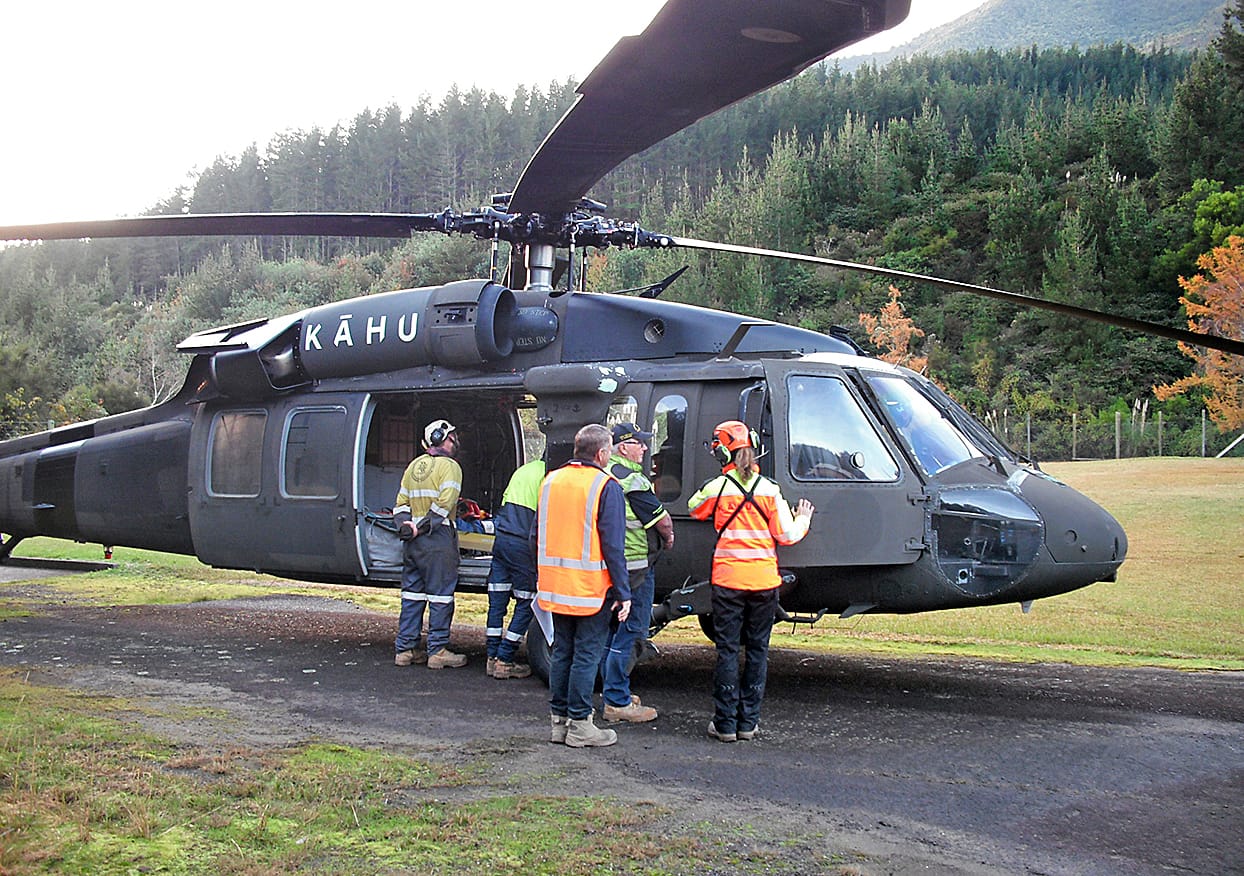
Kahu Helicopters: Kahu was instrumental in transferring the equipment from Putauaki to Manawahe. Photos supplied
Troy Baker
The Whakatāne Radio Telephone Users Association has received a national excellence award for a project involving the removal and relocation of radio equipment from Mt Putauaki.
The Radio Frequency Users Association of New Zealand's Project Excellence Award celebrates outstanding achievement in project delivery, recognising innovation in engineering, excellence in project management, and the successful execution of complex initiatives.
Nominees were required to demonstrate creative problem-solving, technical ingenuity, and a commitment to delivering high-quality outcomes on time and within scope.
Chris Prouse, operations manager for the Whakatāne Radio Telephone Users Association, attended the gala dinner in Wellington to accept the award on behalf of the team involved.
The award recognises the association’s successful removal and relocation of radio equipment and supporting infrastructure from Mount Pūtauaki to Manawahe, including the construction of two new communication towers.
It was a complex process, said Prouse, who started his broadcasting and communications engineering career in February 1962 with the New Zealand Broadcasting Service as a trainee radio technician and has spent a lifetime in the industry.
“What made the relocation of the Radio Telephone User’s (RTU) land mobile radio services unique was that we had to keep essential business-critical services running with minimal off-air downtime throughout the relocation process,” he said.
“When you turn the lights on in the Bay of Plenty, that’s the RTU repeaters at work.
“When you run a tap to make your morning cup of tea, that's the RTU. When you flush the toilet, that's the RTU again.
“When you listen to local FM radio, that’s the RTU at work.
“The RTU's telemetry and control services, including mains power distribution, water reticulation, sewerage pumping, river and rainfall monitoring, and Civil Defence communications, directly impact more than 350,000 residents across the Bay of Plenty,” he said.
In 2017, while negotiating a new lease with the maunga's owners, Māori Investments Ltd and the Pūtauaki Kaitiaki Trust, the association was informed that all communications infrastructure would need to be removed at the end of the lease period, so the mountain could be returned to its spiritual guardians.
Prouse said this required significant upgrades to the RTU's Manawahe Land Mobile Radio site to accommodate the relocation of services.
Pūtauaki had long been considered an exceptional communications site, with two 30-metre towers located on its 815-metre summit.
The Manawahe site sits at 360 metres above sea level and could not provide the same level of coverage, resulting in some compromises for customers, particularly those requiring service in the Murupara and Galatea areas.
To compensate, a new 30-metre tower was constructed at Manawahe in 2017, followed by a second 18-metre tower in 2023.
The relocation involved expertise from communications professionals across the North Island. The project cost more than $400,000 and was funded through RTU reserves, along with a $130,000 grant from Trust Horizon.
“Planning the relocation of land mobile radio services from Pūtauaki, which utilised separate transmit and receive towers for isolation, to single receive/transmit towers at Manawahe required extensive engineering design.
“This is where the expertise of Leyton Smith, Solutions Architect at Dove Communications, proved invaluable,” said Prouse.
“Planning service changeovers with our members was also a time-consuming process.
“Many of the RTU's larger members, including the Bay of Plenty Regional Council and Whakatāne District Council, no longer employ radio specialists.
“Everything is IT-focused these days, so there was a fair amount of education required around radio communications.”
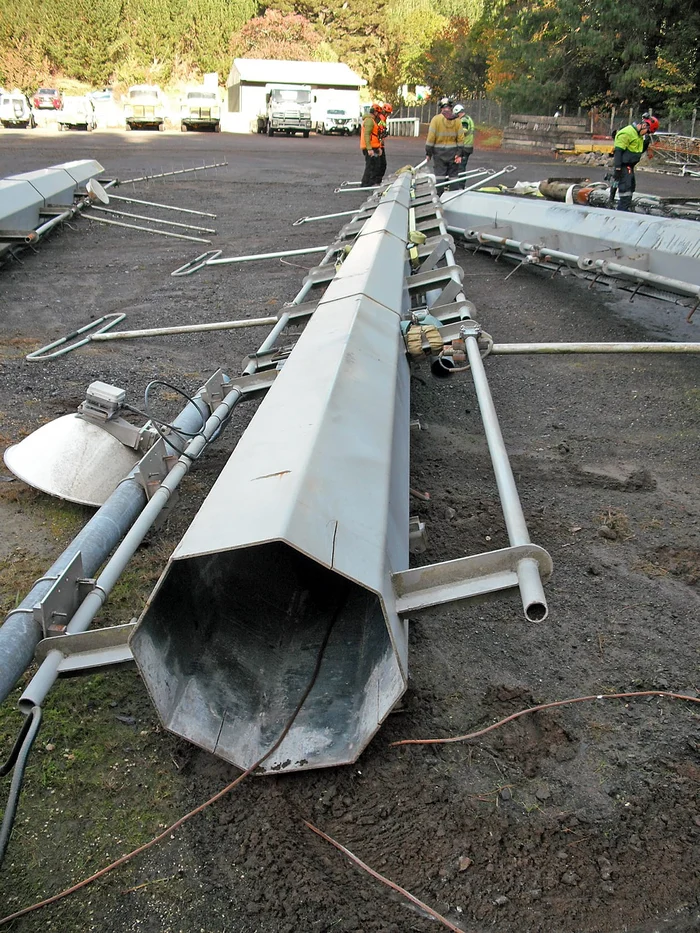
Kahu Helicopters’ Black Hawk helicopter made short work of dismantling the two 30-metre steel towers from the summit of Pūtauaki.
Each tower was split into two 15-metre sections for transport, while the antennae were removed using sabre saws before being recycled as scrap metal.
The new Manawahe site faced its first major test when Tropical Cyclone Vaianu swept through the Bay of Plenty on April 4, causing widespread damage and power outages.
Despite the severe weather, the Manawahe site operated flawlessly, with its onsite generator running continuously for more than 80 hours. This contrasted sharply with multiple major power outages across the region that affected thousands of residents.
Cyclone Vaianu highlighted the importance of resilient communications infrastructure during emergency events, ensuring 24-hour communications remained available to organisations such as Civil Defence and emergency response agencies.
Local councils and other organisations that rely on uninterrupted communications can now count on the Manawahe site to meet their needs for many years to come.