Opinion: A network of communities, not a single new suburb
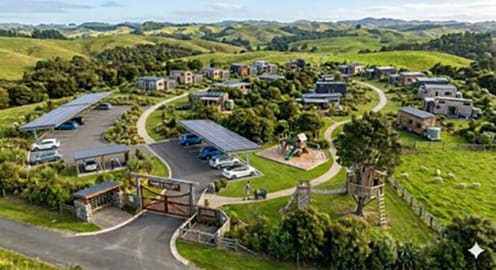
■ Mixed-age pocket neighbourhoods
.
■ By promoting Awakeri as a future “suburb/town”, is the Whakatāne District Council abandoning the established rural communities of Edgecumbe, Tāneatua, and Matatā? asks retired surveyor David Hick

Every one of these towns already possesses roads, schools, shops, and essential public infrastructure. Most importantly, they possess an identity and a community.
Okay, they do all have issues, but they at least deserve to be part of the conversation – and possibly the solution.
As concern grows over the proposed Awakeri development, we must ask a fundamental question: Is building a brand-new suburb/town from scratch really the best way to accommodate our future growth?
Instead of chasing a new “suburb”, the Eastern Bay’s future may lie in creating a connected network of thriving, resilient towns, utilising and strengthening the communities we already have.
Although Awakeri’s strongest selling point is its proximity to Whakatāne, it offers no coastal living, no river views or town centre … no wow selling point.
Starting from scratch requires monumental upfront investment. Although a developer initially absorbs the cost of new roads, water, wastewater networks, parks, and community facilities, these costs are inevitably passed down into the section prices.
This creates a major economic disconnect: section prices dictate the type of residence that can be built.
Simply put, a buyer is not going to place a budget-friendly $150,000 tiny home or a compact $300,000 cottage on a heavily serviced $400,000 section. The math doesn’t work.
High land development costs mandate high-end, expensive traditional homes.
In that sense, an intensive new Awakeri township will inherently struggle to deliver the genuine affordability that first-home buyers and downsizers are looking for.
If substantial infrastructure investment is required regardless, that capital may achieve far greater long-term social and economic benefits if directed toward upgrading and expanding our existing council-owned networks or, in Matatā’s case, pushing ahead with the sewer scheme.
The traditional, large-scale suburban subdivision model is a legacy of the past.
Across New Zealand, housing preferences are shifting because of smaller households, rising construction costs, and changing lifestyles.
Our demographic needs are changing rapidly, and we need land options priced to match them:
■ Retiree: The next generation of retirees will be more active, independent, and mobile. Many want to downsize and remain in their communities without being segregated into conventional retirement villages.
■ First-home buyers: Single people and couples without children are desperately seeking innovative, budget-friendly entry points into the market.
■ The rural and seasonal workforce: There is a distinct, ongoing need for practical housing models for horticultural and Recognised Seasonal Employer (RSE) workers.
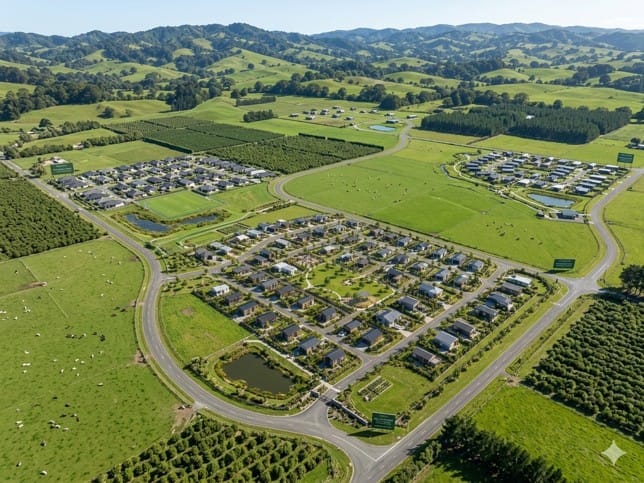
A concentrated, Pāpāmoa-like development should be a lesson in what not to do for the Eastern Bay.
Rather than a single mega-suburb, maybe we should encourage a series of smaller, innovative cluster developments on the fringes of our existing towns and scattered rural lifestyle developments using marginal agricultural land. We have an opportunity to lead New Zealand in forward-thinking housing models, including:
■ Mixed-age pocket neighbourhoods: Clusters of compact homes, cottages, and tiny houses designed around shared open green spaces. Because these sit on the fringes of existing towns where land values are more reasonable, a $150,000 innovative home remains economically viable. Fully serviced, but “off the grid” as far as council is concerned.
■ Self-sustaining rural gated communities: Tailored for rural retirees and independent lifestyles, these clustered developments can utilise their own localised solar power grids, self-contained wastewater systems, and private access roads.
These can be the traditional (half hectare blocks) or smaller homes clustered together on smaller sites (to bring down costs) and shared open spaces and facilities.
For the council, the benefit of this gated model is immense with obligations and liabilities ending strictly at the front gate.
All internal infrastructure, maintenance, and utility management become the responsibility of the development’s body corporate or management structure. This frees the council from a lifetime of infrastructure upkeep costs, allowing them to support housing growth with zero added burden on the district’s ratepayers.
Yes, Awakeri can be part of this, but maybe as a series of cluster developments.
With the rise of electric vehicles, improved transport options, and flexible remote work patterns, the necessity of concentrating development in a single location next to Whakatāne is diminishing.
All our existing small towns sit within a short, manageable (less than 20 minute) commute.
Growth does not always have to mean tearing up greenfield land for an expensive new suburb. Sometimes the smartest investment is in the places we already have.
By directing growth toward upgrading existing wastewater infrastructure, encouraging smart infill housing, and bringing underutilised land back into productive use, the council can spread wealth and resilience evenly across the entire district.
The Eastern Bay is not a single city in the making; it is a proud network of unique communities. Let’s invest in them first.