
Joint water services work progresses
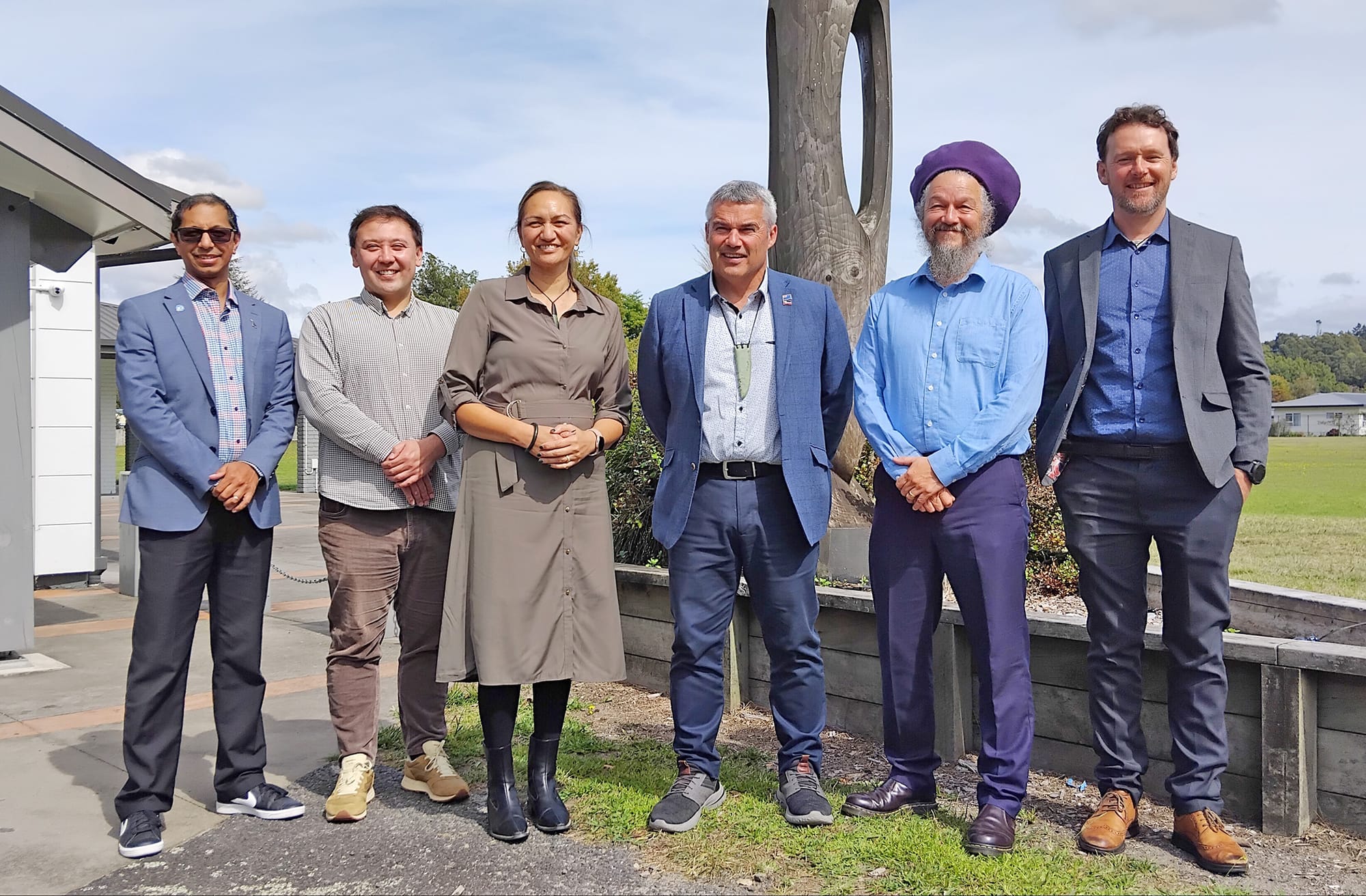
Working together: Some of the joint water services working group members Rotorua Lakes District Council chief executive Andrew Moraes, Kawerau District Council chief executive Morgan Godfery, Kawerau Mayor Faylene Tunui, Ōpōtiki Mayor David Moore, Whakatāne Mayor Nandor Tanczos and Ōpōtiki District Council chief executive Stace Lewer at a meeting in Kawerau earlier this year. Photo supplied
.
Work to explore the long-term future of water services across Ōpōtiki, Whakatāne, Kawerau and Rotorua is continuing to progress.
The joint Water Working Group met in Whakatāne on May 19 to review project updates, iwi and hapū involvement and next steps.
The meeting was chaired by Whakatāne District Council Mayor Nándor Tánczos and brought together mayors, elected members, chief executives and technical staff from the four councils.
As part of the Government’s Local Water Done Well requirements, the Water Working Group is investigating what a multi-council Water Services Council-Controlled Organisation could look like for delivering drinking water, wastewater and stormwater services across Ōpōtiki, Whakatāne, Kawerau and Rotorua.
Once this work is finalised, the community will get to have a say on whether the councils should go down that path or stay as standalone water service providers.
The work is focused on understanding how water services can be delivered in a way that is financially sustainable, resilient and fit for the future.
Tánczos said the group’s role was to carefully investigate the technical options, while making sure iwi, hapū and other partners have meaningful opportunities to help shape the process as the work develops.
“This is a complex piece of work, but the purpose is simple. We need to understand the best long-term way to deliver safe, reliable and affordable water services for our communities.”
“The Water Working Group is focused on assessing the options properly.
“Engagement with iwi, hapū, other partners and respective communities has been planned as part of the process from the start, so different perspectives can help shape the options as they are developed.”
A key discussion at the meeting focused on how iwi and hapū participation can be supported.
Representatives from the Eastern Bay of Plenty Iwi Chairs presented a request to be directly involved in the Water Working Group’s work as the investigation continues.
The working group endorsed further work to identify the best way for that to happen, with a proposal to be bought to the next meeting.
At the Whakatāne meeting, the group reviewed work on 30-year financial modelling, including the different costs each council currently faces in delivering water services.
The reports being complied bring together financial, economic, governance and decision-making, and service delivery considerations.
The group also received a paper on how pricing could work if a joint model was progressed.
The possible options will be discussed in detail at a later meeting.
Tánczos said the modelling was an important part of understanding the possible impacts for each district.
“Every council area is different. The financial modelling helps us understand those differences clearly, so any future option can be considered with eyes wide open.”
The technical report will help councils decide what options should be taken to the community for consultation, which is expected to take place later this year, with final decisions being made by December 2026.
Tánczos says community consultation will be an important part of the process before any final decisions are made.
“No decision has been made on a future joint model.
“Once the technical work is complete, the next step will be going out to our communities, explaining the options clearly and listening to feedback.”
All four councils will continue to deliver water services while the longer-term options are investigated.