
Opinion: Brushing a losing battle
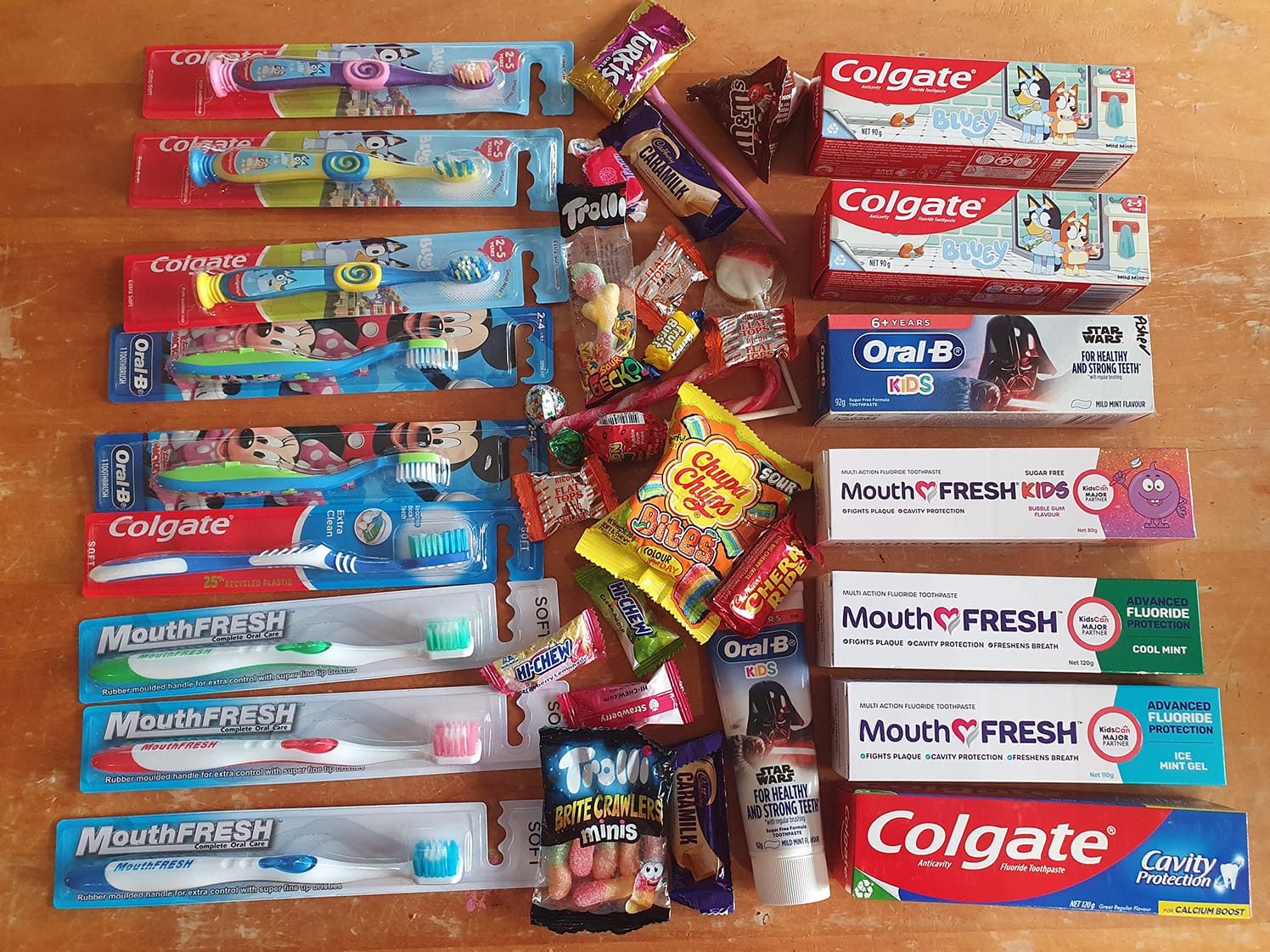
LOLLY OVERKILL: Lollies given to a six-year-old at school.
.
Jess Suisted
My six-year-old daughter recently succeeded in her second side hustle business; selling walnuts collected from our property (thanks so all those people who supported her). She made a decent profit.
However, it is her first side hustle that is really bringing in the cash.
One day, disappointed that she had been given more lollies at school as a reward for good behaviour and achievement, I said: “I’ll buy those from you.”
It was my ploy to find out exactly how many lollies she was being given. She’s got a lot of her father’s attributes, so naturally she saw a business opportunity and jumped on it.
It turns out, she was hauling in plenty of lollies at school, so the extra coins floating around my car for my sneaky trips to the op shop disappeared rather fast.
I purchased the collection of lollies and sweet things pictured from my daughter over the past six months; this does not include the lollies she chose to consume.
I have to admit I’m a bit confused. As a family, we’ve been given loads of toothbrushes and toothpaste from various healthcare providers (Health New Zealand/Te Whatu Ora. Plunket, KidsCan) over the past year.
The haul of teeth-care products pictured should last our family of three children for at least the next year.
Along with the gifts of toothbrushes and toothpaste is a clear message, limit the sugar you give your children and make sure they brush their teeth twice a day. Roger that. I can’t afford (nor enjoy) to go to the dentist too often myself, so I’m a keen advocate for a low-sugar diet and anything else that will prevent my children needing expensive dental care later in life.
Okay, back to my confusion. Why is my daughter being given lollies by teachers at school?
First, there’s the obvious problem of the un-needed extra sugar; it is not only bad for their teeth, but the sugar spike doesn’t help with concentration or behaviour.
You don’t need to do much research to find that an overload of sugar impacts children’s behaviour – experience will tell you that.
Furthermore, there is so much hidden sugar in everyday products we buy and consume that lollies are just not needed daily.
Do you know how much sugar is in one kilogram tub of flavoured yoghurt? Or a bottle of tomato sauce?
You can do your own quick math by dividing the sugar content on the back of the packet by four and that will tell you roughly how many teaspoons of sugar is in that product.
The results may surprise you.
Secondly, since when did we have to bribe children to want to learn and behave appropriately?
It seems in the Western world we are losing our appreciation for a good education.
Where my husband grew up in Ivory Coast it was not uncommon for young children to walk 17km one way to school on an empty stomach because they valued education and the opportunities it brought.
Sadly, we are creating a culture where instant gratification is needed or else motivation to do anything drops.
I wonder how some of our children will do on their first day of work when they are not handed a sweet treat for just showing up.
Thankfully, our school leadership can see the holes in this sugar-coated reward system and are pro-actively finding some solutions to prevent further cavities.
Perhaps my next mission will be to get the Ministry of Health and the Ministry of Education to work together.