
Third water incident in four days for Coastguard Whakatāne
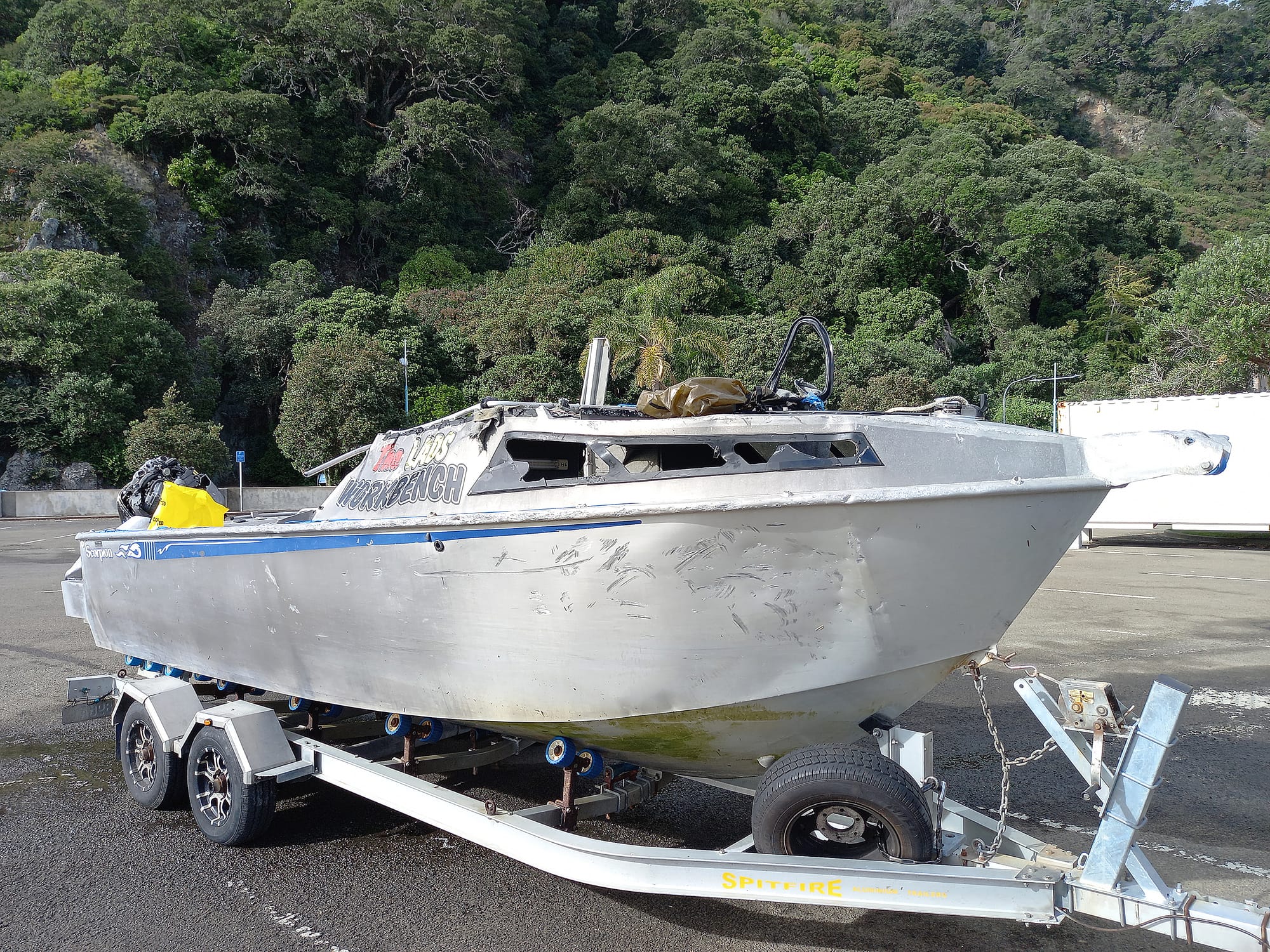
CAPSIZED: The boat carrying six passengers, which flipped on the Whakatāne Bar on Saturday night is back on a trailer at the boat ramp. Photo supplied
Troy Baker
Coastguard Whakatāne was alerted on Monday night to a water-related incident involving four young boaties who became stranded off the Whakatāne coast after suffering engine trouble.
The vessel reportedly had no lights and no radio, requiring Coastguard assistance. Nobody was injured in the incident, and the four people were assisted safely back to shore.
The incident was the third event attended by Coastguard Whakatāne since Friday and followed the death of a diver near Sugarloaf Rocks and the capsizing of a boat on Saturday.
In the Saturday night incident, a member of the public ran into the Coastguard communications room at approximately 5.35pm to report that a vessel had overturned while attempting to cross the Whakatāne Bar, said Whakatāne Coastguard president Nilesh Dahya.
“The volunteer radio operator on duty immediately raised the alarm, with Coastguard Whakatāne launching Whakatāne Rescue II within minutes,” Dahya said.
As the rescue vessel responded through rough conditions, early reports from the scene indicated some occupants were on the rocks while others remained in the water, he said.
Two surfers who were in the area at the time entered the water in difficult conditions and assisted the occupants onto nearby rocks in fading light before Coastguard crews arrived on scene.
When Coastguard reached the area, all six people were located on the rocks and safely recovered aboard Whakatāne Rescue II before being returned to shore for medical assessment.
Coastguard confirmed that sea conditions at the time included a notable swell, rough surf, and deteriorating light conditions. No bar crossing report had been lodged with Coastguard prior to the vessel’s attempt to cross the bar.
Dahya said crossing any bar carried significant risk, and conditions could change rapidly. “While Coastguard can provide information to boaties regarding observed sea and weather conditions, the decision to cross the Whakatāne Bar always remains the responsibility of the skipper. It is the skipper’s responsibility to assess the conditions, the capability of the vessel, and the experience and safety of everyone onboard before deciding to cross.”
Dahya was concerned about the growing number of incidents involving under-prepared boaties who found themselves in trouble.
“Not only are they putting themselves at risk, but they are also putting our rescue staff at risk as well,” he said.
Whakatane Police Senior Sergeant Cam McKinnon said the boat capsize was a reminder to the boating fraternity to do safety checks.
“Make sure you know what you are doing,” he said.
Coastguard is encouraging all skippers to:
■ Check the latest weather and sea conditions before heading out
■ Wear lifejackets at all times, especially when crossing any bar
■ Carry at least two reliable forms of communication
■ Log a trip report and bar crossing with Coastguard
■ Ensure the vessel and crew are suitable for the conditions
■ Avoid crossing if conditions are outside your level of experience or comfort
“Bar crossing reports are an important safety tool, as they allow Coastguard to monitor crossings and quickly raise the alarm if a vessel does not return or report safely back across the bar,” said Dahya.
“The swift actions of the member of the public who raised the alarm, the response from the surfers on scene, and the rapid deployment of Coastguard volunteers all contributed to a positive outcome in what could have easily ended very differently.”