Unitary council models – how do you feel?
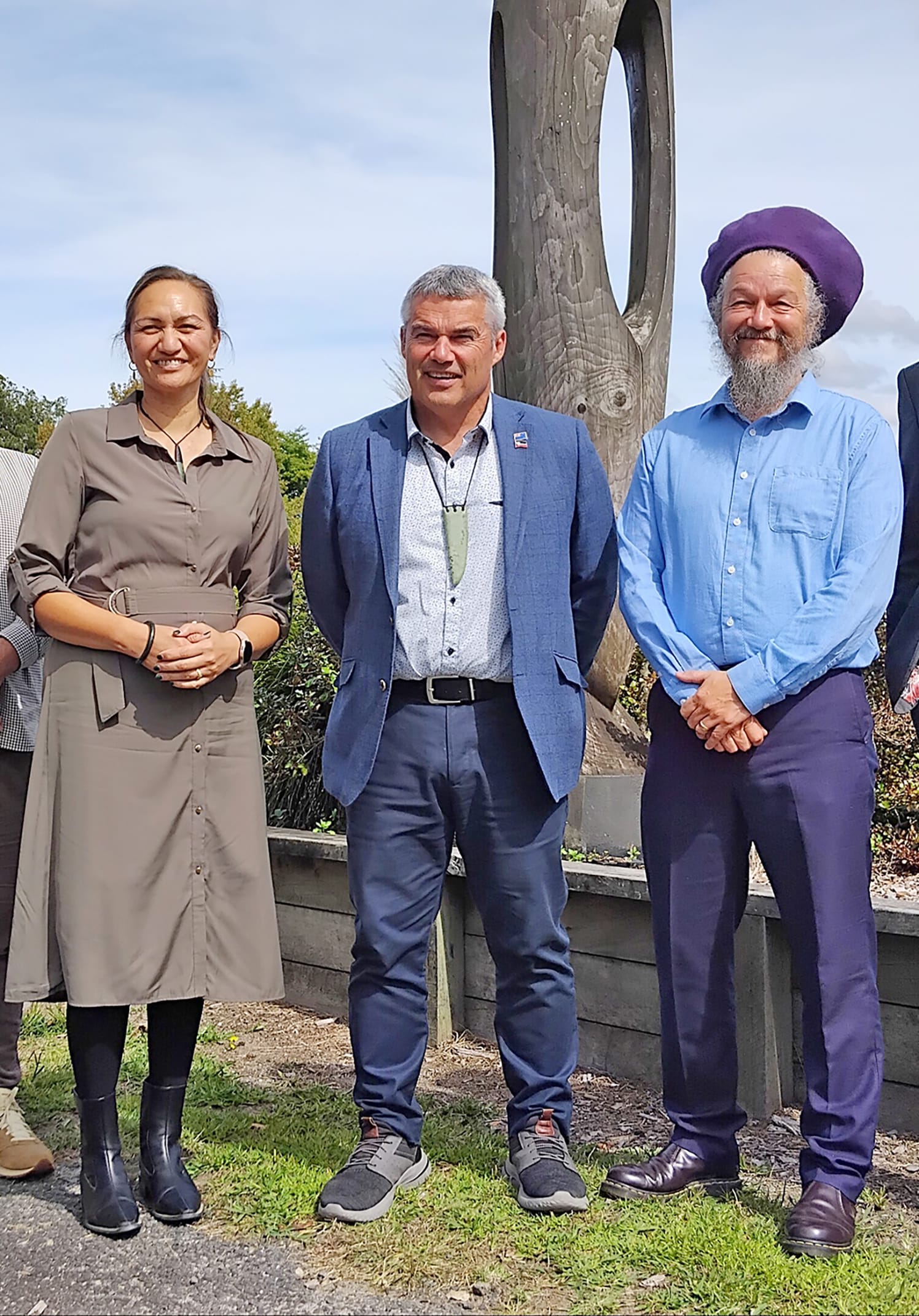
Unitary council: Kawerau Mayor Faylene Tunui, Ōpōtiki Mayor David Moore and Whakatāne Mayor Nandor Tanczos are already working together to assess the viability of a shared water services organisation. File photo
Diane McCarthy
Three models of what a unitary council that includes Whakatāne district could look like have been outlined on an information page on Whakatāne District Council’s website.
These include amalgamations of councils across the entire Bay of Plenty, an Eastern Bay Subregional Unitary Council with Ōpōtiki and Kawerau district councils, and a combined Eastern Bay and Rotorua Unitary Council.
The council is seeking feedback from the public about these amalgamation models, which Mayor Nandor Tanczos said are just examples of how a unitary council could be formed and not official options at this stage.
Matters for consideration around each model include potential efficiencies across a larger council and how to maintain a strong local voice for Eastern Bay communities.
The information page is a response an announcement on May 5 by RMA Reform and Infrastructure Minister Chris Bishop and Local Government Minister Simon Watts giving territorial authorities until August 9 to submit proposals on how they could put together a single council to deliver both regional and local services.
The announcement was the latest in the Government’s proposal to Simplify Local Government, which includes removing regional councillor positions at the next local election.
For councils that have not formed unitary councils by the 2028 election, a compulsory backstop process will be put in place.
“Our message to councils is simple: lead your own reform, or we will do it for you. Either way, change is coming,” Mr Bishop said.
Mayor Nándor Tánczos said the announcement made it clear that councils had little choice but to act if they wished to have any influence over the eventual outcome.
Even if there is a change of Government at this year’s general election, the reform will still be necessary.
“The signals I’m getting are that even if there is a change of government in this year’s general election, the full sweep of reforms will broadly remain in place. There may be changes in some of the details, but that is all,” Mr Tanczos said.
“The question for our communities is how that change works for us to protect a strong local voice, effective services, and good outcomes for our people and places.
“This is a fast-moving process, and the timeframe doesn’t allow for the kind of extensive or formal consultation councils would want to undertake for changes of this scale,” he said.
“But within that window, it’s still important that we hear from our communities. We want to understand what matters most to people as these discussions progress.”
The reforms had dramatically increased the workload, both for elected members of council and staff.
“In the meantime, we need to carry on with business as usual, despite the significant amount of time and resources that these reforms are sucking up. The Government has said that there will be no money coming from them to help pay for all the work these reforms are creating.”
A page explaining the Simplifying Local Government proposal and possible outcomes is now live on the council’s online engagement portal www.koreromai.whakatāne.govt.nz.
“We encourage people to take a look at the information, think about what matters most to them, and join the kōrero,” Mr Tanczos said.
Comments made on the council’s social media posts would also be noted.
The council is asking the community to have its feedback in before Friday, June 5.