
Opinion: Sharing grief and building support
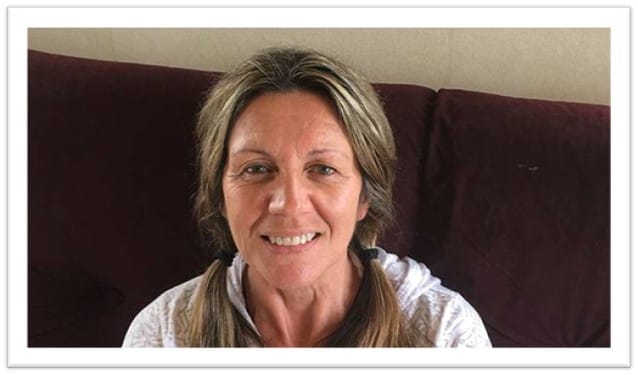
Grief counsellor Suzy Taylor
.
Ruth Gerzon
I recently interviewed a counsellor specialising in suicide and bereavement who is one of the presenters at a day of shared kōrero about sudden death and grief.
Suzy Taylor of Rotorua says her work is deeply shaped by personal tragedy. After losing her 19-year-old daughter, Georgia, to suicide in 2016, Suzy has dedicated her life to supporting others navigating similar grief.
The gathering, planned for May 12 by Ngā Pou Herenga: the End-of-Life and Funeral Guides’ Collective, will bring together health professionals, first responders, and those with lived experience of sudden loss.
“This work comes from my experience,” Suzy said: “I saw firsthand the gaps in support – not just for those at risk, but for the families left behind.”
Suzy stresses the importance of open, informed conversations about suicide. Even the language used matters. “We don’t say ‘committed suicide’ anymore,” she explains.
“That term comes from a time when suicide was a crime. Now we say ‘died by suicide’ – it’s more accurate and removes stigma.”
She also challenges common misconceptions, including the tendency for families to blame themselves. “There’s often misplaced blame, especially when young people are involved. Families can carry that weight for years, and it has a profound impact on their own mental health.”
Many risk factors contribute to our suicide rate, which is double that of road deaths. Some factors are unemployment, housing insecurity, relationship stress, and bereavement. Particular concern remains for high-risk groups such as Māori men, LGBTQIA communities, and older adults, especially men over 80.
Suzy notes that suicide among Māori remains disproportionately high, reflecting complex and overlapping factors.
“Pre-colonial suicide was rare and linked to specific circumstances. Today, we’re seeing multiple pressures – social, economic, cultural – all intersecting.”
After a suicide, access to ongoing support for whānau is essential. “Grief after suicide isn’t linear. People need to know that while it may never fully go away, it can become more manageable with the right support.”
There are now excellent services for whānau such as Aoake Te Rā, (https://www.aoaketera.org.nz/) a free nationwide counselling programme for people bereaved by suicide. There is also Waves: Bereaved by Suicide support group which runs eight-week group support programmes.
Suzy also advocates for mandatory counselling for first responders, who face repeated exposure to traumatic incidents.
“We ask a lot of our paramedics, police, and fire crews. Supporting them properly is part of the bigger picture.”
The upcoming hui builds on a successful community presentation held last September. This one, entitled “Sudden and Unexpected Deaths – Community Response and Care” will feature a wide range of voices, including emergency department staff, police, fire services, and Coroner Donna Llewell.
It will bring people together to share knowledge, experiences, and solutions. “There’s no single fix,” Suzy says. “But when communities come together – when there’s kotahitanga, unity.
Then we can create systems that actually support people before, during, and after crisis.”
All are welcome at the hui, on Tuesday, May 12, 10am-1.30pm, at Liberty Church, 65 Wairaka Road, Whakatāne. If you or someone you know needs support, free help is available. In New Zealand, you can call or text 1737 to speak with a trained counsellor at any time.