
Annual plan ‘disciplined and pragmatic’ – Moore
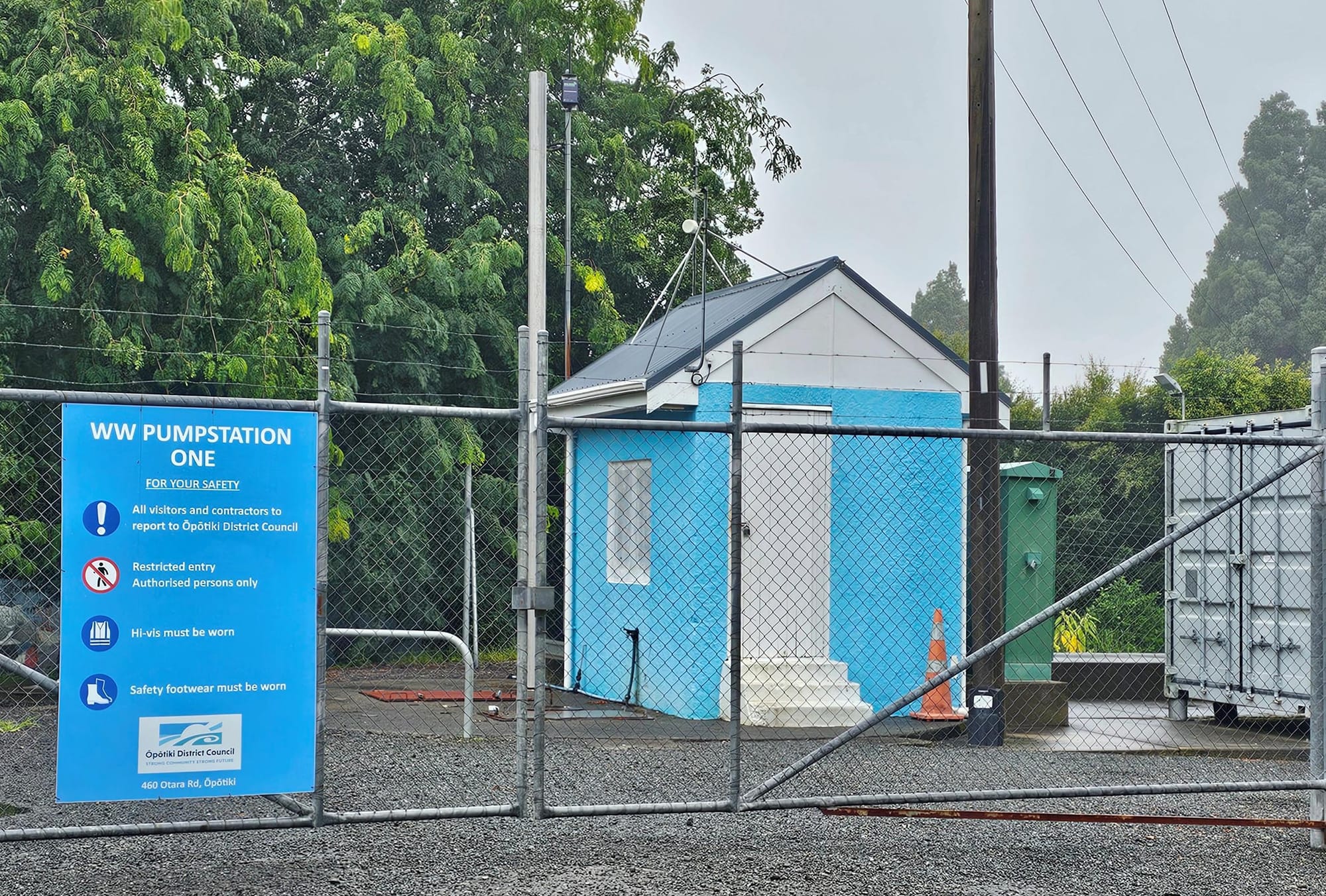
Capital projects: Upgrades to the Potts Avenue Wastewater Pump Station are among over $3.5 million in wastewater projects included in the draft annual plan for the coming financial year.
Diane McCarthy
Ōpōtiki district is facing an 8.9 percent overall rates rise this year – a substantial drop from the 16 percent rise forecast in its Long-Term Plan 2024-2034.
Ōpōtiki District Council approved an information document summarising the annual plan for public release at its meeting on Tuesday.
It states the lower figure has been achieved through “strengthening partnerships, savings where possible and refining assumptions”.
Among the partnerships the council has been working on strengthening is with Bay of Plenty Regional Council, which is also working on its annual plan.
In its consultation document is a plan to spend $1 million per year for the next three years to fund dredging that is essential to maintain the Ōpōtiki harbour channel.
A spokesperson said the council was now able to be more accurate when estimating costs such as insurance, inflation and interest rates than it could be when the long-term plan was written, which accounted for the refining assumptions part of the explanation.
In the information document, Mayor David Moore says, “council has taken a disciplined and pragmatic approach to this Annual Plan”.
“During development of the Long-term Plan, our community was clear about priorities: focus on the basics, manage costs carefully, and defer non-urgent spending where possible. This Annual Plan reflects that feedback. Savings have been achieved with minimal impact on core service delivery by refining assumptions, deferrals, and efficiency gains.”
At Tuesday’s meeting, Mr Moore said the 8.9 percent was still hard to put out to the public as a rate rise, however, it had taken a lot of work to get it down to that figure.
He thanked council staff who “kept getting sent away to re-look at stuff and come back with different options”.
The information document updates the public on some of the major projects it intends to invest in over the coming year.
This includes over $3.5 million in wastewater projects, including upgrades to the Potts Avenue Wastewater Pump Station, enhancements to the treatment plant required to renew its resource consent.
Stormwater projects with a budget of $827,000 include the Duke Street West stopbank and upgrades to the Wellington Street Basin stormwater network. This is a project that is also expected to receive $1.3 million of central government’s Regional Infrastructure Funding through a sub-loan via the regional council.
Over $1.8 million is pegged for water supply projects. This includes plans for relocation of the Te Kaha water treatment plant, which is prone to reduced water quality during wet weather. Reticulation renewals include replacement and strengthening of the water supply main running from Ōtara Road through to Ford Street, supplying much of the town’s water supply.
Roading projects account for over $3.6 million in spending. This includes work on strenthening the detour route when there is a slip at Waiotahe Bluffs. Targeted resilience upgrades to Ōhiwa Beach Road also receive special mention.
Upgrades to resource recovery centres in Ōpōtiki, Te Kaha and Waihau Bay come to a combined $402,000. Just under $1 million is planned for parks and reserves’ projects. This includes a new playground at Waiotahe Drifts, upgrades to public toilets near the Ōpōtiki Surf Lifesaving Club and at Hukuwai Beach and a new toilet at the end of Snells Road.
The parks and reserves spending also includes continued investment in cycle paths, including the Waiotahe link through the Waiotahe Drifts and following the Huntress Creek stopbank.
Further details about these capital projects is included in the information document.
Changes to the long-term plan in the draft annual plan are not sufficient to trigger the requirement for full consultation. However, the council welcomes any feedback from the community on projects they would like to see included in future planning rounds, what the council could do better, and what it should do more of, or less of.
This feedback will be considered before the plan is officially adopted by 30 June.