WHS commemorates Anzac Day
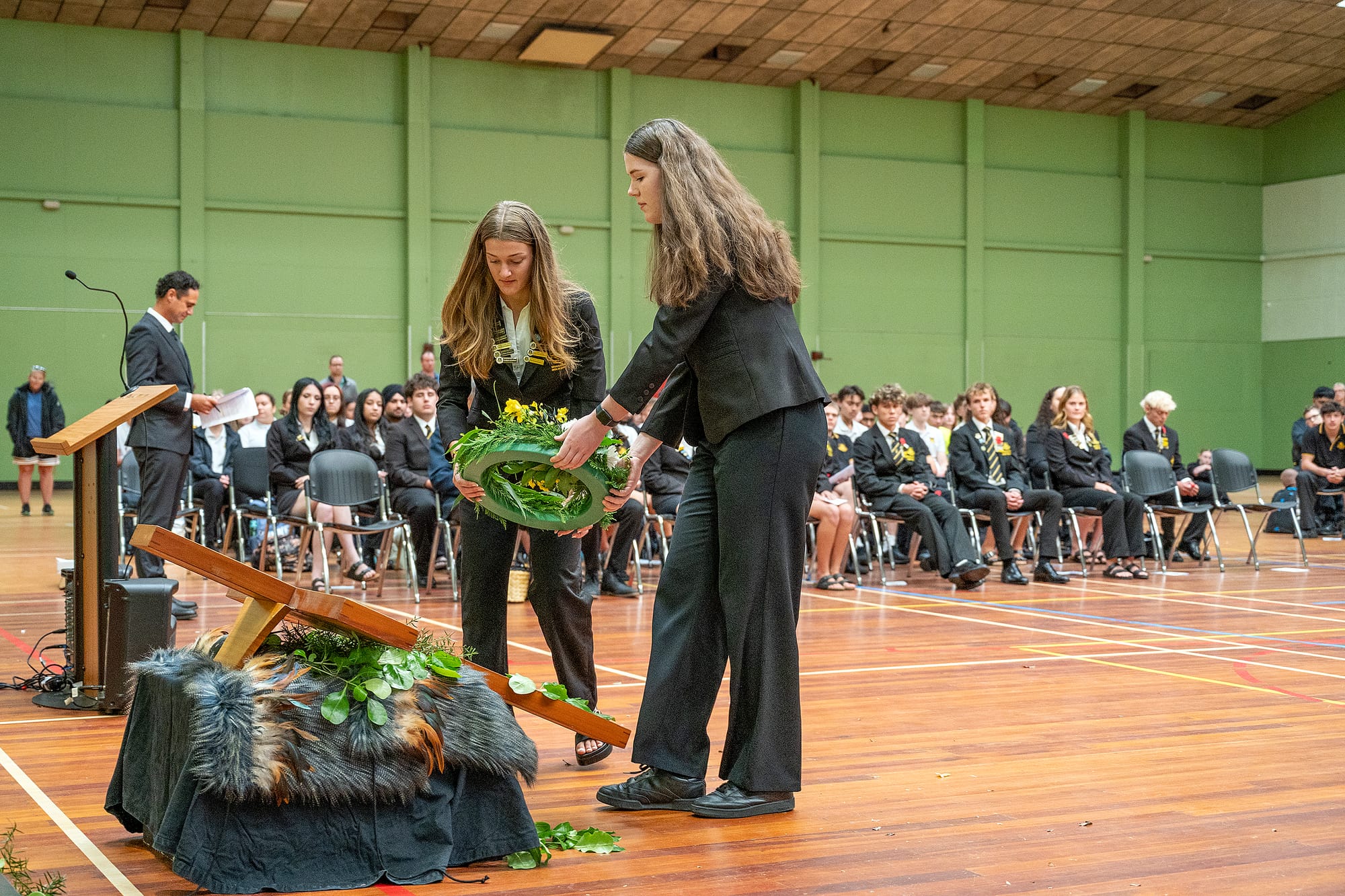
POIGNANT: Students Trista Baker and Hannah White lay the wreath at the at the school service. Photos Troy Baker E5950-178
Troy Baker
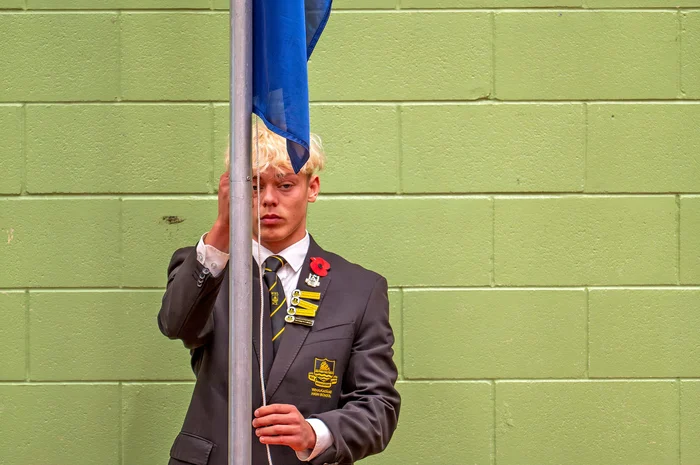
Whakatāne High School’s senior students gathered at the Whakatāne War Memorial Hall on Wednesday for an early Anzac Day commemoration.
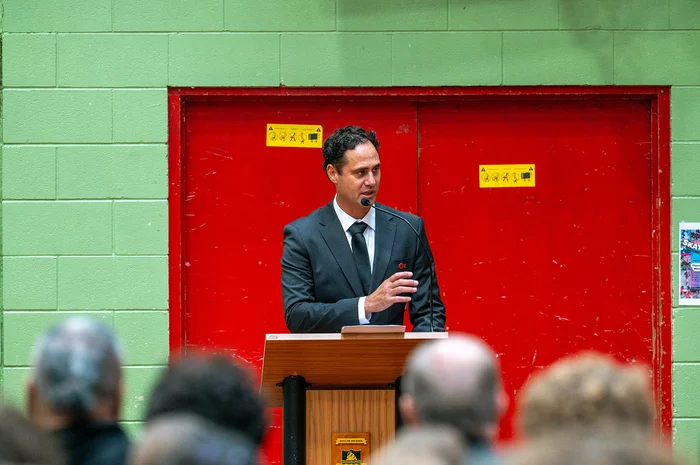
Deputy principal Mark Hanlen officiated the service, outlining the importance of Anzac Day for both young and old.
“Today’s special assembly is a time for remembrance, reflection, and connection.
“For many in our district, this day carries deep personal meaning, passed down through generations and continuing to shape our lives today,” he said.
“To our students, whatever this day means to you, I thank you for taking the time to acknowledge it and for being part of Whakatāne High School, which continues to honour service, sacrifice, and community.”
Mr Hanlen also highlighted the contrast between the modern conveniences enjoyed today and the harsh conditions endured by those who went to war, as well as the challenges faced by those returning home.
“We honour their bravery, their resilience, and the way they stood up for their beliefs.
“We honour how they looked after their mates, and we honour the fact that they fought for us.”
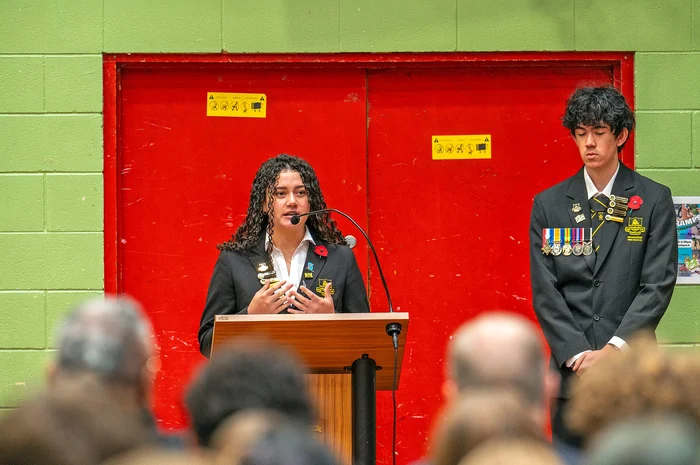
Guest speakers, Whakatāne High School head girl Jiko Bryant and head boy Caiden Simmons, opened with a thought-provoking question: “Lest we forget – why do we say this, and why is it associated with Anzac Day?”
For Jiko, the phrase reflects the sacrifices made by young men for the freedoms enjoyed today, and the lasting impact felt by their families and communities.
“Leslie Raymond Shaw was only 13 years old when he enlisted, and nearly 14 when he landed at Gallipoli.
Today, he would be in year 9, yet he was the youngest of the Anzacs,” she said.
“Consider this if, more than a century after World War I, New Zealand and Australia were drawn into another conflict requiring compulsory military service, how would you feel?
“I encourage you all to cherish your loved ones because time with them is never guaranteed.
“Life can change without warning, and those we love can be gone before we have the chance to say goodbye.”
Caiden stood wearing medals belonging to his great-grandfather who enlisted just two weeks after the outbreak of World War I in 1914.
“The first three medals were earned by surviving several battles, including Gallipoli. It was during World War I that he met my great-grandmother in an English hospital and later returned with her to New Zealand.
“He made a home here as one of the 49 survivors of the Wellington Battalion. With the arrival of World War II, he re-enlisted and continued to serve his country,” Caiden said.
For him, the impact of war is personal.
“It takes a lot to raise a child to love and nurture them into a good person. But the truth is, all of that can be undone in a heartbeat. A single decision, a single moment can bring it all to an end. Those who went to war risked this fate and gave their lives for peace,” he said.
Both speakers reminded students that people they had never met had fought for their futures.
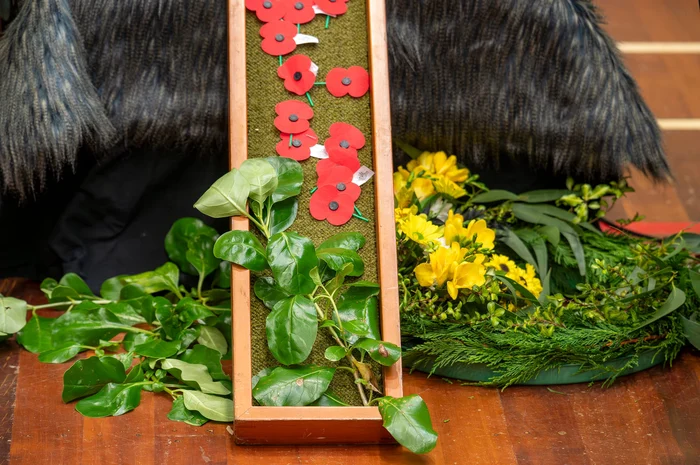
The service included the laying of a wreath, with school leaders and ex-service members placing poppies in remembrance.
It concluded with an emotional haka, paying tribute to those who lost their lives and those who carried the burden of war.
Mr Hanlen was quick to praise the students.
“They showed great respect and maturity today, and I’m proud of the way they spoke, honoured the occasion, and supported one another.”