
‘More songs than good ideas’
Paul Charman
Why prison songs?
Because if you’re a boomer like me, you probably heard these laments at an age too young to resist them.
During the early 60s no radio request session was complete without the likes of Johny Cash belting out Folsom Prison Blues; Val Doonican’s Walk Tall; Lead Belly’s Midnight Special or Merle Haggard’s, Mama Tried.
Some of these performers spent time in prison themselves, Lead Belly (Huddie Ledbetter) more than most.
He made a name in the New York Folk Music scene of the 1930s as the murderer who was released from jail when the prison authorities heard him sing.
Though untrue, it looked good on the record sleave, perhaps providing the basis for the Coen Brothers’ hit movie, O Brother, Where Art Thou.
Circa 2000 this movie revived another mighty prison song, In the Jailhouse Now.
In one of the final scenes actor Tim Blake Nelson takes the lead, with John Turturro pretending to do the famous yodelling part ... I just can’t get enough of the Youtube clip of this scene.
The whole idea of prison as portrayed in these folk and country songs was as a place any unsuspecting lad might find himself having fallen into the wrong company, especially if he got in with, “the kind of girl it's better not to know”.
It was all a bit sexist and wrongheaded but at least it recalls a kinder, gentler view of incarceration than today’s.
Today doing time in prison is so closely associated with being a loser that it shouldn’t even get mentioned in the popular culture.
In the old prison songs, it’s as if you were down but not out.
For example, a line in Walk Tall says:
“I've got one year left to serve and when my time is done – I'll walk tall and straight and make ma proud to call me son.”
Yet, the prince of all 1960s prison songs was the one with no happy ending at all, namely, The Green Green Grass of Home.
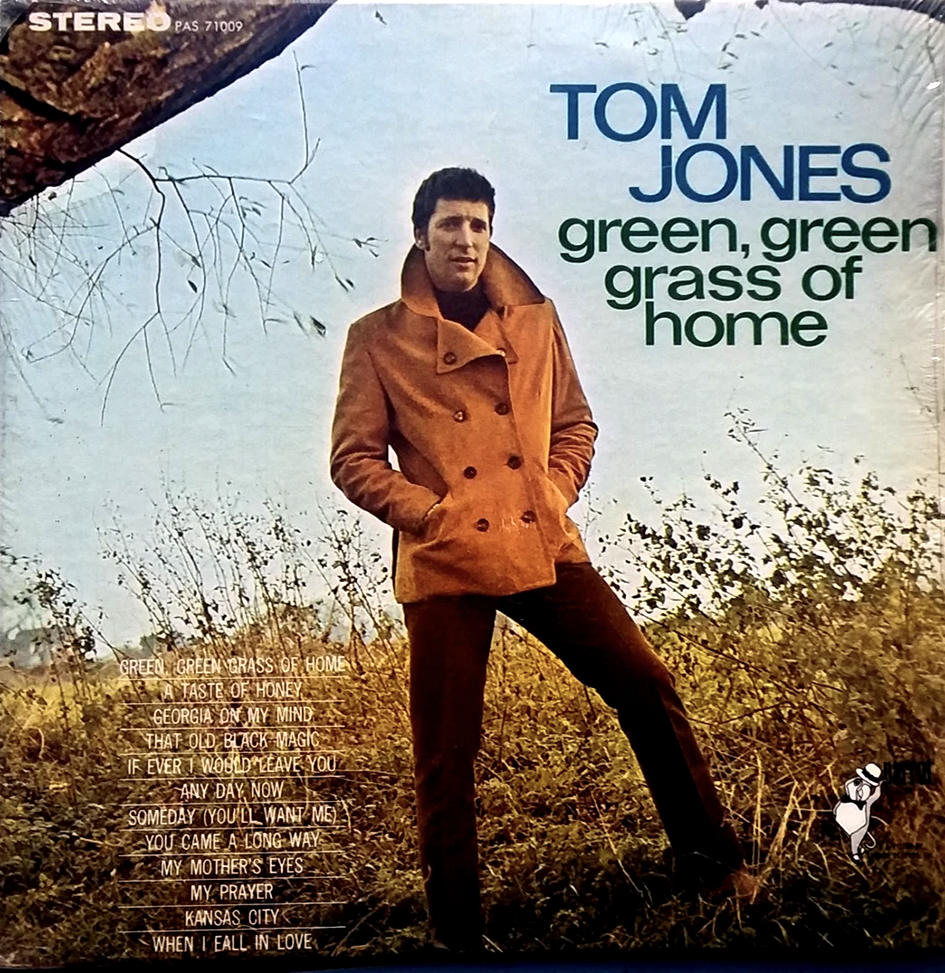
Tom Jones’ version became a mega hit in New Zealand 1965, officially going “gold” with 15,000 copies sold on 45 (small vinyl records of the day), which would be like 100,000 streams today.
The song seems to fit the Kiwi context right down to our green grass.
I would sing it with others gathered in the public bar of the Taumarunui Hotel, circa 1976.
More recently, I spied the lyrics in a songbook being used at Manna Kai in Ōpōtiki.
Manna Kai is the free meal offered in town by my friends Lydia and Dwayne Ashford on Monday nights, and it’s a Christian mission.
So, the songbook I saw there comprised mainly Gospel tunes, but somehow The Green Green Grass ...” had crept in, with chords marked.
It was one of two secular songs to appear among those sacred choruses, the other being Stand by Me.
This was a 1961 mega-hit by R&B great Ben E. King and there have been a staggering 500 covers.
Okay, Stand by Me isn’t a prison song, but forgive the inclusion, because when I see a song fight its way into the collective consciousness – like these two have – it makes hair stand up on the back of my neck.
We’re in the presence of pop greatness here.
Songs with timeless appeal like these seem to register with every generation.
Neil Finn summed it up by pointing out, “there are more songs out there today than good ideas”, and that’s so true.
And to me The Green, Green Grass is based on a great idea.
The singer returns to his childhood home for what seems to be his first visit there since leaving in his youth.
When he steps down from the train, his parents are there to greet him, and his sweetheart, Mary, comes running to join them.
But the singer wakes to see four grey walls and realises that his return home was only a dream and that he is in prison.
It is the day of his scheduled execution. He sees a guard and “a sad old padre who will walk with him to his execution at daybreak, and then he will return home” in the shade of that old oak tree, “as they lay me neath the green, green grass of home”.
When it's strummed on a Māori-style guitar, I don’t need the lyrics to sing along, and neither do most of my contemporaries.
I do need a handkerchief.
There’s something about that doomed inmate’s final dream on death row.
And his one consolation of being taken home to be buried.
Seems to fit with one or two sad stories I heard back in the King Country, and maybe a few here on the Coast as well.
I know all this may sound excessively maudlin, but there I was in the public bar of the now defunct Taumarunui Hotel, singing along to that Tom Jones’ hit with the ne'er-do-wells in my tree planting gang, relishing each of those wonderful chords, and every single syllable of the lyrics.
Yes, you just had to be there.