
Documentary wins people’s choice
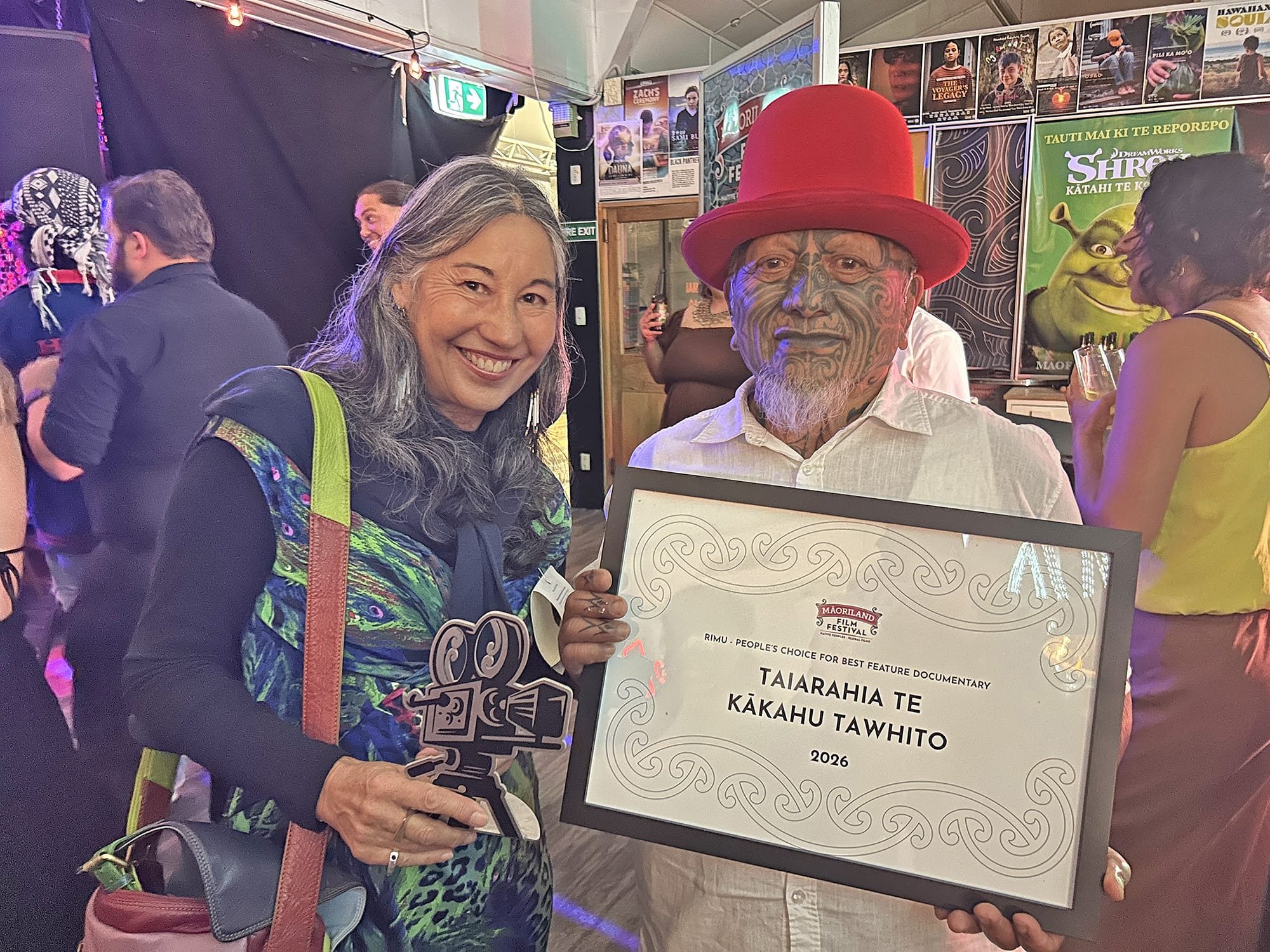
PEOPLE’S CHOICE: Kim Webby and Tame Iti, just after receiving the award for best documentary
News Editor
A powerful documentary commemorating the 40th anniversary of an occupation on Rūātoki’s sacred mountain, Taiarahia, has won honours at the Maoriland Film Festival.
Taiarahia: Te Kākahu Tawhito premiered at the film festival in Otaki on Saturday night, winning people’s choice for best documentary.
There are four awards – Best Documentary, Best Feature Drama, Best Short Documentary and Best Short Drama – chosen by audience vote.
Executive producer Kim Webby, co-producers and co-directors Wikitoria Day and Nicholas Riini, director of photography Mike Jonathan, and key interviewees Tame Iti and Harata Day were at the screening along with about 50 Ngāi Tūhoe supporters who travelled from Rūātoki and Wellington.
Webby said the film screened to about 150 people and was followed by a question and answer with the filmmakers and some of the interviewees from the film, including Saskia Kouwenberg who travelled from Australia.
“She was a young woman during the time of the occupation and visited the site with members of Greenpeace. She was so moved by what she encountered that she decided to stay on for a part of the occupation.”
Vera Davis, a retired Pākehā woman who farmed in Rūātoki and was a big supporter of the occupation, also attended, having been accompanied to Otaki by her grandchildren.
Taiarahia: Te Kākahu Tawhito explores an event 40 years ago when members of Te Māhurerhure hapū occupied Taiarahia for six months and won their battle against plans to rip out native bush and replace it with pine trees.
Tasman Forestry was behind the plantation with a lease deal from the then Tūhoe Waikaremoana Trust Board. The forestry would have covered both the Rūātoki and Waimana sides of the range.
The protestors had support from people from Tahiti and Rapanui who came to Taiarahia in solidarity. Forest & Bird and Greenpeace threw their weight behind the occupation, along with local MP Ann Fraser and Pākehā scientists.
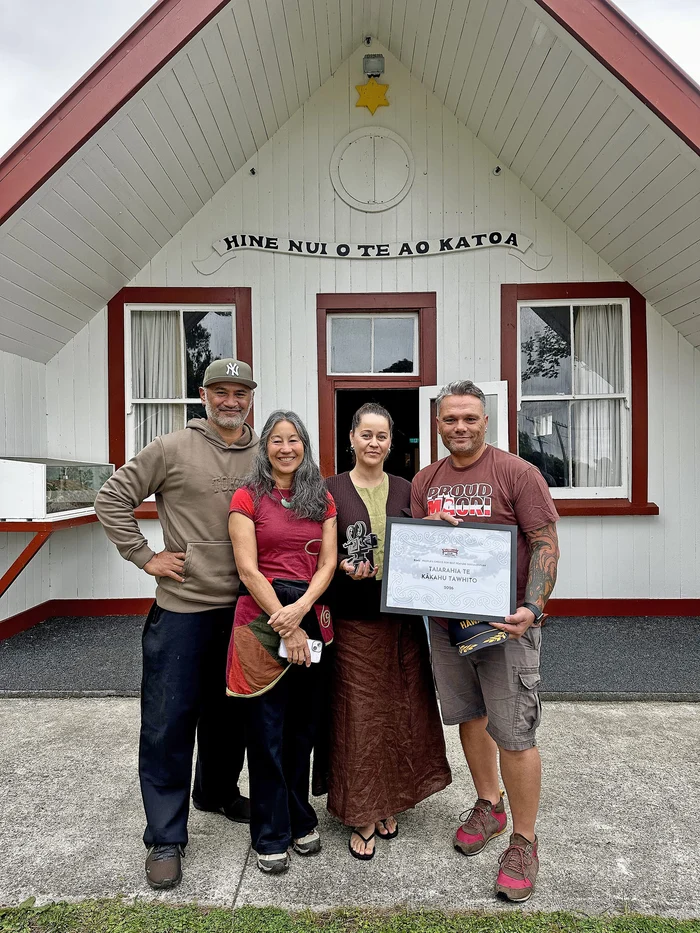
Co-producers and directors Day and Riini were genuinely surprised by the win, saying it was unexpected but very rewarding to know they had made something that people loved.
“When Kim called us to say we had won, we were both shocked and ecstatic. We woke everyone up in our wharenui to tell them and the whole whare clapped and cheered,” said Day.
“It’s really a testament to the many kaikōrero and uri who shared their stories and experiences with us so that we could create Taiarahia: Te Kākahu Tawhito.
The feelings she hopes audiences will come away from the documentary with are many.
“There are so many varying emotions I think the viewer will experience … laughter, tears, anger, shock. I think the story itself will capture the attention of the audience. If there’s one thing I would love our audience, especially Māori, to take away from this documentary, it would be the power of unity, and that we can achieve anything as iwi and hapū when we come together to fight for what we know is right, particularly as we continue to navigate this current political climate.”
She also wants it to serve as a reminder to Ngāi Tūhoe that kotahitanga is needed now more than ever, and that there’s much to be learnt from the stand their uri took 40 years ago.
Riini hopes people come away with the knowledge that standing up for what is right is a great thing.
“Learn some of the history behind the land we live on, it’s all important, and just because someone in a suit and tie makes a decision, that doesn’t mean it’s the right one,” he said.
Having the support of Ngāi Tūhoe at the screening was special for them both.
Webby feels proud for Day and Riini.
“Although Wikitoria is an experienced journalist and Nicholas is experienced in the film industry, this is their first documentary.”
She also feels pleased for their main interviewees, Tame Iti and Harata Day, the people of Te Māhurere hapū and others who supported the documentary.
“It was great to bring to life this piece of history about standing up for what you believe in; for whenua and native forest preservation and the power of communal action.”
As well as the feature documentary, a seven-part documentary series was made for RNZ Digital, which will screen later this year.