
Opinion: Secure housing is key to community stability
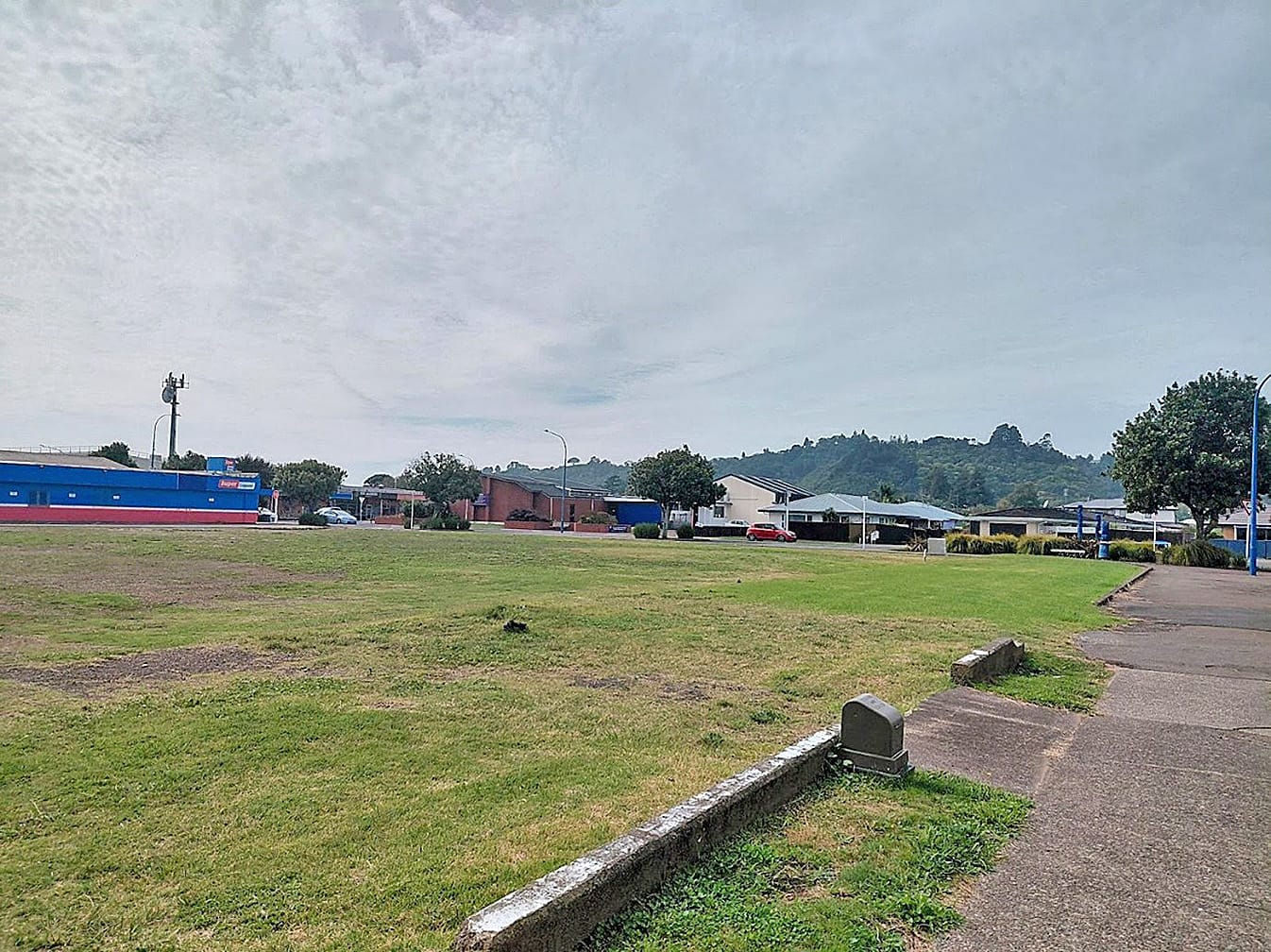
CANNED: Fifty-three homes were planned for this site on King Street, Stewart Street and Washer Avenue, but have been cancelled.
.
■ Whakatāne should be a stable place to call home. Stability would support us to build deep and lasting connections with our neighbours, our local schools, churches, and sports clubs, writes Phoebe Carr, Whakatāne Housing Action Reform Enthusiast (WHARE). It would keep our families and friends in the region. It would create the conditions for us to be able to thrive in our communities.
Sufficient state housing would create stability for people by adding more affordable healthy homes to the rental market. This would allow people to fully participate in society as their basic need for security would be met.
Abundant housing supply would help lower rents, and in turn lower the cost of living. The builds would create jobs, particularly for tradies. And money saved on social issues and rents and gained from jobs would move around the local economy.
Successive governments have failed to build enough state housing, and the current government has cancelled planned builds. We are seeing the impact of this on our community in the form of homelessness, social issues, and community members leaving overseas for better opportunities.
In Whakatāne, as in all towns across Aotearoa, homelessness has become a regular sight on the main street. However, it is just the tip of the iceberg of the housing crisis.
The housing register shows that 234 households in Whakatāne are on the housing waitlist as of September 2025.
Most of those on the housing waitlist are “considered at risk and include households with a severe and persistent housing need that must be addressed immediately”.
Figures from Stats NZ show that 939 people in our Whakatāne district were recorded as experiencing severe housing deprivation.
There are likely many more unrecorded. This means they do not have secure housing but shelter in overcrowded houses, sheds, and in cars throughout our town.
These issues are not limited to Whakatāne. In Ōpōtiki, 87 households are on the waitlist as of September 2025, and 453 people are known to be experiencing severe housing deprivation.
In Kawerau, 54 households are on the waitlist as of September 2025, and 396 people are known to be experiencing severe housing deprivation.
In her article last week (Beacon, March 25) Dana Kirkpatrick stated that 375 households in Whakatāne, Ōpōtiki, and Kawerau are on the housing waitlist and that this was an improvement on 2023 numbers – she is correct.
Between 2020 and 2023, the Labour government accelerated state housing builds and funded large-scale developments and social housing supply.
The completion of those builds helped to reduce the waitlist.
What Ms Kirkpatrick did not mention is that under her government, planned Kāinga Ora builds – which would have provided 3500 homes nationally – have been cancelled and Kāinga Ora property is being sold off.
Over its term, the current Government has cancelled 72 Kāinga Ora state homes in Whakatāne, and eight in Ōpōtiki.
These builds had already been planned and consented. This Government also plans to sell off public property that had been bought for housing developments, making housing even less available to our communities.
Property like this sold in Auckland at a loss; there are losses expected on land for sale in Tauranga and Wellington, too.
As of October 31, 2025, nine state housing properties were for sale in Whakatāne and there was property for sale in Murupara, too.
The lack of public housing adds pressure to our public institutions and limits people’s capacity for an independent life.
People living in overcrowded or damp homes get sick more often. People in fixed term or insecure rentals must move more often, often from town to town.
The effect of this insecurity is seen in hospitals, schools, and Work and Income offices across the district.
Another factor that may have had an impact on housing waitlist numbers is the record numbers of Kiwis leaving the country, over half moving to Australia.
There, they stand a chance of getting a job, or a significant raise, and paying off a mortgage. These people include nurses, teachers, police, and trades people who cite cost of living - including the cost of housing - as a major push factor.
The construction downturn over recent years is another push factor for tradespeople migrating to Australia.
There simply has not been enough work here, which is nonsensical, as there is so much mahi to be done to fix the many issues we have. Recent articles in the NZ Herald state that the downturn in construction has meant young people are struggling to find apprenticeships in the trades as firms don’t have enough contracts to take new people on.
The planned builds would have been housing 72 households by now if they had not been cancelled.
Local builders, electricians and plumbers would have had more work over the past couple of years, and the investment would be starting to benefit us all, lowering social issues caused by insecure housing, and building up community resilience to meet whatever we may face in the future.
Why should it be the state building housing? Because housing is a basic human right and it is the state’s responsibility to meet those needs.
But, if a slightly less idealistic answer is required: state investment in housing would create direct fiscal savings in healthcare and the band aid quick fixes like the extremely expensive emergency housing motels.
Stable housing would increase education outcomes for children and help adults sustain work.
Secondly, the state has the power to build at a scale no one else can. This lowers costs as the average costs of building materials decrease with an increase in total output, and fixed costs like machinery can be spread over a larger volume of builds.
Large scale infrastructure could be integrated more cost effectively, too.
Furthermore, the state has the power to plan and manage long term building projects which would boost confidence for construction firms allowing them to predict labour requirements, employ more people, and for tradespeople to take on apprentices.
Finally, we are the state. Building state housing is investing in public assets we all own together. It is an investment in our collective wellbeing that we would all benefit from, and who knows, you might even need it yourself one day.
I am part of a local group called WHARE and a national group called Public Housing Futures. We are calling on decision makers to ensure that everyone in the Eastern Bay has a decent and stable home by committing to building enough state housing to end the waitlist, and to build the homes they have cancelled.
On Thursday, April 9, we will be collecting signatures for our petition at the public hui. We invite you to come along to Knox Church from 5pm till 7pm for a solution-focused discussion and to take action on the housing crisis.
If you can’t come along, find our petition at https://our.actionstation.org.nz/petitions/keep-building-state-housing-in-the-eastern-bay-of-plenty