
Opinion: Planes, trains and automobiles in a world without oil
.
■ On April 15, 2025, the Beacon published an article of mine titled Planes, trains and automobiles in which I addressed the issue of New Zealand’s dependence on liquid fuels for transportation and said “I want the readers of this column to think very hard about what would happen if, all of a sudden, the oil got turned off to our country and trucks couldn’t run”, writes Victor Luca

I described the situation New Zealand could face if geopolitical tensions continued to deteriorate. That column can be viewed through the Beacon’s electronic subscriber’s page or on my website and this address: https://www.votevictorluca.com/post/the-beacon-mayor-talk-contributions
For several years proxy wars have been raging in the Ukraine and the Middle East. The Middle East is an area of the world that is responsible for a big chunk of global oil production. I touched on these issues in my November 29, 2024 column ‘Wars and Woes and in my reports when I was mayor.
In my first mayor’s report of 2024, I wrote, “So far, the Suez Canal remains open and the oil keeps flowing out of the canal and the Strait of Hormuz, which is the world’s most important oil chokepoint. Since energy makes the world go around and the energy we mostly use is fossil fuel-based, problems in the Suez Canal and the Strait of Hormuz can mean serious increases in oil price and as a consequence more inflation.” I doubt it was taken seriously.
Over my time in local government, I talked a lot about energy security and resilience. Hence, my being a strong advocate for solar development and electric vehicles. It all seemed to fall on deaf ears.
Although I would love to see the world make an immediate transition away from fossil fuels to clean energy systems, the reality is that this can’t occur from one day to the next.
The transition must be brisk and orderly, not abrupt and chaotic. However, abrupt and chaotic looks like what we are going to get because the hostilities in the Middle East are turning extremely ugly.
Regrettably, my fear that the Strait of Hormuz would be closed or partially closed and oil infrastructure destroyed is being vindicated.
In a way there is nothing very novel about any of this. I am old enough to remember the oil shocks of the 1970s.
The first of these occurred in 1973 and was precipitated by the Arab-Israeli war in the Middle East. This was followed closely by the second oil shock of 1979, this time resulting from the Iranian revolution. It was the oil shocks of the 1970s that provoked the Think Big projects of the Muldoon era.
In retrospect, you could say that Muldoon was on the right track.
The projects were a valid response to a real situation. Somehow since then we managed to foolishly lull ourselves into a false sense of energy security.
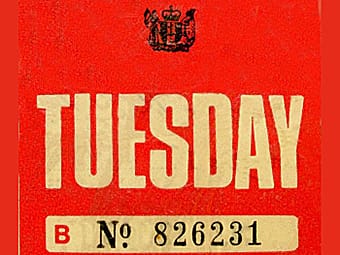
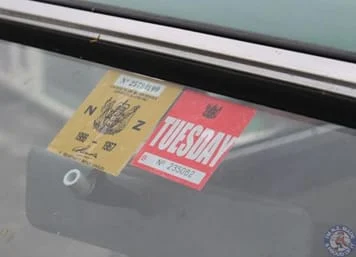
During the oil shocks of the 1970s, I remember legislation being introduced to instigate carless days. A driver designated one day a week to go car-less and attached a sticker to their windscreen. This scheme turned out to be an abject failure resulting in negligible savings, although it caused considerable angst and was eventually scrapped. If the scheme did anything, it may have heightened, albeit temporarily, our awareness of the finite nature of Earth’s resources.
Tensions over oil were to escalate again when Iraq invaded oil-producing Kuwait in the early 1990s and the United States, under the leadership of George Bush senior, and allies, concocted an excuse to invade Iraq that was based on bogus intelligence.
Common jokes going around at the time included “how could our oil get under their sands?”; “The only thing we have to fear is Bush himself”; “Read between the pipelines” and so forth.
Alan Greenspan, former chairman of the US Federal Reserve, writes in his book, The Age of Turbulence, “I am saddened that it is politically inconvenient to acknowledge what everyone knows: the Iraq war is largely about oil.” I have recently made a similar argument on my Substack that this war is about oil today also (see https://vittorioluca.substack.com).
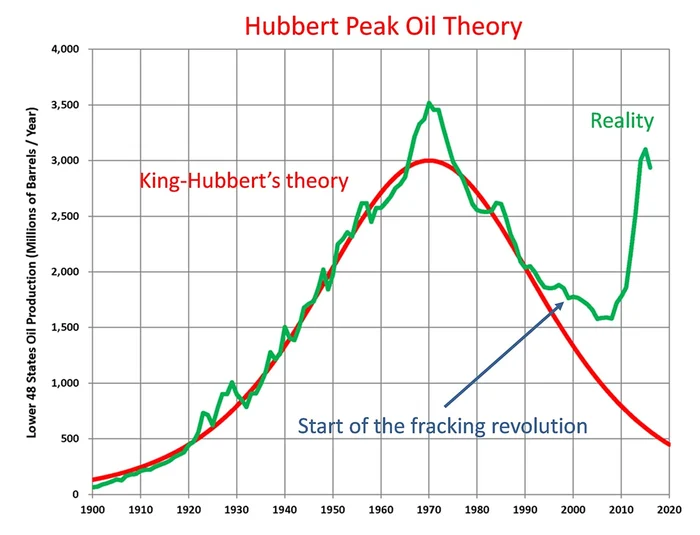
In 1956, Marion King Hubbert disclosed to the American Petroleum Institute that oil was not infinite and that a heightened initial period of consumption would peak in the 70s and this was likely to be followed by a decline in availability due to the finite nature of oil resources.
The curve for oil production over time would have the shape of a bell. In a sense he emphasised the obvious, that all good things must come to an end as would the era of easy oil.
Now, let’s turn to the present day situation which our Governments have seriously messed up because they have not taken energy security seriously enough. Having spent over two decades conducting research in the nuclear area, I gained an early appreciation of energy security. France was the poster child in this regard. A
s a nation with few energy resources, such as oil and coal, it chose to turn to nuclear energy and it was the French government that took the lead.
In critical areas like energy, it is a government’s job to do what industry can’t or won’t do.
So the French government embarked on a massive program to build nuclear reactors.
The French built more than 60 reactors in under 30 years and France became the biggest exporter of electricity in Europe.
We are all by now aware that in 2022 the Labour Government allowed the Marsden Point oil refinery to be shut down and converted into an import-only-terminal.
The Marsden Point refinery expansion was one of the Muldoon-era Think Big projects. The refinery was privatised in 1988 by the fourth Labour Government.
The reason the privatised refinery was shut down was primarily because of low refining margins, declining economic viability and competition from larger, more efficient Asian refineries. Typical neoliberal short-term thinking.
Ultimately, the decision to close the refinery was up to the company that owned the refinery and the major shareholders, being Z energy, BP, and Mobil. I would argue that the refinery should never have been sold.
However, the Government could have stepped in and done something under banner of national security to prevent its closure. It didn’t do it. A country without energy is not a country at all. Energy security is vital.
New Zealand produces about 20M barrels of oil per year and uses about 50M barrels per year.
Since we relinquished our refining capability, the oil we do produce is sent to refineries in South Korea and Singapore and then liquid fuels imported. So if the oil spigot gets turned off, we are pretty much screwed.
It is my understanding that we have only about 23 days of fuel in storage at the moment and commitments for 60-70 days more.
Even if storage were twice what it actually is, there is a serious risk that this would be sufficient because the current hostilities in the Middle East have no defined end point.
As I pointed out in my April 2025 column, we need diesel to move goods around, including food.
We also need diesel to operate machinery for our industries including farming, agriculture, milk processing and timber.
The current Government added insult to injury when it comes to transport resilience by making it harder for folk to buy electric vehicles. They effectively killed the transition to EVs by removing subsidies. I think that only 3.0 percent of New Zealand’s current light vehicle fleet runs on electricity. To be such laggards when we have such a clean electricity grid is tragically stupid.
Aside from transport security, there are many other good reasons for moving to EVs. Another of those is the absence of tail-pipe emissions.
Air pollution is responsible for significant mortality in New Zealand and most of that pollution comes from internal combustion engine vehicles. You’ve got to love how we bend over backwards to reduce the road toll but do nothing to reduce pollution, which kills far more people.
Therefore we have been dealt a double whammy from our most recent governments, who have had a decades-long warm embrace with neoliberal economics that is characterised by an adoration of “The Market”.
All very well until The Market fails, especially in critical areas like energy.
Without energy everything stops, including food production, water treatment plants and so on.
And speaking of market dysfunction, it’s not like our electricity market is really working that well either.
When are our governments going to learn that some things are vital for the functioning of a country and they can’t be left to the private sector or foreign interests? At the moment the main political parties are engaged in the blame game.
The reality is that both major parties have let us all down.
The short-term and blinkered thinking of economists and bean-counters can be very dangerous for a nation.
As far as I am concerned an ideological insistence on privatising critical infrastructure is sheer folly and is something I am vehemently opposed to.
As far as our council is concerned, during my time I advocated for a shift to electrifying its fleet of cars and twin cab utes.
I pointed out in 2024 that you could have bought an LDV eT60 for $41,000. There were no takers on that one. The only EV added to the council fleet during my term as mayor was the EV I bought.
It is a real tragedy that we continue to live in a world almost totally dependent on oil. It has been clear for decades that we need to get off the stuff as soon as possible in order to slow down global warming.
We also need to get off it because it isn’t infinite. It is about time we started to think more strategically in New Zealand.
Finally, I would like to remind people of another piece of Think Big infrastructure that we got rid of and that is the Motunui Synthetic Petrol Plant in Taranaki, which converted Maui natural gas into petrol. What a shame. We had one of only two such plants in the world.
The present crisis has not fully hit us yet. The war in the Middle East could be protracted and escalate significantly. Iran has no reason to back down after it was attacked by Israel and the United States, an attack that has been on the cards for 40 years and which Iran has been preparing for.
The world is in turmoil and if I had to guess, I would say that things could get a hell of a lot worse. Israel has probably in excess of 200 nuclear weapons, which is a lot fewer than the US but still enough to cause a lot of problems for the entire globe, which includes New Zealand, the most geographically isolated democracy in the world.
Russia and China are also nuclear armed and are members of the BRICS alliance, as is Iran, although the three have not signed a mutual security arrangement. They both have significant interests in not seeing Iran wiped off the map.
In 2024, as the mayor, I wrote to the Prime Minister to ask him to do all he could to avert nuclear war. I got no answer back. Surprise, surprise.
So, although the fuel issue is serious, it is not the only problem that the Middle East situation could cause for all countries. Global economic collapse is a distinct possibility.
At the very least, inflation is likely to increase significantly and that means more cost-of-living pressures for all of us.
In my view, the Americans have been handed their eviction notice by the Iranians.
Get out of the Middle East and take your bases with you.
Just to repeat what I have been saying for years, it is time to focus on critical infrastructure and keeping things going. It is not time for spending on frivolity.
Finally, I thoroughly recommend the 2016 book When Trucks Stop Running – Energy and the Future of Transportation by Alice J. Friedemann.
I will make a more complete version of this article available on my webpage.