
Opinion: Little kiwi and the Treaty
.
■ With the coalition government’s ongoing efforts to review Treaty of Waitangi clauses and obligations in many pieces of legislation, this is a great time to learn a little more about our founding document. Is it important and, if so, why, asks independent historian Tanja Rother
Many books have been written about the Treaty of Waitangi.
The Ōpōtiki Library, Te Tāhuhu o Te Rangi, lists nearly 50 titles, each looking at Te Tiriti in different ways: Māori and Pākehā perspectives, past, present, and future of the document and an illustrated history. Where to start?
Well, here are three suggestions. First, for the little ones there is Nikki Slade Robinson’s The little kiwi and the Treaty (David Ling Publishing, 2016, 15p.).
This is a children’s picture book written and beautifully illustrated by Ōhiwa local Nikki Slade Robinson.
Listening to Koro's (granddad’s) story, the little Kiwi learns about identity, family history, treaties and living alongside other groups.
Part of the Little Kiwi series, it has te reo Māori phrases woven through it. A gem.Next up is the first bilingual cartoon about our founding treaty.
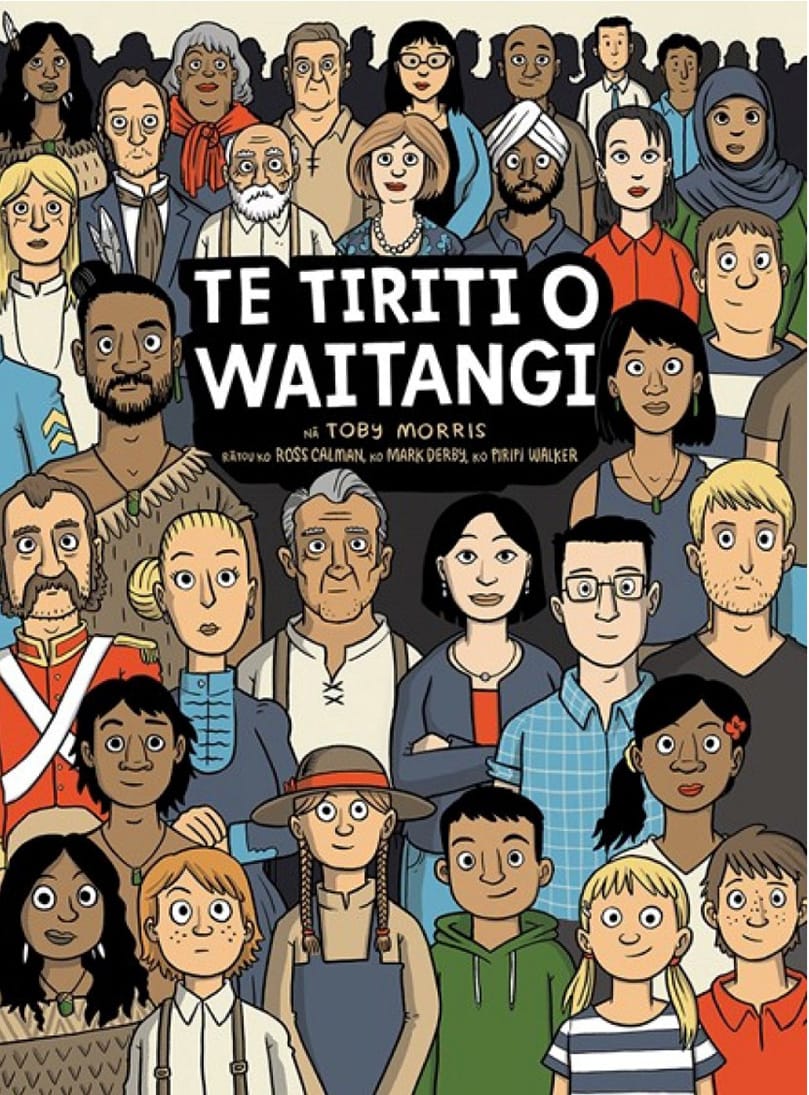
Written by Māori and Pākehā authors Ross Calman (Ngāti Toa, Ngāti Raukawa-ki-te-tonga, Ngāi Tahu), Mark Derby and Piripi Walker (Ngāti Raukawa), Te Tiriti o Waitangi/The Treaty of Waitangi (Lift Education E tū, 2019, 16p.) takes a fresh and innovative look at the Treaty.
The illustrations are by Toby Morris, an award-winning New Zealand cartoonist. This is a flip book – one way the text is in English, turn it upside down and you have a te reo Māori version.
I could not agree more with book reviewer Rachel Moore suggesting that “this book should be in every home in the country. It should be in every school and public library and given to every new migrant who arrives to live in New Zealand as part of a welcome package.”
It is a super-accessible, straightforward and concise read for anyone to get a basic understanding of what happened before and after Te Tiriti was signed.
As Toby, the main character, says at the end of the English version: “It wasn’t always the nicest story, but we can’t pretend it didn’t happen. If we’re honest about our country’s past, we can try to fix some of the damage that still affects us today. We all want a country that’s fair for everyone.”
Finally, for those who would like a deeper dive, especially, Pākehā: Becoming Tangata Tiriti. Working with Māori, Honouring the Treaty by Avril Bell (Auckland University Press, 2024, 140p.).
This book explores the experiences and insights of 12 ordinary non-Māori New Zealanders whose work life has exposed them to the Māori world.
Their stories of learning about and from Māori, and about themselves and their own cultural backgrounds, are based on everyday experiences and work practices.
As such, this book is about barriers, mistakes, and successes in building relationships with Māori.
And about the “power of learning through experience and a gentle and gradual process of change”.
In the opening chapter, Bell quotes from “The unseen world”, an article written by Pā Henare Tate (Ngati Manawa, Te Rarawa) in 1990: “We shake hands. I say, ‘Kia ora’, and unless you’re Māori or we are in a Māori setting, this is usually followed by a conscious effort on my part to contain the urge to press noses with you.
“For a Māori, the hongi is a physical expression of our meeting on a spiritual level.
“My wairua (spiritual self) greets yours. (…) The Māori in me says, ‘Go ahead,’ but somehow the conventions and the times in which we live dictate something else. There is an uneasiness. I see it in your eyes. I feel it in your hand – your wairua and mine do not sit comfortably together.
“We have merely acknowledged each other’s presence. Even after 150 years we still choose merely to co-exist. Come, feel the warmth of my nose.”
■ Tanja Rother is an independent historian and writer based at Ōhiwa Harbour. Email: [email protected]