
Council faces questions over waterfront
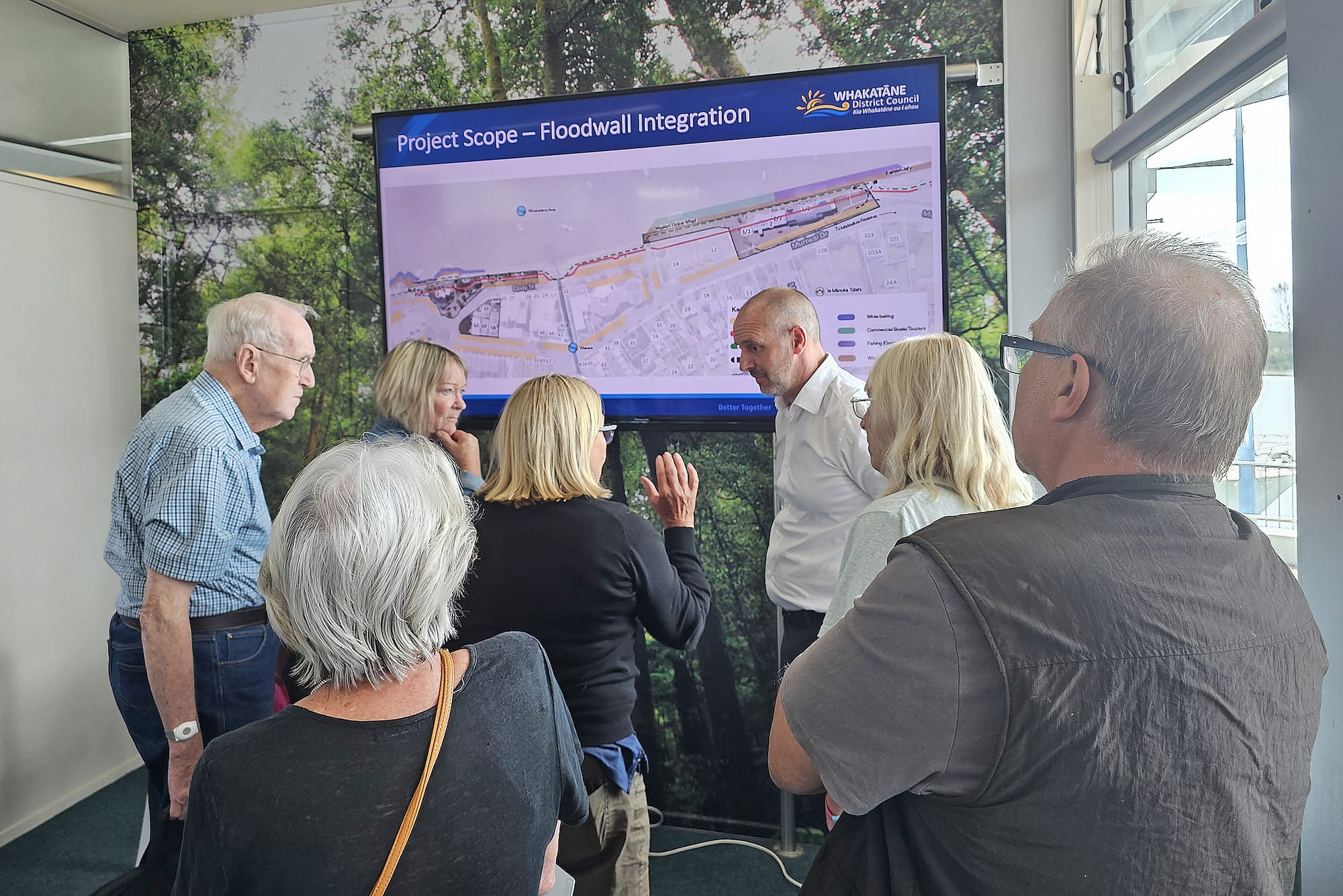
Project manager Ian Morton explains the floodwall integration project to members of the public on Monday. Photo Diane McCarthy E5904-1
Diane McCarthy
Whakatāne District Council staff and contractors have been available this week to answer questions about a project to integrate the new floodwall into the town centre.
The work is expected to take place between November this year and March next year.
Four community engagement sessions were held at the old isite building on Monday and yesterday, with a fifth expected to be held in the council chambers last night. Between 30 and 40 people attended the first session on Monday.
Questions were asked about the cost of the project.
This consists of $3.75 million from central government, which would need to be matched by $3.75 million from existing funding allocated in the council’s long-term plan in 2024.
If the spending is not matched, that funding will need to be returned.
Options for spending additional ratepayer funds allocated to the project are also incorporated in the engagement.
The council plans to demolish several buildings it owns in the central business district to create a temporary open space area. It has options for the old isite building and for the area around the soon-to-be moved Whakatāne Sportfishing Club.
“Are you not aware of the fact that there is plenty of opposition to the existing long-term plan and people are saying ‘sorry, no’ to any more expenditure?” asked former Whakatāne district councillor David Dowd, who attended.
Project manager Ian Morton said if that was the feedback from the consultation, it would be captured and taken into account.
“What we would have to do is give the $3.75 million back to central government. That is an option, but regardless of what happens you will have to spend some money.”
He said there was not a do-nothing option as the moving of the Whakatāne Sportfishing Club alone would require quite a reasonable amount of money just to tidy up the carpark and put in some new stormwater infrastructure.
Some councillors had asked for a do-the-minimum option to be included, which people could submit on.
He also questioned why the Bay of Plenty Regional Council, which is funded through central government to build the flood wall, was not carrying out the work.
Strategic property manager Vanessa Fergusson said although the regional council was being funded by central government to replace the floodwall and reinstate anything they damaged, that funding did not include public amenity mitigation of the way it looked.
The public has until March 27 to view and submit feedback on the riverfront integration plans via its consultation website, koreromai.whakatane.govt.nz/riverfront.
This feedback will be presented to council members for their consideration when they decide on options for work to be undertaken.