Taiarahia – the mountain that was saved
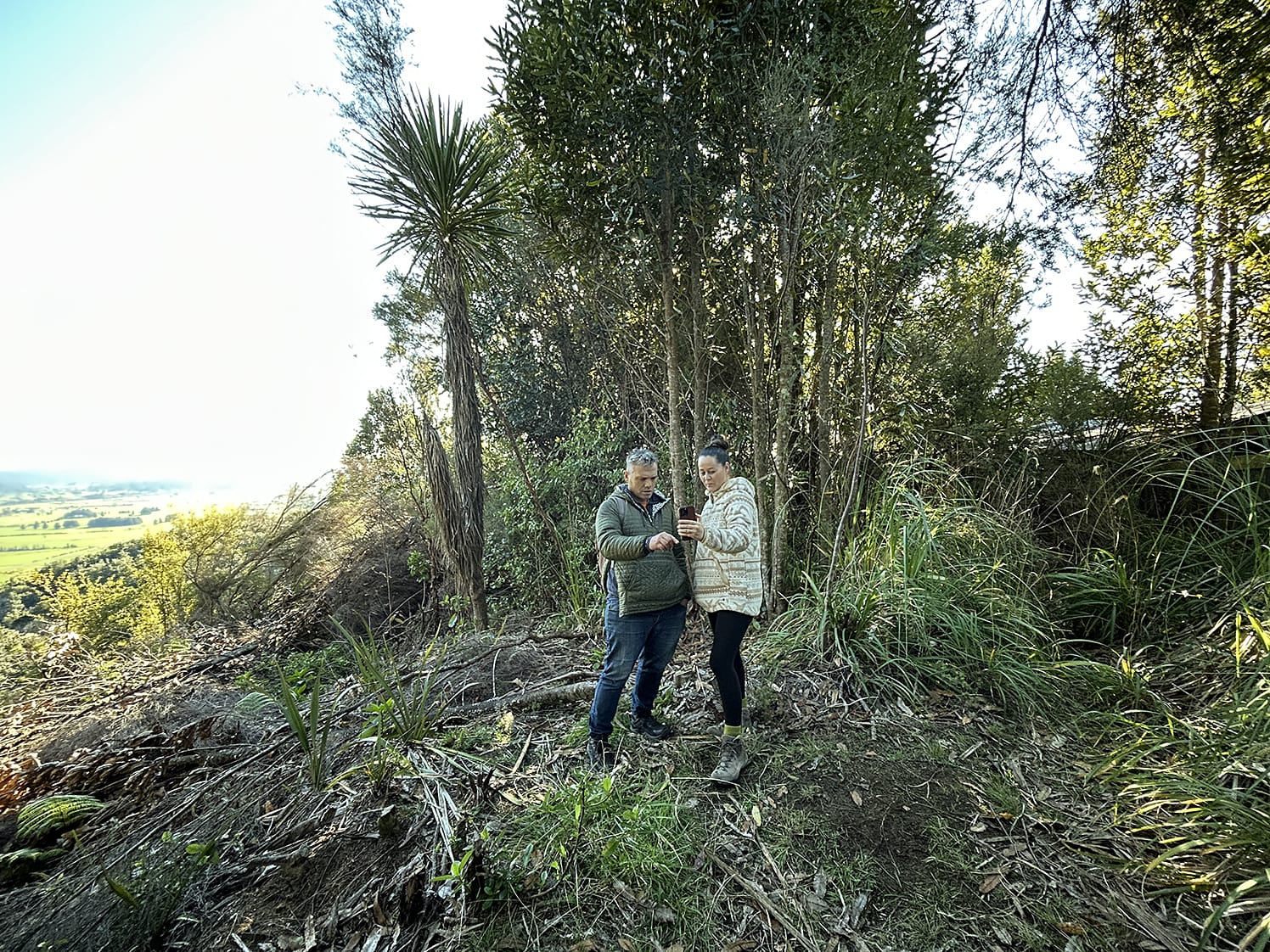
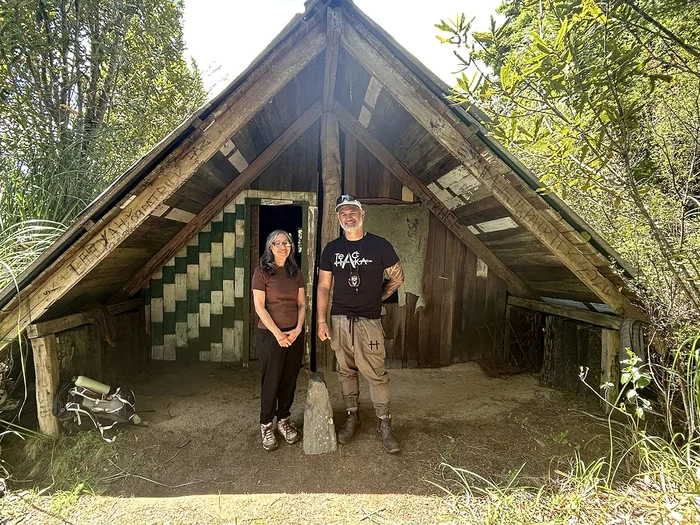
<span style="white-space: pre-wrap;">historic connection: Co-directors and co-producers Nick Riini and Wikitoria Day on Taiarahia. Photos supplied</span>
.
Kim Webby reflects on a powerful story of protest, unity and protecting Taiarahia.
This month a powerful documentary about our neighbours within Ngāi Tuhoe, has its premiere at the Māorilands Film Festival in Ōtaki, near Wellington.
The documentary, Taiarahia: Te Kākahu Tawhito, explores an event 40 years ago when members of Te Māhurehure hapū, occupied their sacred mountain Taiarahia for six months, and won their battle against plans to rip out native bush and replace it with pine trees.
I was honoured to be asked to executive produce the documentary, alongside co-producers and co-directors Wikitoria Day and Nicholas Riini.
This uncle and niece team are both Te Māhurehure descendants, with whānau who were directly involved in the occupation.
Wikitoria’s mother Harata Day, was the on the ground organiser, while Tame Iti led the occupiers on the maunga, an occupation that carried all the conflicts and controversy worthy of any powerful protest action.
The first the people of Te Rewarewa Marae knew of the plans to plant pine trees on about half of the 1030-hectare Taiarahia range, was when Harata Day looked out her window and saw bulldozers clearing native trees on their maunga.
She immediately phoned her cousin, Tame Iti. By the time they mobilised, two of Taiarahia’s eight ancient pā sites had already been desecrated. Taiarahia is an area of deep historic, cultural and spiritual significance.
It is a touchstone for mana whenua to connect to their land.
Tasman Forestry was behind the plantation with a lease deal from the then Tuhoe Waikaremoana Trust Board.
The forestry would have covered both the Rūātoki and Waimana sides of the range.
Yet, the trust board had failed to consult with Te Māhurehure hapū who are directly below Taiarahia and most directly affected.
In a news report of the time, the board said it did not have up-to-date addresses for all of its beneficiaries.

Fiery hui took place and with the blessing of elders the occupiers climbed the maunga, just before Christmas 1985 and remained throughout summer and winter for six months.
Unable to proceed, it seems Tasman eventually gave up and went away.
The protesters had support from people from Tahiti and Rapanui, who came to Taiarahia in solidarity. Forest & Bird and Greenpeace threw their weight behind the occupation, along with local MP Anne Fraser and Pākehā scientists.
A scientific survey of flora and fauna revealed that Taiarahia was home to a tiny, rare orchid alongside North Island brown kiwi, long-tailed cuckoo or koekoeā, shining cuckoo or pīpīwharauroa, bellbird, harrier hawk, silver eye, grey warbler, morepork, fantail, kākā, North Island robin, kereru, pied tit, rifleman, tuī and whitehead.
The documentary uses cutting edge AI animation to show what might have happened during a massive weather event if pine trees had been planted and it is not a pretty sight.
This occupation took place when the Māori renaissance was in full swing.
The famed Te Māori exhibition was under way, ta moko was making a comeback, kohanga reo were in their early stages. Māori rights were being asserted.
This documentary shows a tiny hapū exercising its mana motuhake and standing up for its traditions, culture and whenua.
It shows that taking action can work, that collectively people are powerful. It feels like an important story to tell, when Māori rights, including those gained over the past 40 years, are being eroded by the coalition government.
A seven-part docu-series accompanies the feature length cinematic film.
The docu-series will screen on RNZ’s digital platform later this year.