East Coast shines at kapa haka
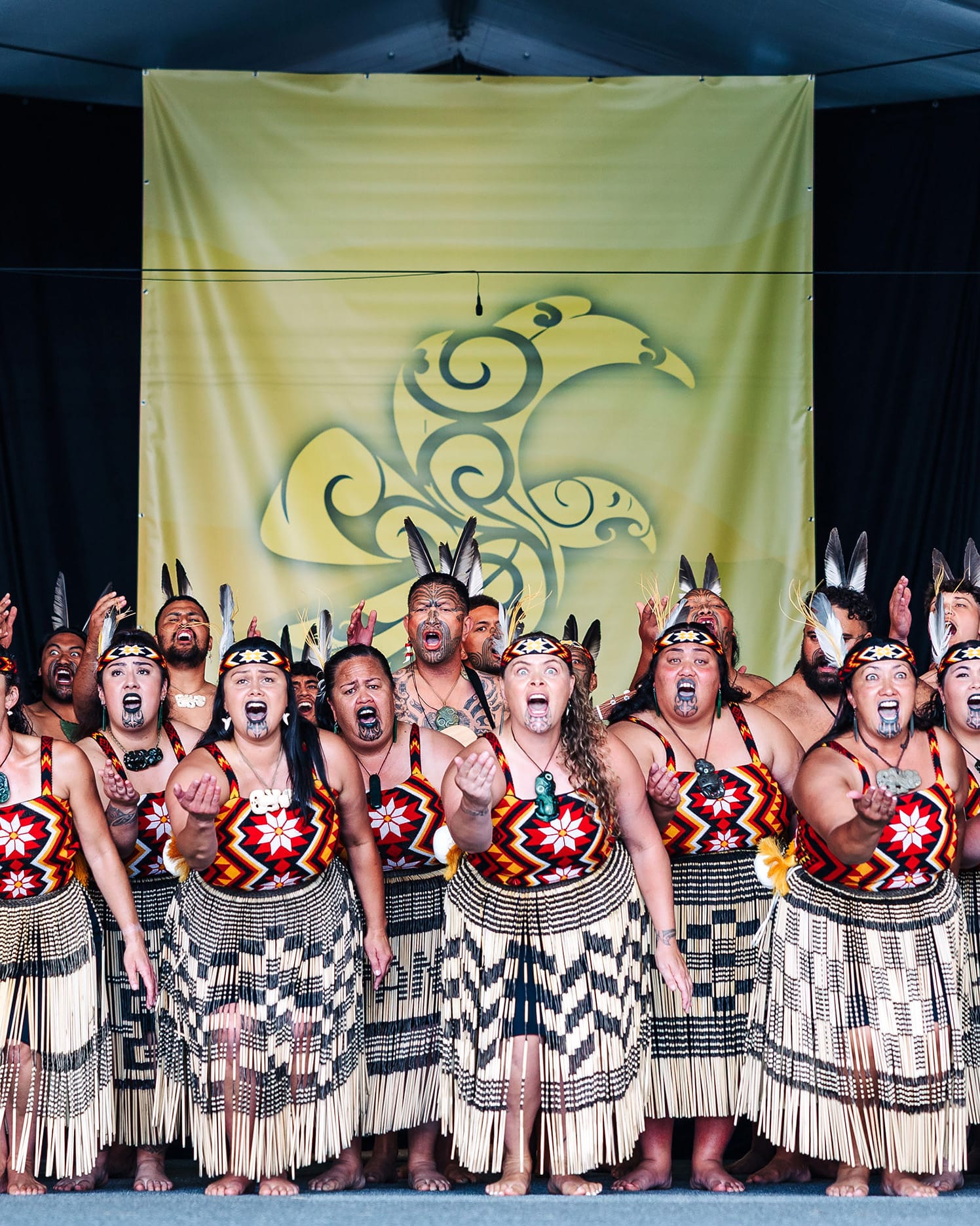
<span style="white-space: pre-wrap;">TAUMATA TRIUMPH: Te Taumata o Apanui take first place. From left: Wharerakau Stirling, Monica Waititi, Ngawai Parata, Rob Ruha, Erena Koopu, Hinerangi Wilson and Paula Simeon. Photos Erica Sinclair</span>
Tamara Herdman
Ōpōtiki and East Coast teams dominated the 2026 Mātaatua regionals held in Whakatāne over the weekend, taking out five of the six qualifying spots for the kapa haka national competition, Te Matatini.
Fourteen rōpū (groups) competed in Saturday’s competitive section, with the top six teams progressing – Te Taumata o Apanui (1), Ōhinemataroa ki Ruatāhuna (2), Ōpōtiki Mai Tawhiti (3), Te Kapa Haka o Te Whakatōhea (4), Tauira Mai Tawhiti (5) and Te Whānau- ā-Apanui (6).
On Friday, nine rōpū performed in the Te Moana o Toi “whakangahau” non-competitive section, with Ngā Uri o Awanuiārangi placing first, and equal second placings going to Ngā Taringa Pai and Ruatāhuna Korosins.
Held on February 27-28 at Te Kāeaea o Taiwhakaea, also known as Whakatāne Rugby Park, the two-day festival hosted by Te Whānau-ā-Apanui brought together 23 kapa haka teams from across the Mātaatua rohe (region).
The competition serves as the regional qualifying event for Te Matatini 2027 – the pinnacle of kapa haka in Aotearoa.
Thousands attended, and the atmosphere was electric.
Food stalls, merchandise tents and cultural displays lined the grounds, making it clear this was more than a competition – it was a celebration of identity, whakapapa and cultural excellence.
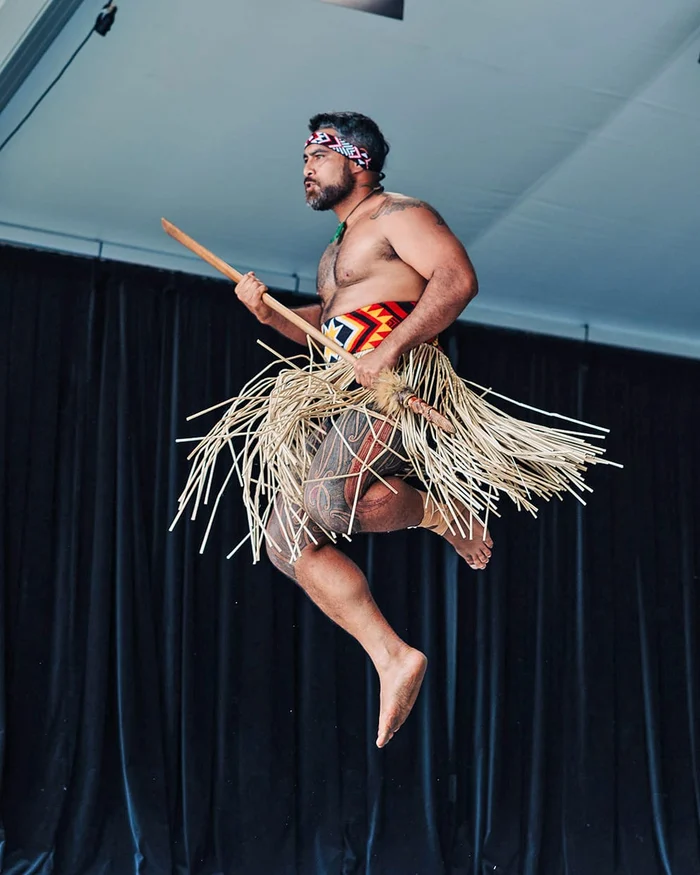
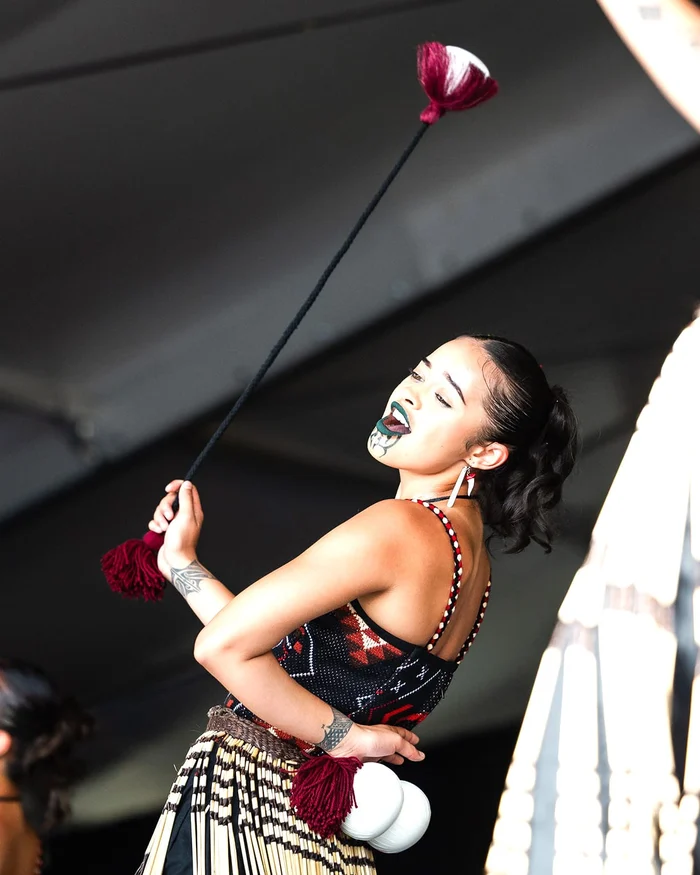
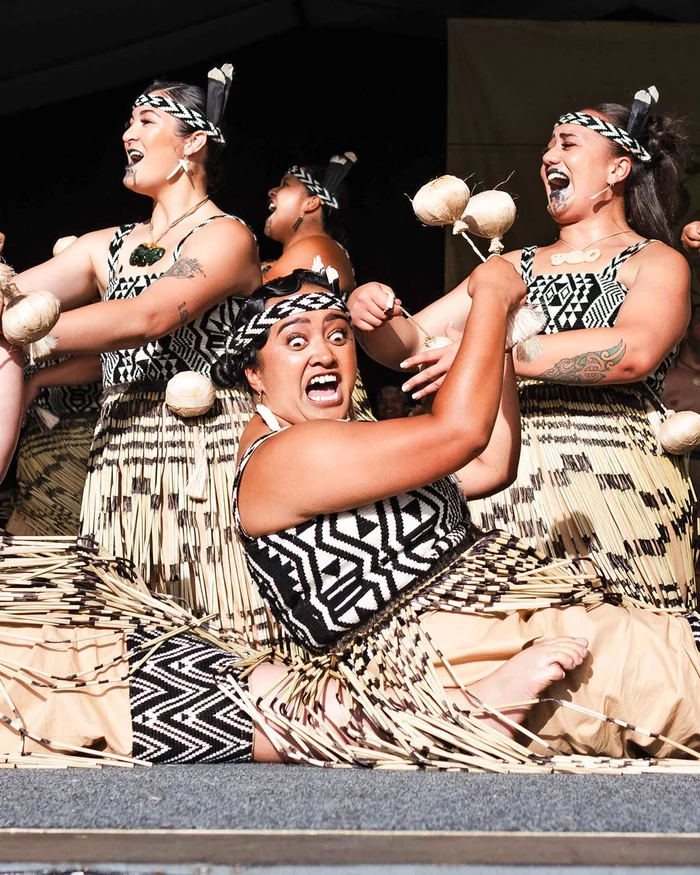
Each team performs a 25-30-minute set made up of waiata tira (optional choral), whakaeke (march on), whaikōrero (speech), mōteatea (traditional chant), waiata ā-ringa (action song), poi, haka and whakawātea (march off).
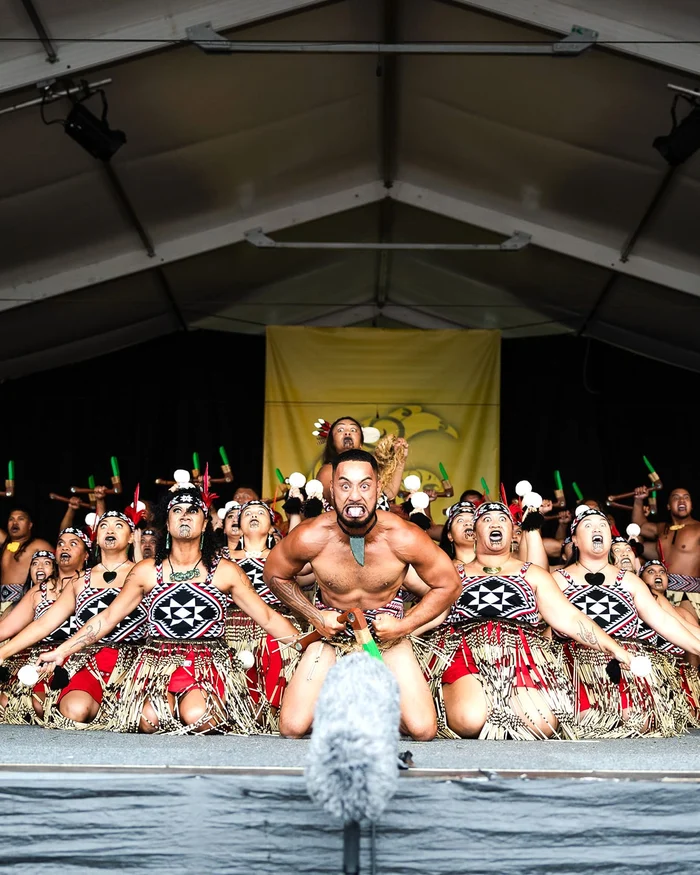
Teams are judged on these components as well as their reo (language), kākahu (outfits), kaitātaki wahine (female lead) and kaitātaki tāne (male lead).
Points are deducted for mistakes, but the teams are so polished that errors are rare. Teams give up months of weekends in preparation, and it shows in their discipline and unity.
Even if you are not Māori, attending a kapa haka festival is worth experiencing.
The manaakitanga (hospitality) is exceptional, and like opera, you do not need to understand every word to feel the mauri (energy).
Listening to mōteatea overlooking the hills behind Whakatāne unearths emotions from the depth of grief held in the land.
While established champions often draw the largest crowds, lesser-known rōpū bring their own unique energy and are equally compelling to watch. Each carries its own long-standing history and distinctive techniques.
The Mātaatua rohe was well represented on the final day of Te Matatini last year, with three of its teams placing in the top 12 nationally – a testament to the depth of talent nurtured here.
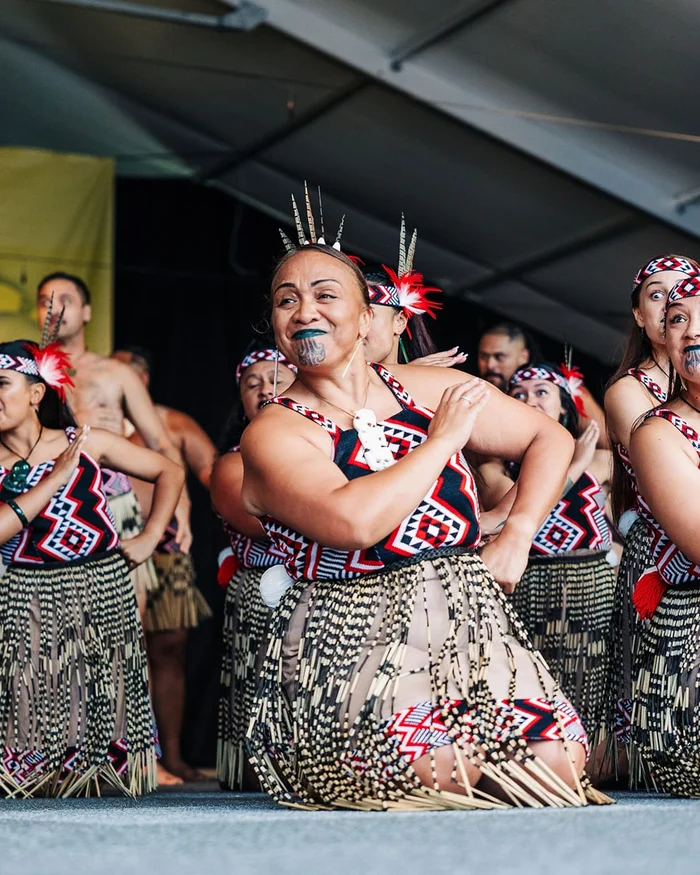
Defending regional champions Te Whānau-ā-Apanui returned to the stage following their win at the last regionals hosted in Tōrere, a victory that followed their Te Matatini 2023 national win.
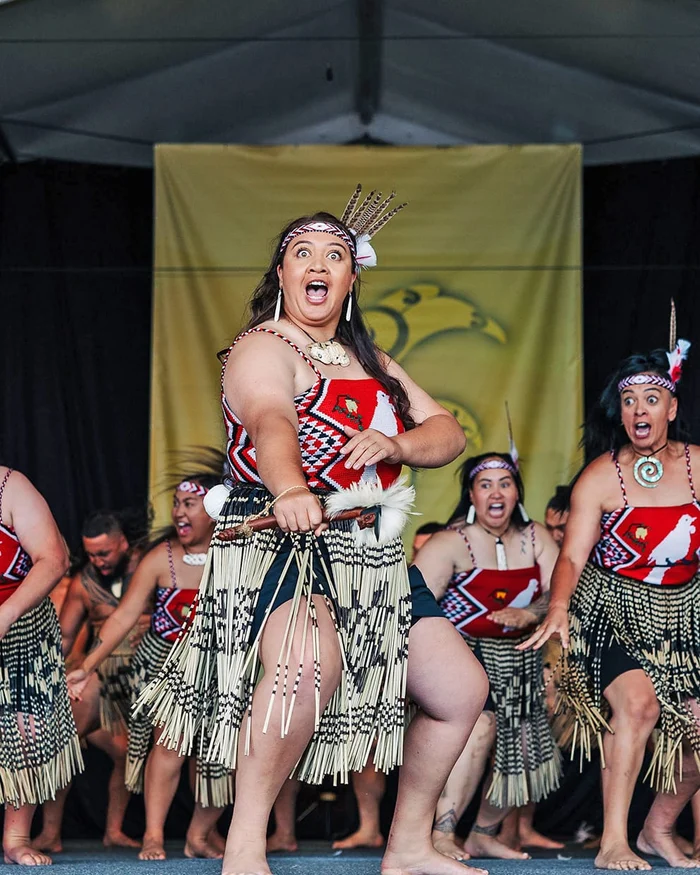
This year’s regionals winning team, Te Taumata o Apanui, is led by Ngawai Parata (kaitātaki wahine) and Kawana Waititi (kaitātaki tāne). Their tutors are Cilla and Rob Ruha, the acclaimed musician behind singles Ka Hao, State Highway 35 and Kalega.
One of the key kaupapa woven throughout Te Taumata o Apanui’s performance this year was kotahitanga – unity. Tutor Rob Ruha said the rōpū themes this year reflected deeply held values: “There’s always themes behind the things that we do.
“We have several kaupapa that are dear to our heart. One is the exploration of what kotahitanga means.
“A great example of kotahitanga is when the floods hit the East Coast, around a quarter of our team were affected by that.”
Heavy rain in January this year triggered multiple slips and surface flooding, closing sections of the Waioweka Gorge and parts of State Highway 35.
“We usually practice at the three marae between Whangaparaoa River and the Raukokore River –
“ Kauaetangohia, Pararaki (Te Maru o Hinemakahō) and Wairūrū Marae. Our families from Taupō, Ngāti Tūwharetoa, opened the doors to their marae – Waipahīhī and Rauhoto Marae – and we were able to continue practising, because what would normally be a 45-minute trip to rehearsals ended up turning into 11 1/2 hours via Taupō-Napier.
“When these things hit and we’re able to lean on relationships that we’ve built throughout the years, that’s the magic of kotahitanga operating at its best and providing the oranga (collective wellbeing) that we needed.
“Another theme was an exploration of things that return mana to our people, like the kaupapa of the poi was all about whakapapa.
“The kaupapa of the action song was all about remembering those who had invested in us over the many years that we’ve been doing kapa haka.
“Also focusing on things that return mana because in this world, especially recently, there’s been so many things that strip mana from our people.”
Behind the 40 performers in a team are often many supporters who make it all possible.
“Winning is the combination of many hands making light work, from seamstresses to cooks to people who went hunting to gather meat and kaimoana (seafood),” Ruha said.
“Everyone who was able to contribute their time and resources to come along to rehearsals, (so we can) deliver the performance that we gave.
“All our babysitters and all the supporters who maybe people don’t see, contributed to that win.”
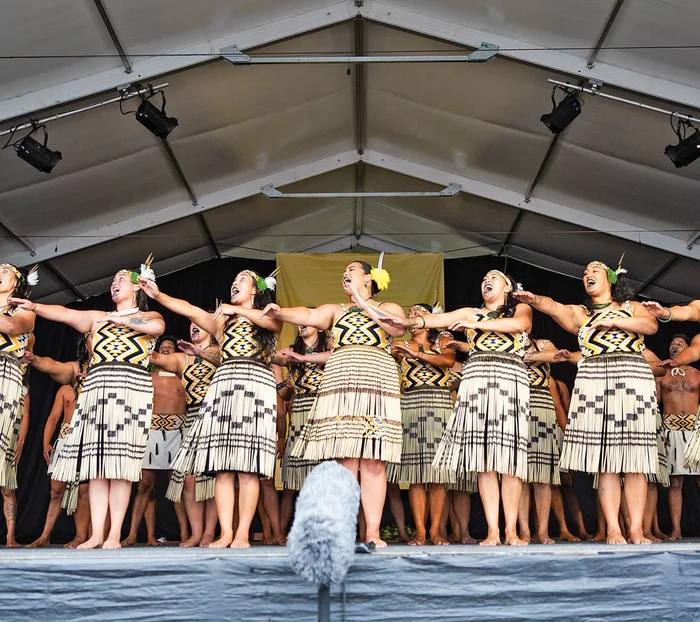
This weekend, Te Taumata o Apanui head to the Michael Fowler Centre in Wellington to perform with Rob Ruha and the New Zealand Symphony Orchestra as part of the Aotearoa New Zealand Festival.
“We’re really looking forward to it. We’ll be performing some of our items from the regional competition with the full orchestra.”
Last October, they performed at the China International Folk Art Festival in Foshan, China, in front of 500,000 people.
Over the next four months. 11 regional competitions are being held across Aotearoa and one in Australia. An estimated 5500 performers will take part as groups vie for a place on the country’s biggest kapa haka stage.
The Mātaatua rohe once again delivered a regional competition worthy of the national stage, with the high calibre of performance and unwavering community support ensuring the weekend was one to remember.
The 2027 Matatini competition will be held at Hopuhopu in Waikato, and the next Mātaatua regionals will be hosted in Tauranga in 2028.