From the ashes - Kelsey share story of survival and strength
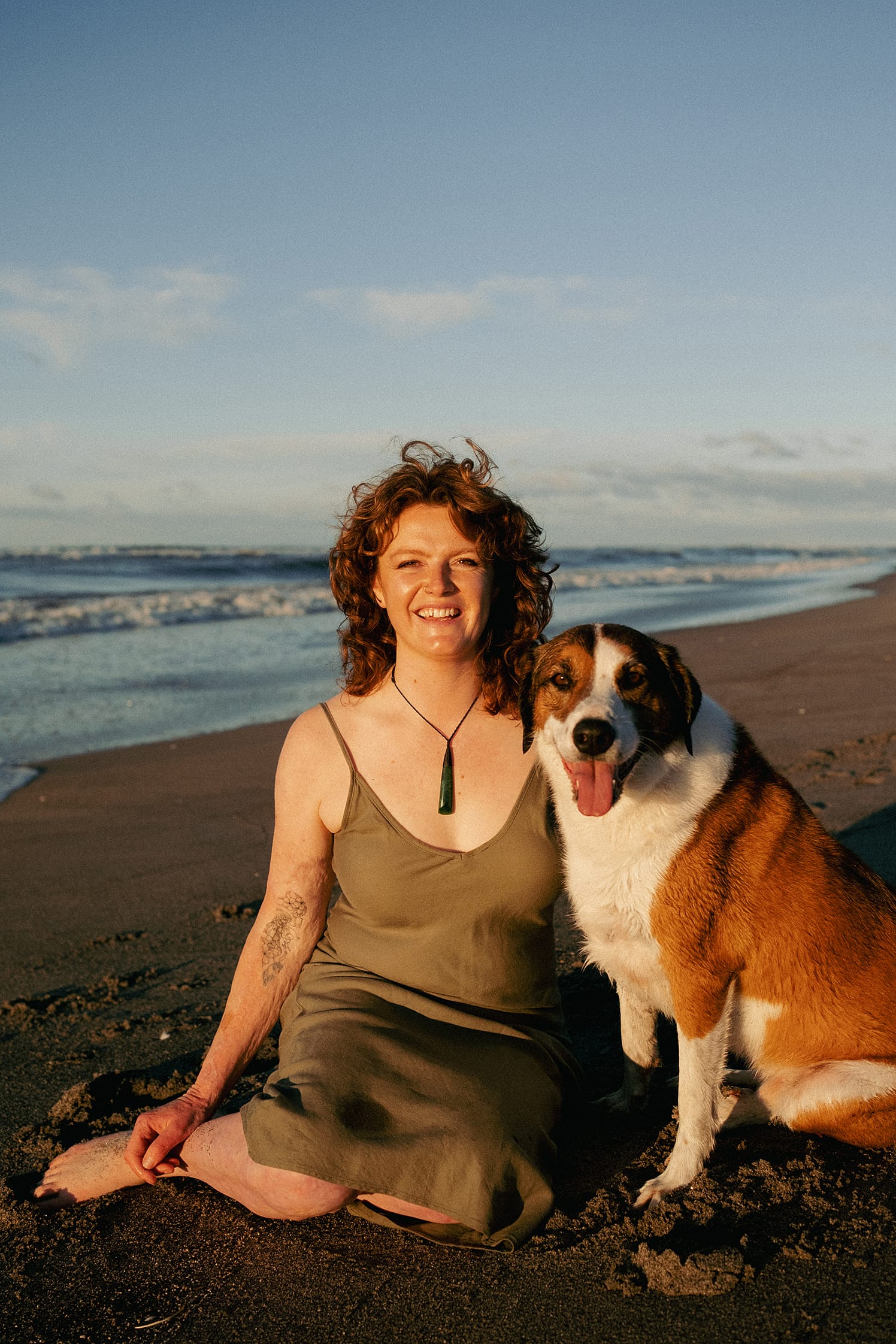
STORY OF ENDURANCE: Kelsey Waghorn, author of Surviving White Island and Everything That Came After, with her beloved dog River. Photo: Eilish Burt Photography.
Kathy Forsyth
Six years after the eruption of Whakaari White Island claimed 22 lives and injured 25 others, survivor Kelsey Waghorn is ready to tell her story – in her own words.
When Whakaari / White Island erupted on December 9, 2019, Waghorn had already completed more than 800 trips there as a guide with White Island Tours. Now 31, she says the time is finally right to share what happened – and what came after.
Her book, Surviving White Island and Everything That Came After, humorously opens with, “I am coming to you live from the jungles of Borneo.”
It’s an unexpected beginning to a story rooted in tragedy, but humour is one of the threads that carries readers through an extraordinary account of trauma, endurance and recovery.
Waghorn says a combination of encouragement, the winding down of court proceedings that have been ongoing since the eruption, and her own improved headspace led her to write the book.
“There was so much conflicting information in the early days, and everyone made assumptions,” she said. “It just didn’t feel safe any earlier. Now it felt like the right time – and [publisher] HarperCollins has been really supportive in making sure it was done the way I needed it to be done.”
Her story does not begin with the eruption.
In 2016, Waghorn was aboard the Peejay V when it caught fire and sank. All 53 passengers and six crew made it safely to shore. She was also guiding on Moutohorā when a visitor died after falling during a walk.
“As you’re writing, you realise, ‘this happened, and this happened’ — it almost doesn’t seem real that all of that happened to one person ... and before I turned 25,” she said.
Waghorn is clear that her book is her view.
“This is what happened in my life and for my family and is my point of view. Others will have their own version.”
About 40 pages in, she recounts the day that changed everything. A cruise ship had docked in Tauranga and, as usual, visitors opted for a guided tour of Whakaari.
“At the main crater, everything was as normal as ever,” she writes. It looked fine — steamy, but then it was always steamy.”
Moments later, everything changed.
“My radio started screaming. I had my back to the crater. I turned around. The moment I saw it. I knew what was happening. The island was erupting.”
She describes the horror of a pyroclastic surge – a fast-moving wave of superheated gas and debris – rolling toward them.
Critically injured, Waghorn helped lead her group back to the wharf, where a returning tour boat had turned around after seeing the eruption.
She was flown to intensive care at Hutt Hospital, one of the country’s specialist burns units.
Part Two of the book unfolds through family group messages and entries in a “Red Book” kept by nurses – a diary of updates and encouragement, written so she could piece together the weeks she does not remember.
Readers relive the induced coma, multiple surgeries, skin grafts, agonising dressing changes and the long road of rehabilitation, and the move to Waikato Hospital burns unit.
After 66 days in hospital, Waghorn was finally discharged. But the surgeries continued, and a new battle was beginning.
“Initially, I believed the physical recovery would be the hardest,” she writes. “I was not expecting what was to come.”
Post-traumatic stress disorder cast a long shadow. Nightmares, anger, grief and deep sadness followed her home.
“All I knew about PTSD was what I saw in the movies,” she told the Beacon. “You don’t hear anything good about it because it’s not good.”
Despite therapy, progress was slow. It was through working with a wellbeing coach, Sam, that Waghorn found a turning point.
“Sam certainly turned everything around for me. I mean, all the conventional methods didn't seem to work for me, but what felt very woo-woo with Sam – things like meditation and gratitude – for me, that worked, which I'm infinitely grateful for.”
Her book carries a message of hope.
“I do hope that someone, whether it's just one person, gets something good out of it,” she said.
“If I'd been told six months before the boat fire, 'this is what your next 10 years of life looks like’, there's no way I would have believed that was possible to survive.
“I guess you can get through a whole lot of things you didn’t think you could. In the trenches it was pretty dark. But I've learned that you can get through it.”
Waghorn will launch her book at 6pm on Tuesday, March 3, at the Whakatāne Sportfishing Club. Entry is by gold coin donation, with proceeds going to the Wellington Regional Burn Unit. The book is available at Whakatāne Paper Plus.
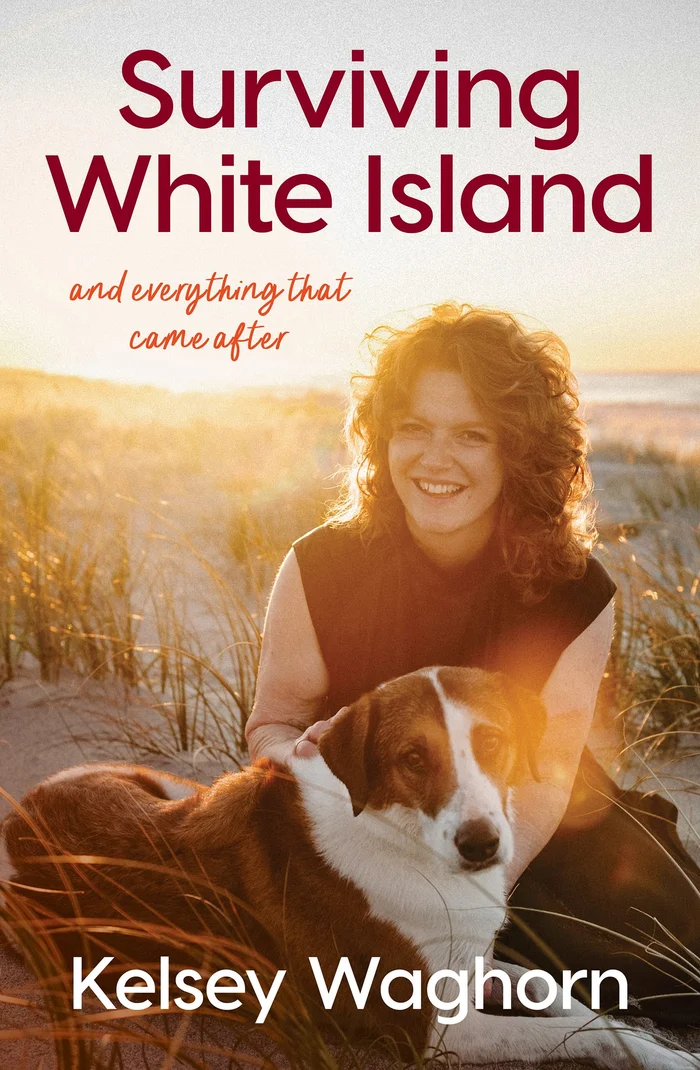
What: Book launch – Surviving White Island and Everything that Came After
Where: Whakatāne Sportfishing Club
When: 6pm, Tuesday, March 3
Entry: Gold coin donation (proceeds to Wellington Regional Burn Unit)