
Opinion: Motorbikes on the way out
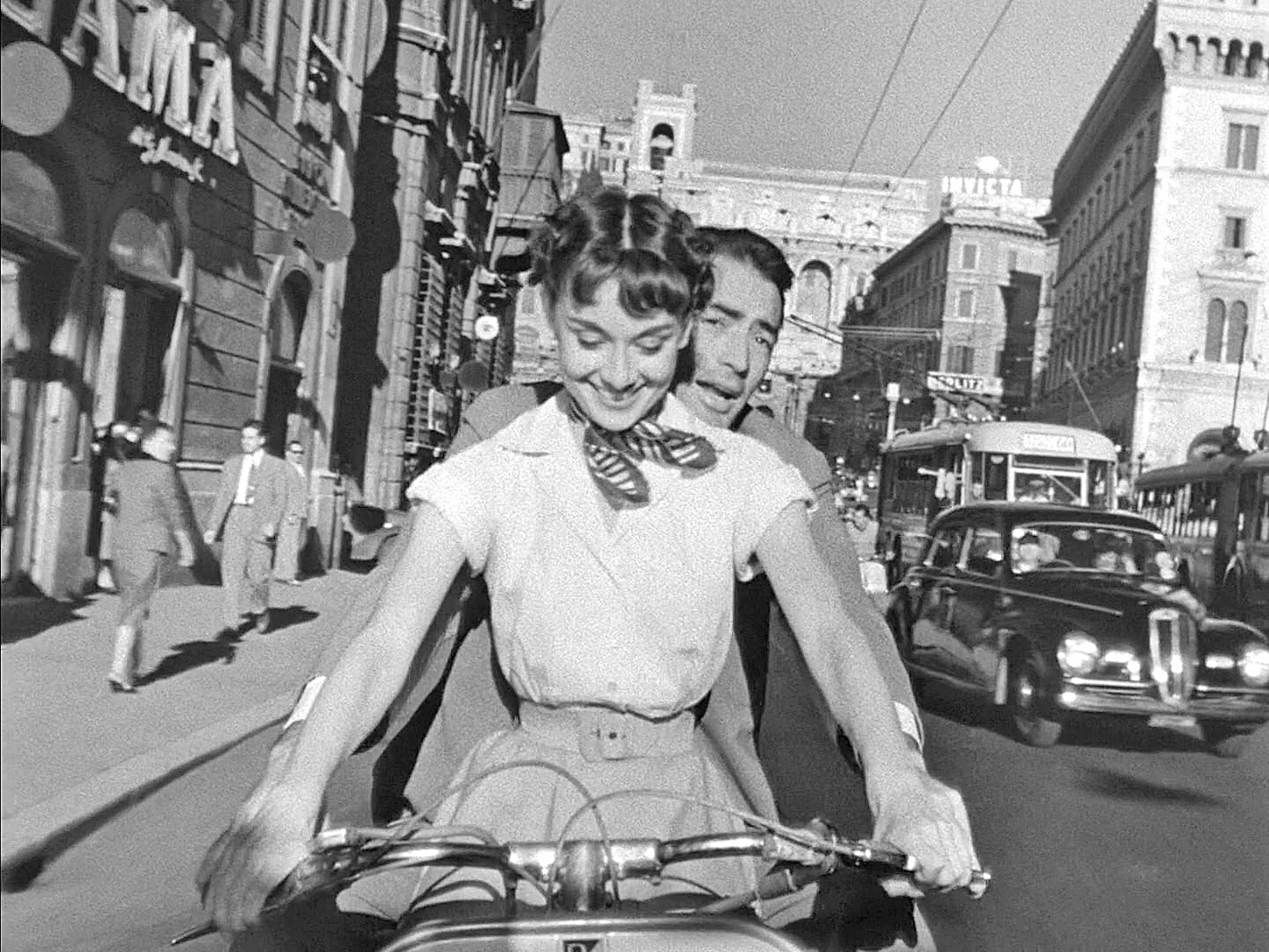
GLOBAL ICON: Audrey Hepburn and Gregory Peck starred in Roman Holiday, a movie put motorcycling on the map for many boomers.
Paul Charman
Paul Charman
Motorbike riders are ageing out, and riding bikes looks like becoming a pastime limited to a dedicated remnant.
Except for a hard core of men possessing what I call “the motorcycle gene”, the sun is setting on this form of transportation.
Yes, plenty of female bike enthusiasts exist but I would prefer they speak for themselves.
All I know is that today’s boys no longer endlessly draw choppers on their Mighty Pads as we did at intermediate school, nor do they grow up to book their motorcycle licence test the day following a 15th birthday.
Okay, it’s now a 16th birthday but you get my drift.
And don’t be fooled by those hooning young dirt bike riders.
For them the use of two wheels is merely expedient. Most would be just as happy causing mayhem in cars if they only had access to them.
No, when you make adjustment for population growth, bike numbers have been falling year-on-year. They are becoming an old man’s hobby.
There will always be hardened enthusiasts around, but I predict we’ll be the exception.
The 1953 film Roman Holiday promoted and popularised scooter riding, particularly the Vespa, transforming bikes into a global icon of style and romance. Then in 1969 the movie Easy Rider made bikes desirable generally, Harley Davidsons in particular.
When I was a teen, every lad wanted a bike.
But today, Vespa is facing a significant drop in revenue while Harley is on the ropes financially.
The appeal has faded as young people are fewer in number, having more recreation options and less to spend overall.
Then there’s the challenge of promoting something as being cool, when young people know full well it’s their grey old grandad’s favourite pastime.
Regardless, I estimate about 2 percent of males will always have the motorcycle gene.
There I was standing beside my bike, aged about 20, and wearing my leathers when a boy of about five stopped to stare.
His mother made three jovial attempts to pull him away by the hand, but he got free and sat on a nearby park bench to continue watching me. A tussle ensued but he didn’t go quietly.
I put this down to the gene that decrees some boys simply must ride bikes.
I met two brothers at Ohakune, one of whom was smitten with bikes and talked endlessly about them – like me – while his sibling regarded them as a cheap way to get to work and nothing more.
Sure, there are in-betweeners.
I know a lot of men who had a bike or two when young then moved to cars.
A few of us never grow up.
Now in retirement I’m contemplating the purchase of yet another motorcycle, having spent a small fortune on the contraptions over 50-plus years.
What a shock to see what’s for sale out there, because they seem to be going for a song.
Classic bikes are getting too hard for their frail owners to kick over, let alone ride.
Big cruisers and tourers are too much of a handful for an old boy to handle on a windy road.
Adventure bikes are too high to swing a leg over.
Scooters have a huge disadvantage as follows: so little road presence that, knowingly or not, many car drivers tend to shunt both man and machine into the weeds.
Just about everyone selling a motorcycle today seems prepared to take a financial hit, so it’s a happy time for people like me.
Remember, notwithstanding good fuel mileage, bikes are expensive to run due to those huge registration fees demanded by ACC.
Many bike riders can’t afford to register their machines.
I am particularly interested in “classic” bikes more than 40 years old, which can be registered cheaply.
It’s about $500 to $600 annually to register most bikes sold after 1986.
When scanning the secondhand bikes for sale a few things strike me:
■ A tone of desperation – While they have always been the worst kind of asset to dispose of urgently, that’s true now more than ever.
■ High quality – Thanks primarily to the wonderful big four Japanese companies Honda, Suzuki, Yamaha and Kawasaki there are superbly engineered very well-designed machines out there going for a song.
■ Obscure makes devalue faster – Though I love European machines, the likes of BMW, Ducati and KTM seem particularly hard hit.
As I scan what you pay for a big old BMW tourer I can only mutter, “how are the mighty fallen”.
■ Of course, the market in the developing world is different. There are more young people needing transportation in cities like Kuala Lumpur and Sao Paulo, so low-cost bikes will remain popular in these places for a while yet.
By contrast much of the Western World is facing demographic collapse. It takes a starry-eyed youngster to sign a hire purchase deal for a motorcycle he can’t really afford. But today’s youngsters seem not only fewer in number, but also a lot wiser.
■ Many of the secondhand bikes now being sold were manufactured in India or China.
Though I am aware of the remarkable rise of brands like the India-produced Royal Enfield, in my view none of these equal the quality of the Japanese motorcycles my generation enjoyed for so long. I hate to see them go.
■ There won’t be many bargains around in 10 years’ time. Big bikes – the kind with four cylinders or those big V twins – just won’t be economical to manufacture at scale. Once the currently abundant secondhand stock is gone, it won’t be replaced.
I wish that bikes still ruled the roads as they did when I worked in a Takapuna Honda shop back in the mid-1980s. But times change.
In the early 20th Century maybe a quarter of Kiwi homes had pianos, which then got scarcer in the era of radio.
Today, it’s hard to find a house with either a piano or a plug-in radio, though of course, some persist.
And that’s how it’s going to be with motorcycles in my view.
When us old guys who adore them are gone, they’ll be kind of a rarity.
Furthermore, future generations may wonder what all the fuss was about.