
Waka ama crew swamped by boat wake going over Whakatāne bar
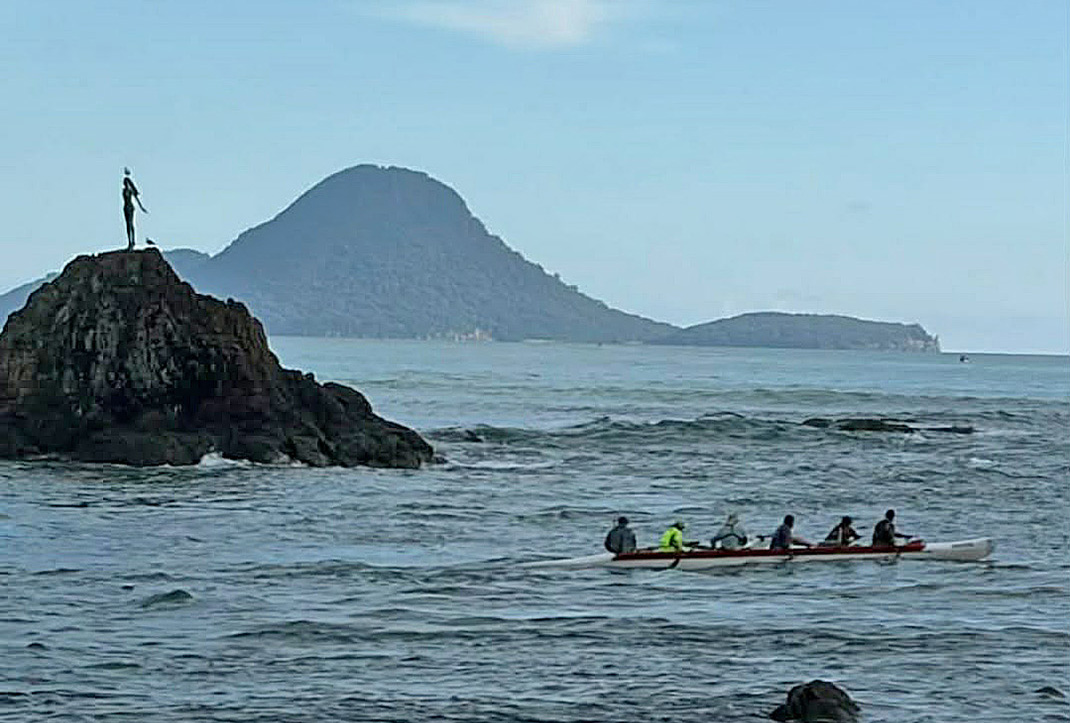
BEFORE IMPACT: The waka ama crew photographed shortly before being swamped by the wake of a passing boat. Photo Fiona Hennessy.
Tamara Herdman
A veteran waka ama crew were swamped by boat wakes while paddling over the Whakatāne bar on Waitangi Day.
The six paddlers, all aged in their 60s and experienced members of Waka Ama o Whakatāne, were crossing the bar when two motorised boats passed close by at speed, creating wakes that flooded their waka.
“We got swamped,” said crew member Ivan Hindmarsh. “There were that many boats around that morning because they had a big fishing tournament going on.”
The incident has prompted a call for recreational boaties to abide by speed restrictions and be considerate of other river users.
In New Zealand, powered vessels are required to travel at a maximum speed of five knots when within 200 metres of the shore, or within 50 metres of another boat, raft, or person in the water, and must give way to non-powered craft.
“I was steering our waka, and I heard them coming up behind us and going quite fast,” Mr Hindmarsh said. “I tried getting out of the way and they passed us on the inside – between us and the rocks.
“Just before they caught up with me, I looked at my GPS and we were sitting on about 9kmh (the equivalent of 4.86 knots). They had to be going a lot faster than that to get past us. They were no more than three or four metres away from us.”
He said the first boat’s wake dumped water into the waka, leaving it heavily flooded.
“As soon as they got past us, this big wake just came and dumped water in our laps. About 30 seconds later another boat went past us as well, and their wake is what put us under the water.”
The crew continued paddling despite water up to their waists, knowing they needed to clear the bar before attempting to bail out.
“We were sitting with water up to our waists and we just kept on paddling. We knew we had to get out over the bar and out into the ocean before we could do anything.”
A nearby boat stopped to assist, throwing the crew a rope and towing them further offshore.
“We were lucky—this one boat stopped and threw a rope to us, and they dragged us out probably another 100 metres,” Mr Hindmarsh said. “The rope broke, but by that time we were far enough out.”
Once clear of the bar, the crew jumped into the water and flipped the waka to drain it.
“There’s a knack to flipping them upside down,” Mr Hindmarsh said. “When you right them again, it only half-fills with water.”
The crew then bailed out the remaining water and paddled on.
Although no one was injured, several items were lost overboard, including a black carbon Viper steering blade valued at around $800 and a Garmin GPS watch worth about $2000.
He said other items, including shoes, water bottles, and cell phones were recovered from the water.
“Another boat stayed with us until we had the waka back up and running, just to make sure we were all right. That was good they were there for us.
“All of us in that waka actually qualified to go to Singapore in August for the World Sprint Championships,” he said. “The youngest one in that waka that day was 63. The oldest was me – I’m just about 70.”
He said the conditions at the bar were typical for the area.
“It was a little bit bumpy because of the tide, but it wasn’t anything unusual. We’ve been out in worse than that. It was just another day going out over the bar.”
Mr Hindmarsh has since reported the incident to Coastguard and hopes it serves as a reminder to powered vessel operators to slow down and give space to non-powered craft.
He said the most dangerous part of the incident was not the swamping, but the risk of being struck by another boat.
“The danger was if another boat didn’t see us in the water and ran us over. That probably would have been the biggest danger.”
Bay of Plenty Regional Council harbourmaster Jon Jon Peters said powered vessel operators had clear responsibilities when passing non-powered craft such as waka ama.
“New Zealand’s maritime rules emphasise that there is a responsibility for keeping smaller craft safe. This includes keeping a safe speed, keeping a look out, maintaining a safe distance and minimising wake and wash.
"Skippers are required to notify Maritime New Zealand via their online notification tool as soon as possible after any incident or situation that has caused, or could have caused, serious harm.”
Anyone who finds a black carbon Viper steering blade or a Garmin watch on a float is asked to contact Waka Ama o Whakatāne.