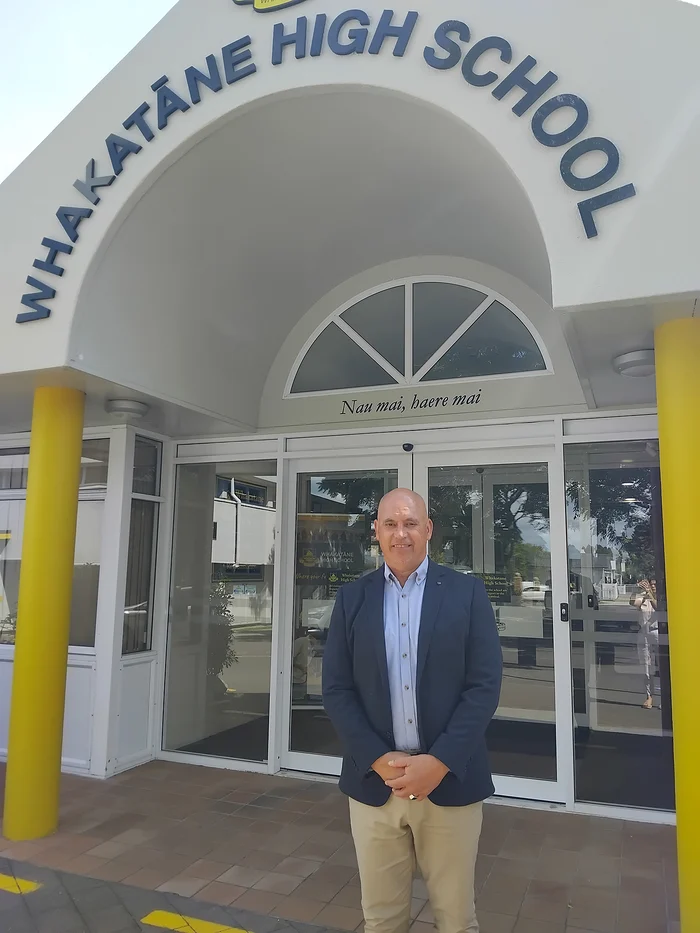
From old boy to principal – Peter Barsdell takes helm at high school
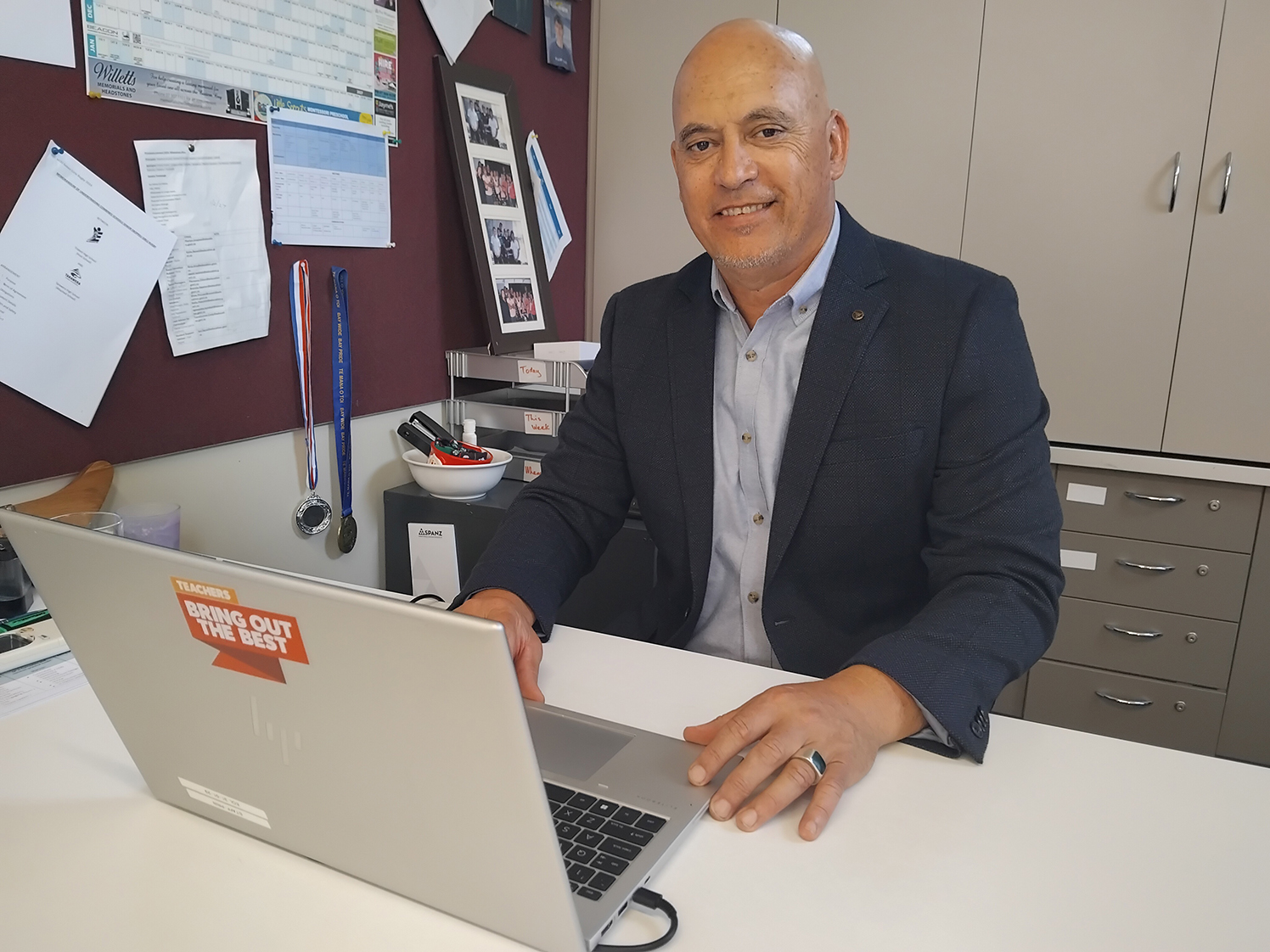
New head: Peter Barsdell has hit the ground running as the new principal of Whakatāne High School. Photo Kathy Forsyth E5851-02
Kathy Forsyth
First a student, then a teacher and deputy principal, and now the principal – Peter Barsdell’s connection with Whakatāne High School spans decades.
Mr Barsdell began the role of principal at the start of the term, following the departure of former principal Martyn Knapton in 2024 and a year under interim principal Carol Hughes.
Despite a long career in education and leadership, becoming principal was never part of a grand plan or career advancement, he says.
“When the opportunity came up this time, I just had a gut feeling that I needed to put my name forward – to step up and serve the school and the community I have deep connections with and grew up in,” Mr Barsdell said.
After finishing school at Whakatāne High, Mr Barsdell completed a four-year degree in physical education before returning as sports co-ordinator for two years.
He gained his teaching qualification in 2000 and spent three years teaching at St Kentigern College in Auckland.
He then returned home, taking up the role of head of department for physical education at Whakatāne High School for a decade, followed by 10 years as deputy principal – experience that has prepared him well for the top job.
Mr Barsdell’s first year as principal is shaping up to be a busy one, with curriculum and assessment changes rolling out nationwide.
One of the first visible changes at Whakatāne High School has been a return to one-hour lessons after several years of longer class blocks.
“With the new curriculum coming in, and the science of learning underpinning it, the school felt that shorter, more frequent lessons better support how students learn,” he said.
The focus is on little and often – “chunk learning, so information moves from short-term into long-term memory”.
The new national curriculum places a stronger emphasis on explicit teaching and a knowledge-rich approach, something Mr Barsdell acknowledges may feel like a shift back to more traditional methods.
“There’s been a lot of inquiry learning and co-construction over the years, so this is about getting back to explicit instruction,” he said.
Alongside curriculum change, new assessment and reporting tools are also being introduced.
“The next year or two is really about navigating change effectively – making sure staff and whānau understand what’s happening, while not losing the identity of who we are as a school.”
Central to that identity is relationships. He describes his leadership style as “highly relational”.
“You can have the best plans in the world, but if people don’t work well together, they don’t come to fruition,” he said.
“It’s about teamwork, clarity, helping people feel valued and understand the role they play in the bigger picture.”
While academic achievement remains a key focus, Mr Barsdell said student wellbeing was also important.
“Providing an inclusive, safe culture that supports student wellbeing is also a priority,” he said.
“The research tells us – and we know – that when wellbeing is strong, that supports their learning and their achievement.”
He also emphasised the importance of diverse pathways, including strong trades and vocational options alongside university study.
“Our role is to support young people into whatever pathway best suits them and benefits their future and their whānau.”
Sport and extracurricular activities also play a vital role, with the school maintaining strong links with local clubs.
“It’s about reconnecting and working together to support our young people.”