
Opinion: From New Zealand Day to Waitangi Day to Te Rā o Waitangi
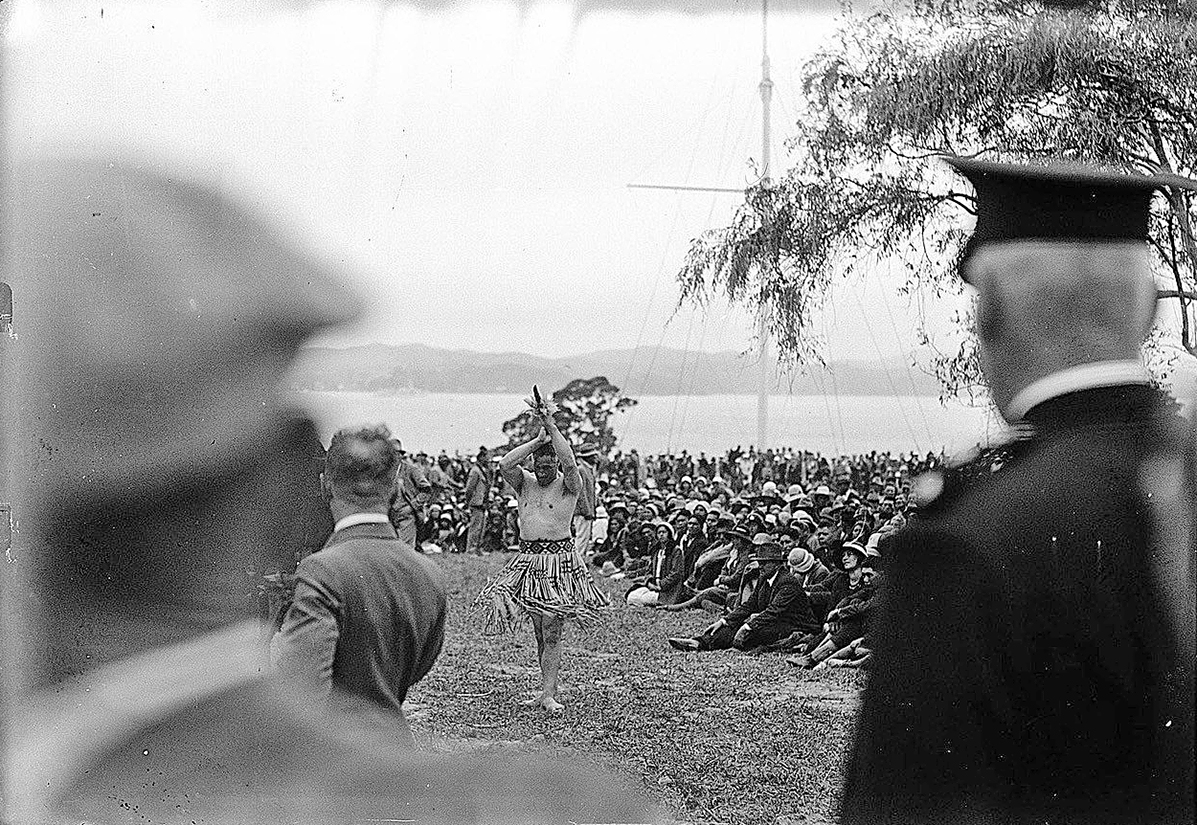
CHALLENGE: Waitangi, 1934. Source: Auckland Libraries Heritage Collections.
.
■ Independent historian Tanja Rother reflects on Waitangi Day’s origins and Whakatōhea’s distinct Treaty history.

Many people will enjoy the public holiday tomorrow. Not everyone might be aware, however, that Te Whakatōhea did not sign Te Tiriti o Waitangi (Treaty of Waitangi) on February 6, 1840. The Bay of Plenty Treaty sheet was signed by seven Whakatōhea rangatira (chiefs) at Ōpōtiki on May 27 and 28, 1840.
As around the country and at Waitangi the annual commemorations of the signing of Te Tiriti o Waitangi (Treaty of Waitangi) are under way, it may be a good time to briefly reflect on the beginnings of our national day.
Waitangi Day was first officially celebrated in 1934.
In 1974, following many years of Māori advocacy, February 6 became a public holiday. The day has undergone many shifts and changes.
How did it begin? In 1932, Governor-General Lord Bledisloe and his wife purchased the land where the Treaty was signed from a local farmer to gift it to the nation.
He hoped that the site would become a national memorial, symbolising that the Treaty of Waitangi had initiated a unique relationship between the indigenous and the colonising peoples.
The first ceremony to mark the signing of Te Tiriti on February 6 took place in 1934, when a large number of people gathered from all parts of the country. In the language and attitude of mainstream media at the time the Bay of Plenty Times reported on February 1,1934:
“About a thousand Māoris make trip. Yesterday and today, a total of about 900 natives have passed through Tauranga by train on their way to Waitangi to attend the celebrations there.
“A special train yesterday carried about 300 and other trains today had nearly 600 Maoris aboard. A special train reached the local station at 11.30 this morning and halted for 20 minutes in order to enable the travellers to have refreshments. Some hundreds of natives are from the Poverty Bay and East Coast districts and the remainder from the Bay of Plenty” (Bay of Plenty Times, February 1, 1934, p3).
The newspaper’s unnamed journalist further commented, “wind and rain made an unpleasant day in camp at Waitangi yesterday, but Maoris are accustomed to bad weather, and nobody seemed in the least depressed. The younger people filled in time by practising hakas and pois in several of the large tents, while the elders sat in groups under canvas and discussed tribal affairs for hours on end.”
Up to 10,000 Māori attended the 1934 celebrations at Waitangi. For many the events also had special meaning as they looked back 100 years to other events of great significance before the Treaty, particularly 1835, when northern tribes issued He Whakaputanga o te Rangatiratanga o Nu Tireni, or the Declaration of Independence of the United Tribes of New Zealand.
There were likely many Te Whakatōhea, Ngāti Awa and Tūhoe among the large contingent from the Bay of Plenty travelling to Waitangi.
After all, the list of the Crown’s breaches to Te Tiriti in their rohe (territories) was long and the harmful impact of the 1866 confiscation of most of their productive lands felt daily.
In 1940, Māori leaders saw the celebrations as a chance to challenge the nation’s record of race relations.
East Coast leader and politician Āpirana Ngata observed that not everyone had something to celebrate.
In Ōpōtiki and elsewhere in the Bay of Plenty, schools marked the centennial with re-enactments of the signing of the Treaty.
Over the next three decades, Waitangi celebrations were often dominated by government officials’ rhetoric of New Zealand society as “one people”, a slogan that could not have been further from reality for many Māori experiencing disempowerment and poverty.
It was also an expression of the politics of cultural assimilation of the time, which wrongly assumed that Māori needed to become Pākehā in order to thrive.
When the day became a public holiday in 1974 this thinking was reflected once more in naming it “New Zealand Day”.
The name reverted to Waitangi Day in 1976, in recognition that it commemorated the signing of the Treaty of Waitangi by the British Crown and Māori chiefs in 1840.
For many decades Waitangi Day, or Te Rā o Waitangi, has been an important stage for Māori and Pākehā protest relating to both historical and new breaches of Te Tiriti.
Increasingly, Pākehā have been taking an interest in the day’s commemoration and are being reminded that most Māori chiefs in 1840 signed Te Tiriti, not the English version of “the Treaty” that differs substantially in meaning.
n Tanja Rother is an independent historian and writer based at Ōhiwa Harbour. Email: [email protected]