
Opinion: A gateway worthy of the view
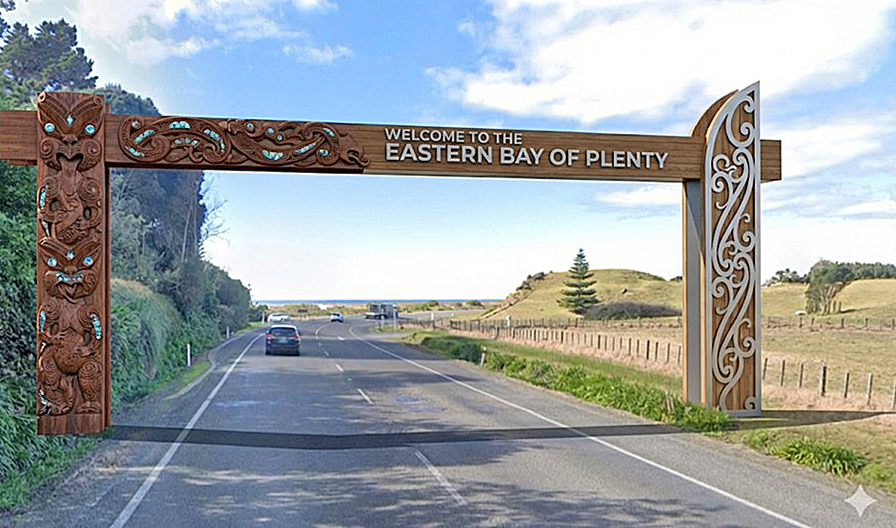
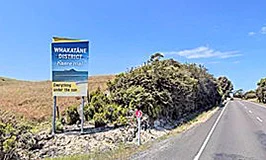
GATEWAY: An example of what the Eastern Bay of Plenty Gateway & Landmark could look like, pictured above, as opposed to the current district sign at Otamarakau, pictured below, marking the western boundary of the Eastern Bay, falls short of reflecting the region’s significance.
.
■ David Hick, is a long time Eastern Bay resident – he arrived in 1951 aged one week and was educated locally before spending the next 50 years living and working in various other places. He returned in 2020 to retire at Pikowai, bringing with him a portfolio of ideas and visions, including this one for a bold landmark to welcome travellers to the Eastern Bay.
For thousands of travellers each week, the descent from the plateau near Otamarakau marks a moment of quiet revelation. The road bends, the land opens, and suddenly the first glimpse of Pacific Ocean appears –blue, expansive, and unmistakably the Eastern Bay.
For visitors it is their first glimpse of the Pacific.
For locals, that view reassures them that they are home.
Yet, the official “welcome” to the district, a weather-beaten council roadside sign on State Highway 2, does little to mark that moment, and falls well short of reflecting the region’s significance.
A new proposal aims to change that – dramatically.
The Eastern Bay of Plenty Gateway & Landmark Proposal calls for a large, visually striking welcoming archway, designed not merely as signage, but as an experience.
The concept is simple and powerful: a monumental “picture frame” arch positioned so that, as motorists approach from the west, it frames the first full view of the ocean.
The structure would become both a symbolic threshold and an iconic landmark – announcing arrival, celebrating place, and offering a sense of pride to locals and visitors alike.
This is the front door of our district.. It should feel like one. Driving through the frame could be seen as symbolic.. entering a new world!
Several design options are suggested, each reflecting different elements of the region’s identity:
n A clean, minimalist steel frame for a modern, bold statement
n A structure incorporating Māori carvings, acknowledging tangata whenua and cultural heritage
n A laminated timber design, referencing the district’s forestry history and coastal character
Rather than settling on a single idea behind closed doors, the proposal recommends a public or professional design competition, inviting creativity and community buy-in from the outset.
From a practical standpoint, the project is designed to be achievable rather than aspirational.
Most of the structure would be fabricated off-site, with on-site installation carried out quickly on engineered footings.
Strategic planting would conceal bracing while enhancing the framed ocean view.
Optional features could include subtle night lighting, integrated “Welcome/Farewell” signage, or even electronic road information displays.
At approximately six metres high, the arch would comfortably exceed standard bridge clearance requirements, ensuring safety for all vehicles.
Gateway landmarks are not new – and that’s part of the argument for doing one well.
Successful precedents include the Christchurch Gateway Arch, the iconic Great Ocean Road arch in Victoria, and closer to home, the TEL Papamoa public artwork, all of which have become instantly recognisable markers of place.
The Eastern Bay deserves the same level of thought and ambition.
Funding options could include sponsorship from local businesses and organisations, partnerships with transport agencies such as NZTA, or a mix of public and private support.
With relatively low construction costs compared to major infrastructure, the return on investment – identity, pride, and visibility – would be substantial.
At its heart, the proposal is not about steel or timber. It’s about recognition.
A recognition that the Eastern Bay of Plenty is not just passed through – but arrived at.
And that first glimpse of the Pacific deserves to be framed accordingly.
Not a feel good, vanity project ... a legacy project.