
A call for action: Why Bay of Plenty must be ready for what’s coming

.
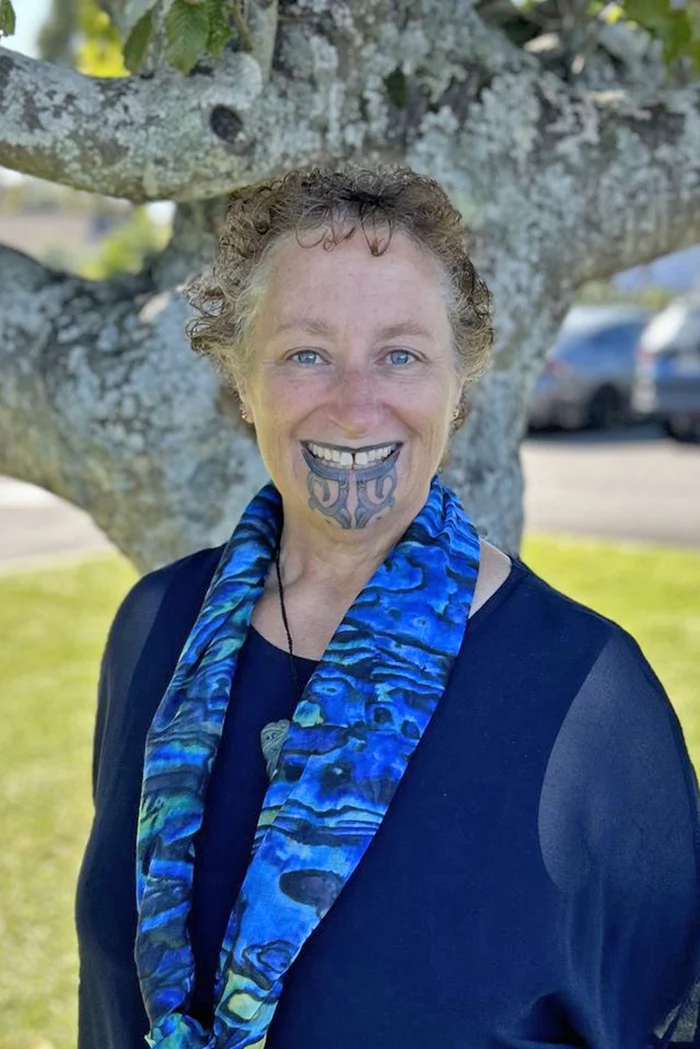
■ We know what’s coming. Not when, but we know it will come. This is not conjecture or alarmism – it is geological certainty, writes Bay of Plenty Regional Council Kohi Māori councillor, Dr Mawera Karetai.
Yet, too many of us in the Bay of Plenty continue to live as though disaster is something that happens to other people, in other places. That kind of wilful ignorance has become increasingly difficult to defend.
Let me be direct: We face three converging hazards that make preparedness not optional, but essential.
The first is already under way. The second is accelerating. The third will arrive with seismic inevitability.
Understanding these threats, and what we can do about them, should be in the minds of every adult member of our community.
Climate change is no longer a distant threat in the Bay of Plenty. It is reshaping our weather right now, whether you believe in it, or not.
Rising ocean temperatures are driving measurable changes to rainfall intensity. When our sea surface temperatures increase, warmer air over the ocean holds more moisture. It’s simple physics: the atmosphere can store roughly 7 to 8 percent more water vapour for every degree of warming.
This winter and spring, we have already seen this play out.
Extreme rainfall events that climate experts predicted decades ago are occurring with increasing regularity.
The rain that falls can now be 20 to 30 percent heavier than what fell in the 1970s when our infrastructure was built.
Our stormwater systems, our roads, and our homes were designed for the climate we had then, not the climate we have now.
Dr Kevin Trenberth, a leading atmospheric scientist affiliated with the University of Auckland, put it plainly: “As oceans warm, we see these warmer sea surface conditions. Warmer air can hold more moisture, so you tend to get heavier rainfall. That’s the climate change trend.”
Did you know the land itself in the Bay of Plenty is actively moving – some of it is rising, and some of it is sinking.
You can see what is happening in your neighbourhood on this map: https://searise.takiwa.co/map/6233f47872b8190018373db9/embed
Vertical land movement, measured in millimetres per year, combines with sea level rise to reshape coastal flooding risk in ways that too many property owners do not understand.
Near Pikowai in the central Bay of Plenty, our land is rising at about 5 millimetres per year – the fastest rising land in New Zealand.
This actually mitigates some of our sea level rise for that area. But that uplift is driven by the same geological processes that have also locked strain into the Earth’s crust over centuries. That strain, when released, will reshape our coastline in minutes.
Contributing to vertical land movement is the risk of a significant seismic event.
This is where wilful ignorance becomes negligence.
The science is clear: A major earthquake in the Bay of Plenty region is not a question of “if”, but “when”.
Bay of Plenty sits on multiple active faults: the Whakatāne, Waiohau, Edgecumbe, Waimana, and Paeroa faults, as well as the broader Taupō Volcanic Zone system.
In 2025 there were 41 named, active faults in the Bay of Plenty. More significantly, we lie in the shadow of two major regional threats.
The Hikurangi Subduction Zone, which lies beneath the North Island, carries a 25 percent probability (a one in four chance) of producing a magnitude 8.0 or greater earthquake within the next 50 years.
Scientists who study this fault speak in deliberately certain language: These events are “inevitable”. If not in our lifetime, then in our children’s.
As I often say when I am talking to groups about this, “If it didn’t happen yesterday, then it could happen today, or tomorrow”.
The Alpine Fault in the South Island presents an 82 percent probability that the next major rupture will exceed magnitude 8 and is also likely to happen any time.
The geological archives of New Zealand tell us these events recur roughly every 300 years. We are overdue.
Earthquakes of this scale do not merely shake buildings. They reshape coastlines, trigger tsunamis, open ground fissures, and spawn thousands of landslides.
A major subduction zone earthquake beneath Wellington and the Wairarapa would generate four to eight minutes of continuous shaking compared to the 10 seconds of shaking we felt in the 2011 Canterbury earthquake. The scale of impact would be transformative in all parts of our lives.
Knowing is not enough. Knowing and doing nothing is not acceptable. Preparing is everything.
In all of the events I have written about today, science has given us advance warning.
We have probability estimates. We have maps of hazard zones. We have detailed scenarios of what will happen.
What we do not have is the luxury of waiting. Every dollar spent on preparation now for your home, securing a chimney, understanding your property’s hazards, assembling an emergency kit, mitigates risk and saves lives.
Every hour spent understanding our community’s vulnerabilities is an hour that will pay dividends when the ground shakes or the rain falls.
Do you have civil defence plan for your household?
Here is what you can do now:
■ Make a grab bag – keep it somewhere accessible.
■ Walk your property and identify hazards – Ask yourself: what could go wrong here?
■ If a hazard cannot be eliminated, what barriers or protections can you put in place?
■ Check your home’s earthquake resilience.
■ Know your local hazards
Knowing your specific risks is the first step to planning for them.
I am almost certain Beacon editor Neryda McNabb’s inbox will be flooded with emails from the wilful ignorant in our community crying “alarmism!”.
But this is not alarmism. This is realism.
Wilful ignorance is choosing not to know, choosing not to prepare, and has become indefensible.
We have the knowledge. We have the time. We have the tools. What we need is the will to act.
The scientists studying these hazards are not fearmongers. They are geologists, seismologists, and climatologists working from evidence.
The National Emergency Management Agency is not crying wolf – they are sounding an alarm based on the best available science.
Local councils are increasingly requiring natural hazard assessments of properties because we understand what is coming.
In my role as a regional councillor, I see the infrastructure challenges ahead.
I see the planning implications of rising sea levels, vertical land movement, and increased rainfall.
But this is not just a job for councils or central government to think about. It is a job for every household, every property owner, every person who wants to protect their whānau and their home.
Prepare now. Check your grab bag this week. Walk your property this weekend. Know your hazards. Make your household plan. Understand your vulnerabilities. Build resilience into your home and your household.
The ground beneath our feet is moving, the climate is changing, and the faults are loaded with strain.
All we can do is be ready.