
Te Tawa Kaiti’s vision for sustainable agriculture resonates globally
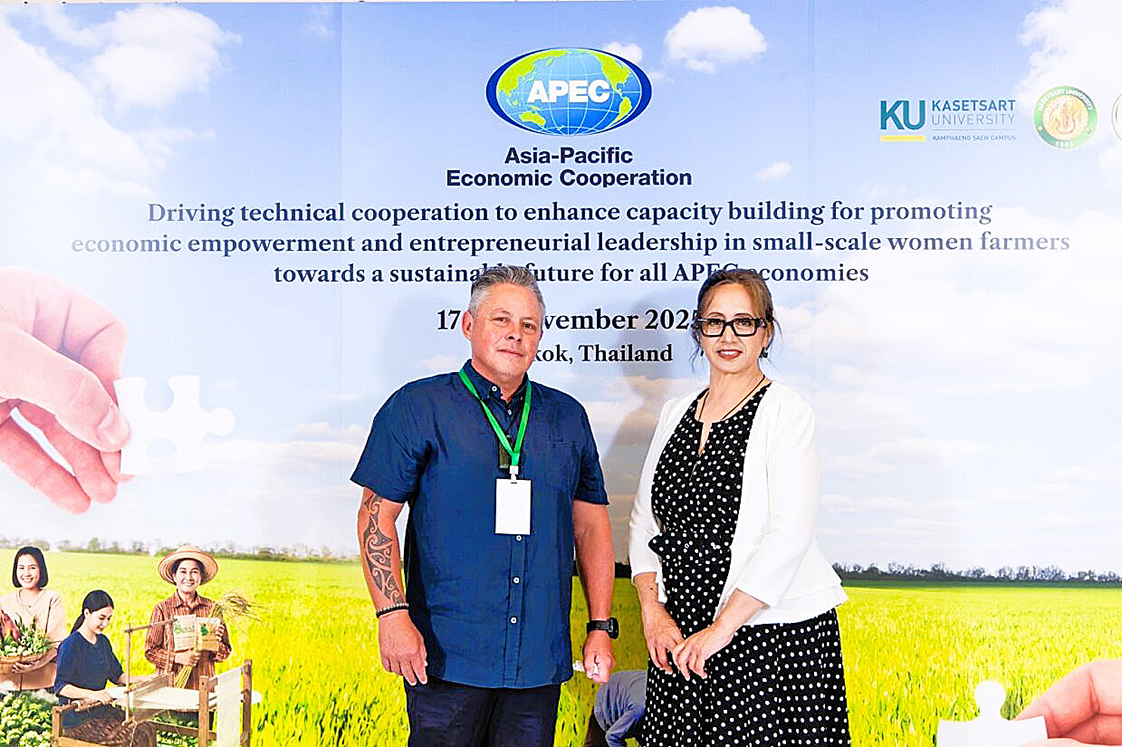
GLOBAL STAGE: Ken Goldsmith and Hinehou Timutimu share their expertise at an APEC workshop in Thailand. Photos supplied
.
Two Eastern Bay business leaders are participating in an international initiative focused on empowering women in farming.
Ken Goldsmith, from Goldsmiths Chartered Accountants in Whakatāne, and Hinehou Timutimu, general manager of Te Tawa Kaiti Lands Trust in Rūātoki, were invited to a November APEC Technical Co-operation workshop.
There were joined by other expert speakers representing the economies of Malaysia, Thailand, Vietnam, Chinese Taipei, Peru, Chile, Australia and New Zealand.
The workshop in Bangkok, Thailand, aimed to enhance the capacity of participants from APEC member economies to design and implement programmes that economically empower women farmers and promote sustainable futures.
Ms Timutimu said they collaborated with academics, economic leaders, and government officials from around the globe.”
She began her presentation with a karakia and karanga, wearing her mother’s korowai and treasured taonga.
These symbols of heritage and strength underscored her message of resilience and spirit, incorporating themes of whakapapa, whenua, and kaitiakitanga.
“Our puna is not just a source of water – it is a source of life, identity, and leadership,” she said.
The theme of her presentation drew inspiration from her niece’s name, He Punawai o te Aroha (The Spring of Love), representing a source that nourishes and sustains life.
“This metaphor reminds us that leadership encompasses more than just systems and structures; it also involves spirit, relationships, and resilience,” she said.
Accompanying her presentation was a poignant video titled Mana Wahine, which narrated the story of a young Māori wahine bidding farewell to her brothers as they left Rotorua Railway Station with B Company, 28 Māori Battalion.
She eventually marries a returning serviceman, together raising 13 children in Rūātoki.
Ms Timutimu notes that today, their descendants form the foundation of Te Tawa Kaiti Lands Trust – a living testament to he punawai o te aroha.
On the second day, Mr Goldsmith and Ms Timutimu presented He Whāriki mō Paekoau – He Tutuki i te Aka Matua, showcasing how Te Tawa Kaiti Lands Trust and Ngāi Tūhoe integrate cultural values with modern technology to revitalise dairy farming and maize production in Aotearoa.
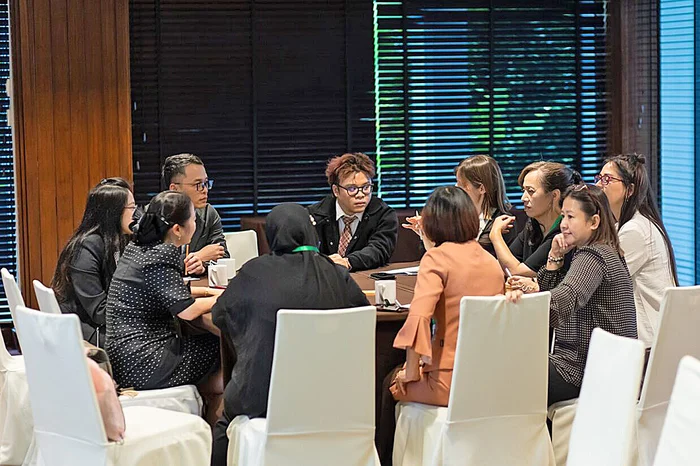
Their presentation illustrated a vision where innovation and tradition coexist to restore the mauri of the land while building resilience for future generations.
Mr Goldsmith also presented on halter neckbands, a world-class agri-tech solution using GPS-enabled, solar-powered smart collars to automate cow movement, improve pasture management, and boost efficiency.
He described the workshop as “illuminating”, noting the participants’ deep commitment and passion for the kaupapa, as they shared powerful insights into the realities of their own economies.
“It was an invaluable opportunity for knowledge exchange and for forging strategic international relationships to enhance our collective approach to sustainable agriculture.”
Ms Timutimu also co-facilitated thematic discussion groups alongside Professor Stefanie Lemke of Austria both days.
The collaborative dialogue resulted in concrete recommendations for broader implementation.
Three main outcomes emerged from the workshop:
■ Actionable Recommendations: Practical strategies for programme design, monitoring, and gender-transformative approaches in agriculture.
■ Shared Regional Vision: A unified understanding of challenges and opportunities in women’s agricultural empowerment, paving the way for APEC-wide collaboration.
■ Strengthened Network: New connections to support collective learning, data sharing, and co-development of empowerment programmes for marginalised farmers.
She said participants left the workshop equipped with new knowledge, stronger partnerships, and a shared commitment to advancing gender equality across the APEC region.
This marked the beginning of transforming insights into action and creating lasting empowerment for women in agriculture.