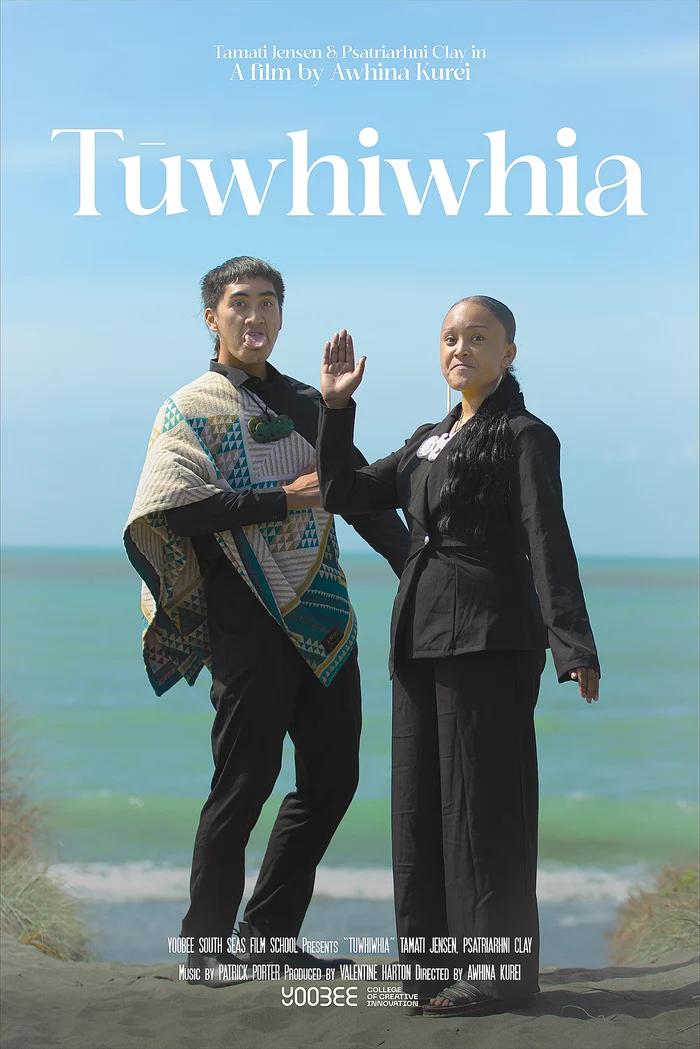
Film carries powerful health message
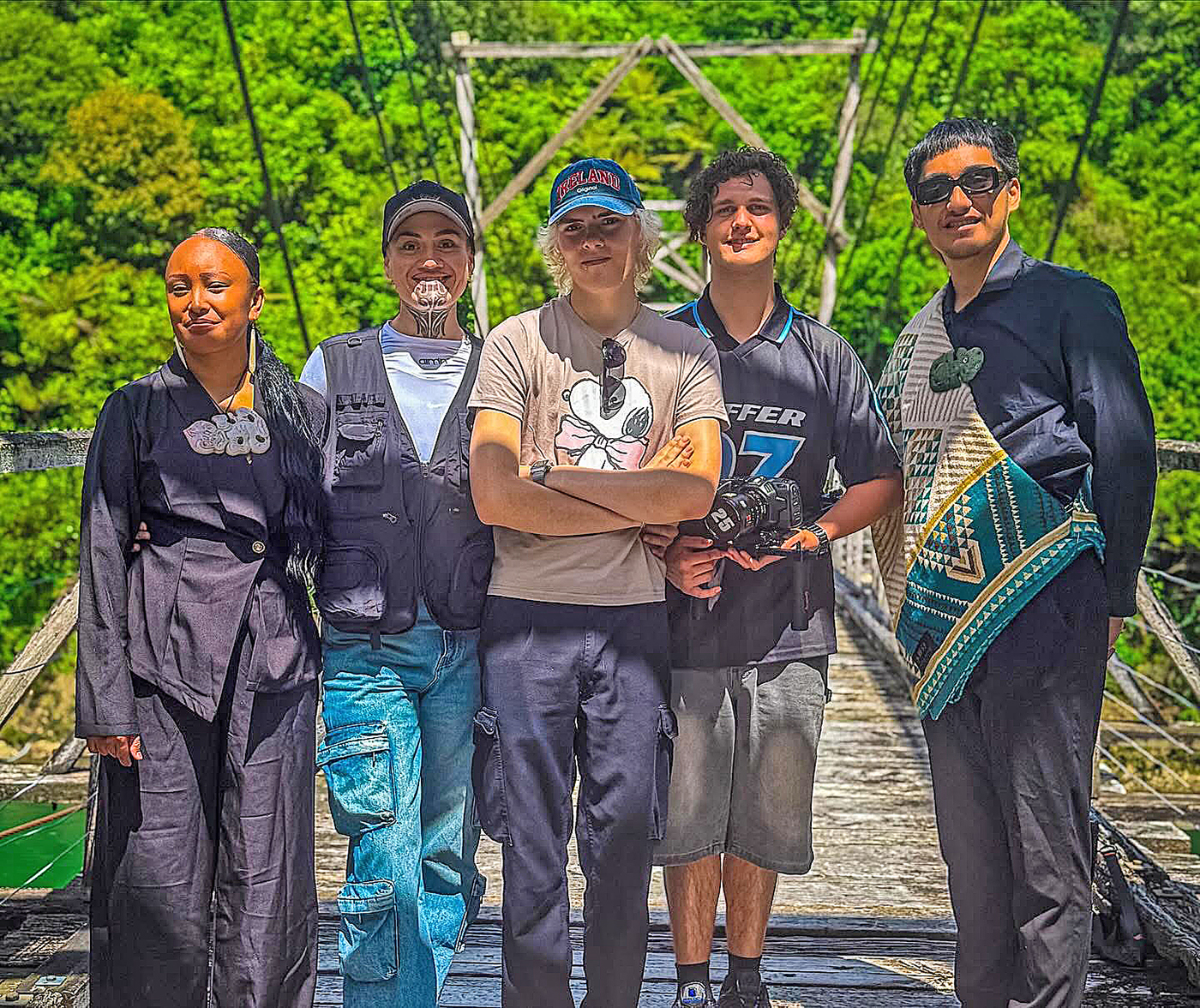
TEAMWORK: The team behind Tūwhiwhia, which will premiere at the The Deluxe next week. Photos supplied
Paul Charman
TŪWHIWHIA, a film by emerging director Awhina Kurei, will screen at a booked-out premiere at the Deluxe Theatre on December 12.
The film, which is in te reo, has at its core a powerful health message encouraging young people to be tested for strep throat and rheumatic fever, conditions with the potential to lead on to heart failure.
Kurei works in the film industry and has been simultaneously studying at the South Seas Film and Television School, where she is in her final year.
“As part of my graduation project, I’ve created a taonga with and for our rangatahi, a work that honors their creativity, strength and wairua within the film and music industry,” she said.
“This story is one of love, loss and healing – acknowledging the fragile nature of the lives we’ve been given.”

Tūwhiwhia was based on the tragic death of Kurei’s niece and picks up on her mother’s efforts to highlight the dangers of complications from the strep throat condition.
The story shows how following Tūwhiwhia’s passing, her whānau and community are left to navigate the deep waves of grief. Her brother and cousin, separated by distance while preparing for kapa haka nationals, receive the heartbreaking news that she has passed in her sleep. In response, they channel their aroha and pain into the waiata Tūwhiwhia – a song of remembrance and restoration.
Through intimate interviews, emotional behind-the-scenes footage and a heartfelt performance, this project has captured the transformation of grief into grace, and isolation into kotahitanga.
“It is not just one whānau’s story, but a reflection of how an entire community can rise to heal through waiata, kapa haka, aroha and whakapono,” Kurei said.
Funding was a testament to the belief and generosity of those involved.
“While a project like this would normally cost around $80,000 to produce, the strength of our community has made it possible through koha and tautoko,” she said.
She is grateful to the crew of three from Auckland who volunteered their time to travel and film; Whakaatu Whanaunga Trust, which covered accommodation and travel costs between Auckland and Ōpōtiki; the Gilmer-Jensen whānau who courageously shared their story to help raise awareness of rheumatic fever; and the sound technician (Patrick), who donated his time and expertise to professionally mix and master the track.
Kurei works in communications and makes films for RNZ podcasts.
She said her goal was for her studies to develop the gift she had been given for storytelling.
“As a tribal filmmaker I want to entertain, inform and inspire, working with others to tell their stories. I aim to tell stories for all cultures. Film is a powerful medium and can be a positive force in society, so it’s a privilege to work in an industry like this one.”