
Ōhope water rescues spark safety warning
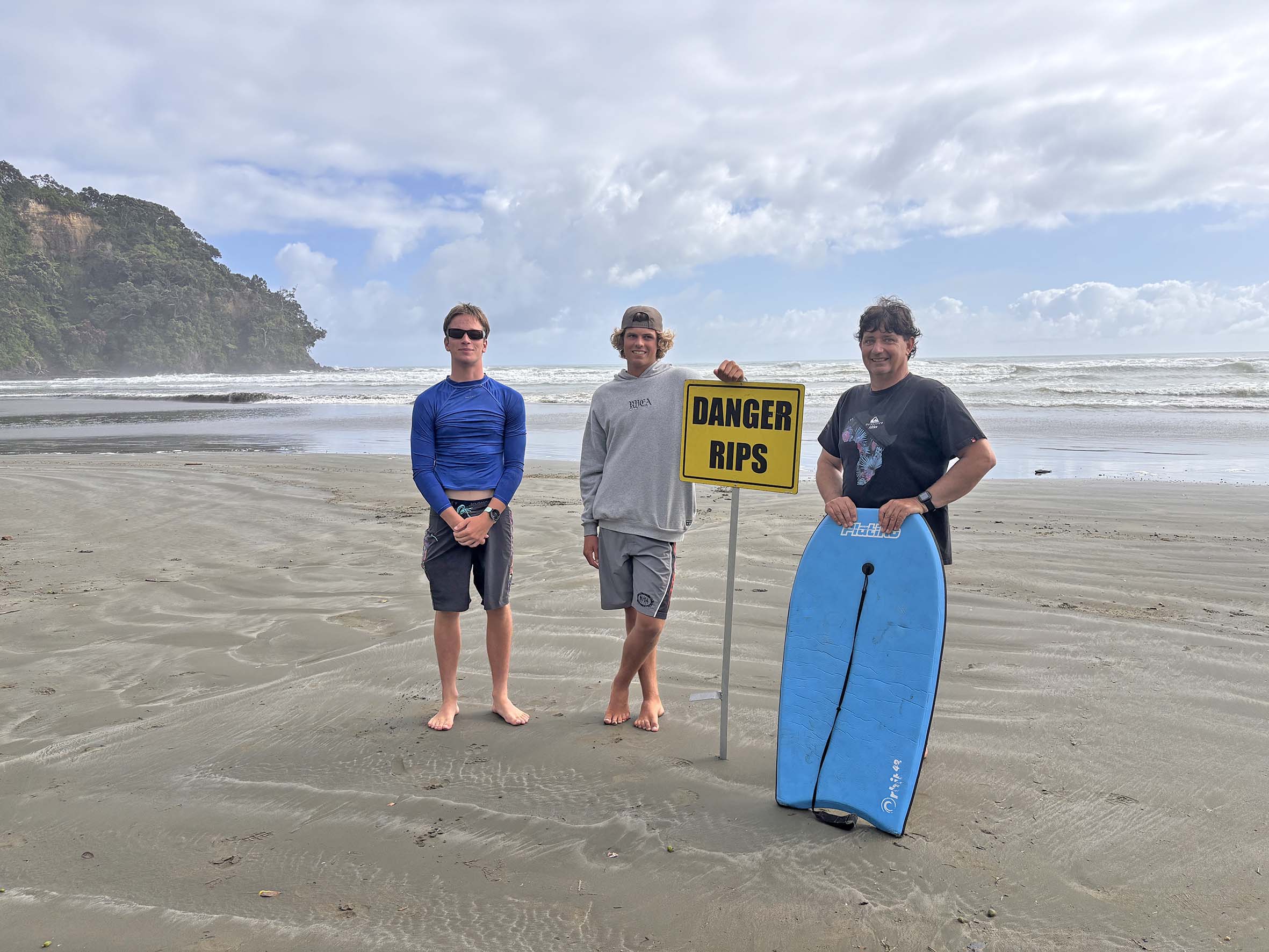
STAY SAFE: Salt Spray Surf School instructors Noah Camburn, Tai Murphy and Troy McParland are keen to help beachgoers stay safe in the water this summer. Photo Brianna Stewart E5754-02
Brianna Stewart
A major rip at Ōhope West End has caught several recreational swimmers by surprise this week, with five rescues in one day sparking a safety message from the local surf school.
Strong easterly swells are contributing to a particularly strong rip current at the beach.
The current is strongest on the outgoing tide – coinciding with when locals have been showing up for their after-work swim.
Salt Spray Surf School took to social media on Wednesday, urging swimmers to make educated decisions about where they enter the water.
Owner Ollie Dobbin said, for the most part, West End remained a safe beach, but the large swells meant a certain zone had become dangerous.
Three adults were brought to shore on the surf school’s boards after they got into trouble in the rip on Wednesday afternoon. The team had attended a surfers’ rescue training the night prior.
Mr Dobbin said he also helped return two children to safety when he noticed them playing in the shallows of the rip.
“They were still able to touch the bottom, but they were very close to falling off that drop zone and being sucked out.
“I ran into the water and managed to get them in. They were small kids, waist deep, and they were struggling to get back in.”
The Wednesday rescues added to the company’s tally for the week, which Mr Dobbin estimated sat near 10.
Mr Dobbin said he had no choice but to make the Facebook post.
“I had to put the post out. If you do enough rescues, at some point it will become a recovery.”
But he wanted the impact to be one of awareness, not fear.
He said the best thing people could do to keep themselves safe around the water was to educate themselves.
Beachgoers are encouraged to pop by the Salt Spray Surf School tent for advice about which areas are currently safe to swim in. The team have borrowed Whakatāne Surf Life Saving Club’s “danger” sign to mark where the rip is located.
Because rips don’t stay consistently in one place, the sign may be moved multiple times a day.
With a large component of their lessons being about how to identify and enjoy safe areas of the water, planned school trips and Wednesday’s after school groms session went ahead without issue this week.
Surf instructor Troy McParland was preparing for Whakatāne Intermediate students to enjoy the incoming tide as part of their electives day yesterday.
“With the incoming tide we’re finding it’s pretty safe. As soon as it starts turning to go out, ledges form and water drains off those ledges.”
He said the rip this week was sucking lots of sand out with it, so it was discolouring the water and looked somewhat like a river.
On Friday, one surfer lost his board in a rip and held onto another surfer’s board until a surf school employee could get out to assist.
The same day, another surfer ran out of puff and was sucked into a rip between the cliff and a line of rocks.
Mr McParland, who is also a senior lifeguard and Learn to Swim instructor, said both surfers did “absolutely the right thing” by holding onto something to keep them afloat.
Lifeguard patrols start up at Ōhope Beach on Sunday and will continue every weekend to the end of February. The beach will be patrolled every day between December 20 and January 26.
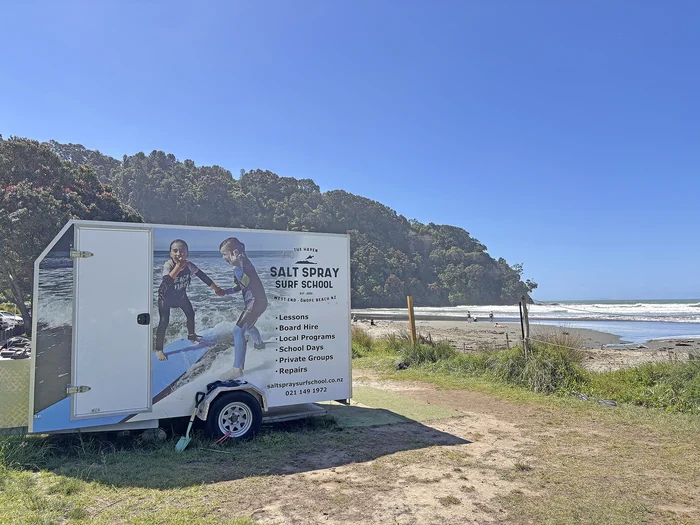
Salt Spray Surf School expect to be at West End every day for the rest of summer.
Although their priority is to keep their students safe, they also keep an eye on the beach to guide people away from any rips that might be around and jump into action when required. The team is more than happy to point out safe swimming areas.
Recreational surfers also play a significant role in saving lives on the water.
With an Australian statistic estimating that more than 60 percent of water rescues are performed by recreational surfers, both Mr McParland and Mr Dobbin spoke highly of the Surfers Rescue 24/7 course.
A free training session in Ōhope on Tuesday night taught practical water rescue techniques and basic CPR skills tailored for surfers of all experience levels.
They’d like to see more of the community at the next one, which will be organised based on demand. Details of any further course dates will be posted on the Salt Spray Surf School Facebook page.
Tips to stay safe in the sea
Do's and don’ts when entering the water:
■ Do try to pick a spot where the waves are coming in. Don’t pick a flat spot.
■ Do watch the water for five or 10 minutes. Don’t take a quick look, because the waves may be between sets, obscuring the outgoing current. Rips are most noticeable after the set comes in; the water surges up the beach and funnels out in one spot.
■ Do look for discolouration of the water.
■ Do trust your abilities. If the current is strong when you’re walking into the water, get out before you’re too deep.
Stick to the three Rs if caught in a rip:
■ Relax. It’s hard to do when the water is trying to take you somewhere, even for experienced people, but it’s important to conserve energy.
■ Ride it out. If you’ve got a board, hold onto it and keep afloat. If you’re wearing a wetsuit, that’s added buoyancy too. If you’ve got neither, do your best to breathe and float. If you’re taken out beyond the breaking waves, you’re likely in a safer spot. You’ve saved energy and can lie on your back.
■ Raise your hand. Try and do it fairly early, so someone can see you’re in trouble before you get very far out.