
Whakatāne crisis recovery cafe gets a boost
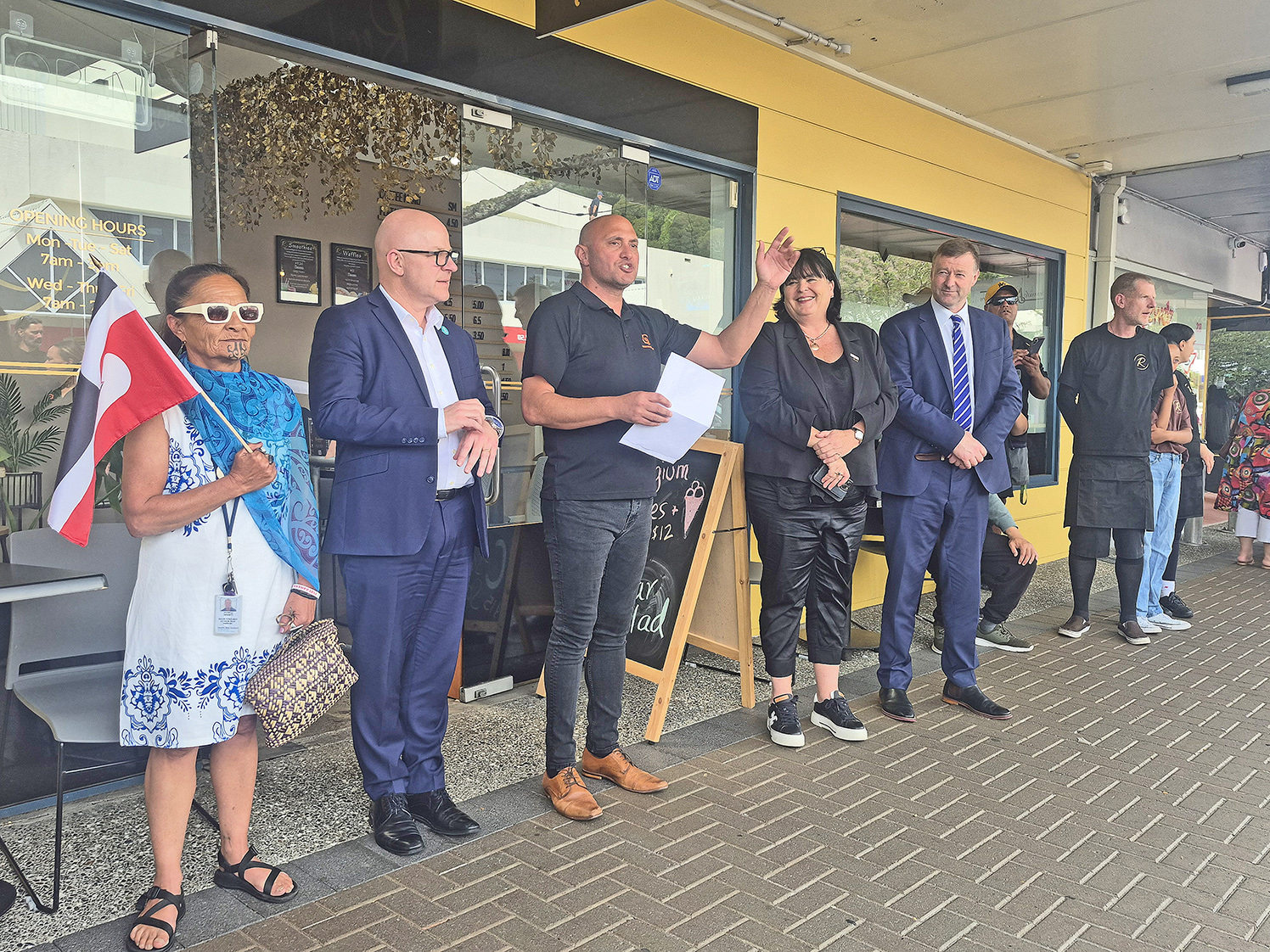
FUNDING BOOST: Resilience Café founder Waata Heathcote welcomes Government ministers Matt Doocey and Mark Patterson, and East Coast MP Dana Kirkpatrick to the Strand Café. Photos Tamara Herdman E5704-01
.
Whakatāne’s Resilience Café will receive a funding boost from the Government.
Minister for Mental Health Matt Doocey made the announcement on Friday, citing the importance of crisis recovery cafes such as Resilience.
“Emergency departments aren’t always the best place for someone in mental distress. Crisis recovery cafés like Resilience, offer a peer-led, non-clinical space where people can go to get support and be heard,” Mr Doocey said.
The additional funding will enable the café to significantly extend its opening hours.
The café was previously open Monday to Friday, 7am to 3pm, and will operate into weekday evenings 7am to 7pm on Wednesday, Thursday and Friday. It will now also open on Saturdays from 7am to 3pm.
The team will now be able to grow by at least two additional peer support specialists, meaning the café can double its capacity from seeing 15 people to 31 people at any one time.
“I’ve been calling lived experience the silent revolution, not because it’s new, but because it’s starting to gain more traction here in New Zealand. We are better utilising peer support workers in a range of settings, including emergency departments, eating disorder services, and crisis alternatives.
“I am proud that, since coming into Government, the peer support lived experience workforce has grown by almost 100 percent.
“The Resilience Café is a great example of a community organisation already making a difference, and this funding will help them reach even more people.
“Crisis Recovery Cafes are a part of our mental health plan for faster access to support, more frontline workers and a better crisis response.”
Whakatāne was the 13th and final stop on Mr Doocey’s Rural Health Roadshow.
He earlier attended a public meeting to hear from the local community and frontline workers in rural health about what was working and where barriers remained.