
Rates are going up, says mayor elect
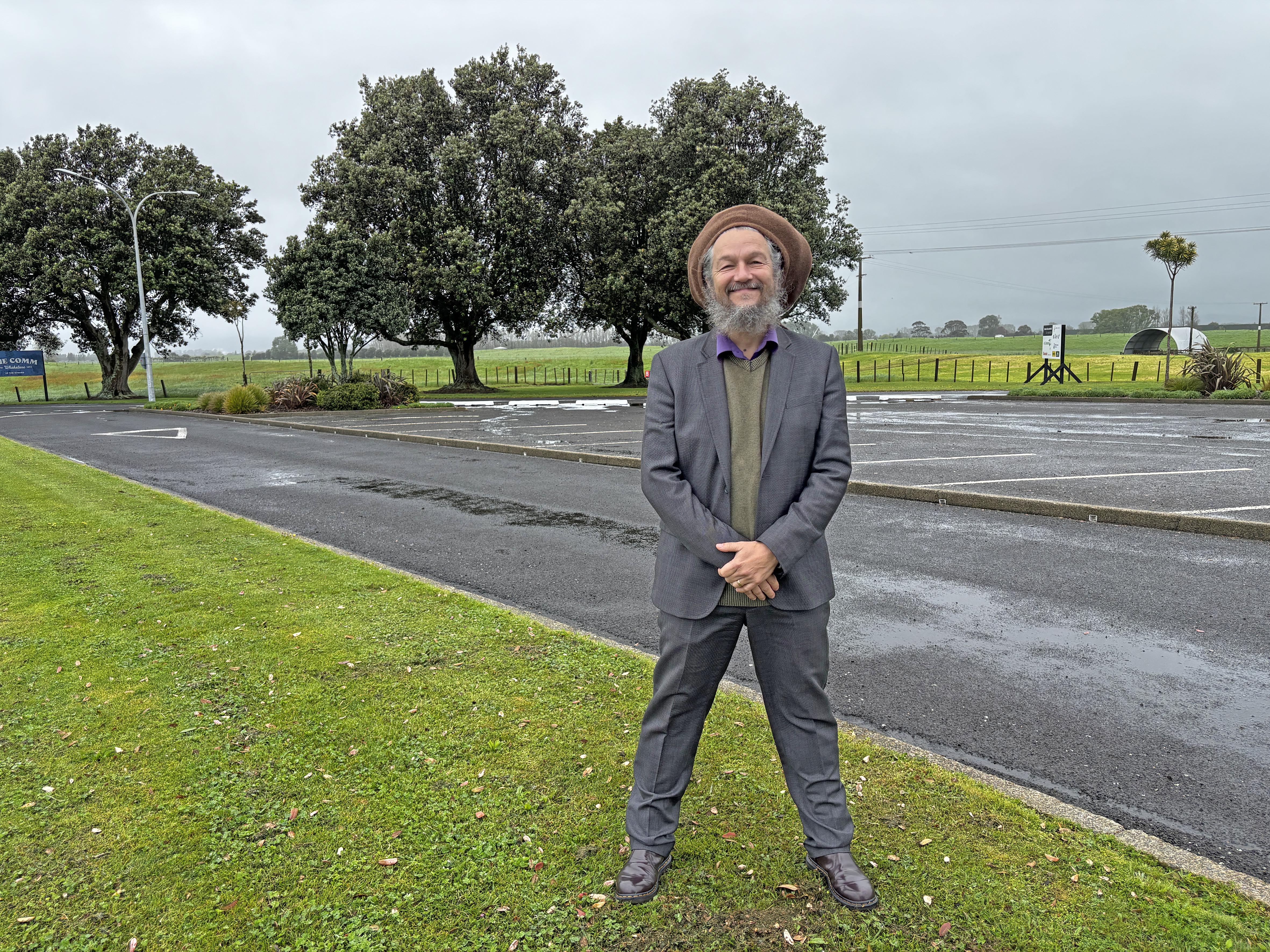
Mayor elect Nandor Tanczos. Photo Brianna Stewart E5679-02
Diane McCarthy
Nice-to-haves contender takes the lead
While rates’ rises have been blamed for at least 31 councils throughout New Zealand seeing a change in mayors, Whakatāne made a change to a mayor promising that rates will rise further.
Mayor elect Nandor Tanczos, pictured left, has been more welcoming than Whakatāne’s previous mayor, Dr Victor Luca, pictured right, of projects many may consider nice-to-haves.
“The nice-to-haves probably add a few dollars to the rates bill at the end of the year,” said Mr Tanczos.
“They’re not the things that are driving rates’ increases. I don’t believe in sucking all the money out of everything that makes our place worth living in.”
Despite two mayoral candidates advocating a need to rein-in council spending, Dr Luca and newcomer to council Philip Jacobs, Mr Tanczos is looking safe as mayor elect.
With only special votes still to be counted, Mr Tanczos is sitting 96 votes ahead of Dr Luca for the mayoralty.
Dr Luca has conceded that he is not expecting any reversal to Tanczos’ lead when final results come out later this week. He felt most of those making special votes were more likely to vote for Mr Tanczos.
“My supporters have been fairly stalwart,” Dr Luca told the Beacon.
“I would have expected the special votes to break for [Mr Tanczos]. So, I’m not expecting any miracles.”
Dr Luca has spent his two terms on council trying to exert downward pressure on rates.
“I did my best to keep rates increases to moderate levels. That’s one of the things I stood on and died in a ditch over,” he said.
Dr Luca went as far as voting against two long-term plans as he considered they contained projects that would be too costly for the ratepayer.
“You’ve just elected a mayor that was pro-the boat harbour, the council refurbishment and the Rex Morpeth Recreation Hub development,” he said.
Dr Luca believes his election loss is due to Mr Jacobs splitting the vote of those opposed to council spending on projects such as Rex Morpeth, with its $1.2 million price tag.
“He’s standing on the same agenda, only he was a bit more draconian than I am,” Dr Luca said.
Mr Jacobs advocated for council staff cuts and scrapping of projects, including the Rex Morpeth Recreation Hub and the Matatā Wastewater Project.
Between them, Mr Jacobs and Dr Luca have 4804 votes so far, which would have been more than enough to win against Mr Tanczos’ 3607.
“Now, you’re going to end up with a mayor that’s a lot more pro-spending than I am. I was trying to keep a lid on it.”
Dr Luca pushed back on plans for the council to hire 32 additional staff in this financial year.
“I think I can take credit for putting a delay on it. But I would have been trying to put a stop to it altogether if I was elected.”
Mayor elect Mr Tanczos was humble in victory.
“It’s not 100 percent in the bag yet, but I feel really humbled that the community has put their faith in me to be mayor of Whakatāne district.”
Mr Tanczos said there was already “a lot the be getting on with” over the next week.
“My immediate priority is to pull all the council together as a team. Of course, I know most of them, we’ve worked together and get on extremely well.
“We’ve got some new councillors who I’ll be looking to get to know a bit better and bring into a team. Then getting a good connection between councillors and the staff is critical.”
He would be looking at streamlining the committee structure.
“I’m not sure the structure we have has been working very well, so I will be looking at going back to what we had under Judy Turner and also Tony Bonne, which will be one less committee.”
For deputy mayor and committee chair roles he would look at a range of criteria, such as experience and number of votes.
“For deputy mayor, I will be looking for someone who doesn’t replicate my skill set but has a different set of skills to complement mine, and someone who understands what the job entails and how council works.”
He couldn’t speak highly enough of the councillors elect.
“Everyone brings extensive skills and experience to the table. I think it’s going to be a great few years.”
He said it was a challenging time to take on the mayoral role.
“If it was easy I would let someone else do it. That’s why I’m in politics. For me, it’s about making tough decisions and grappling with thorny challenges. That’s what I enjoy.
“I’ve been really clear on the campaign that I’m not promising to bring rates down. Rates are going to go up, because of the need to spend on water, particularly, but also interest rates, inflation and the continuous new sets of responsibilities coming from central government.
“I am concerned about it. I know people are struggling. I do want to keep a focus on how council can control costs and work more efficiently.”
He said regarding the nice-to-have projects, people made a clear choice.
“Philip gave a really clear choice, saying we need to suck all the money out of all the so-called nice-to-haves and people have indicated really strongly that’s not what they want.
“They don’t want a community with no life – that has no facilities. People voted for something different.
“I do believe that social infrastructure is just as important as principle hard infrastructure, but I also believe that we have to give value for money. People need to see that we’re not spending their money unwisely.”
He also wanted to look at how Whakatane council worked with other councils to achieve some change to the funding model from government.
Local democracy reporter Diane McCarthy reports on the preliminary results for the Eastern Bay of Plenty’s council elections
Māori wards are here to stay
Māori wards could be said to be the biggest winner in the Eastern Bay at this year’s local elections.
Whakatāne and Kawerau districts had overwhelming responses from voters toward retaining its Māori wards.
Ōpōtiki district was not required to hold a referendum to retain its Māori wards as it held a poll as part of the 2022 election.
Preliminary voting results for Whakatāne District Council, which introduced three Māori wards in 2022, showed 7306 electors voted to keep the wards, while 4803 wanted to remove them.
Kawerau District Council, which has created a Māori ward with three seats at this election, had 1511 votes for retaining Māori wards and 695 votes to remove them.
While special votes are still to be counted, it is unlikely to affect these results substantially.
Familiar team for Whakatāne
Mayor elect Nandor Tanczos will lead a team of mostly familiar faces, with a scattering of new councillors on Whakatāne District Council as preliminary results come in.
Lesley Immink and Julie Jukes have been re-elected to their Whakatāne-Ōhope ward seats, along with former community board member Carolyn Hamill and former regional councillor Malcolm Whitaker.
Tu O’Brien has been returned as the Rangitaiki Māori ward councillor and Toni Boynton as the Kāpū te Rangi Māori ward councillor.
Former Murupara Community Board member Jesse Morgan-Ranui has been elected to replace Ngapera Rangiaho who vacated her seat on the Toi Ki Uta Māori ward to stand for regional council.
They will join former Te Urewera ward councillor Andrew Iles and former Rangitaiki general ward councillors Wilson James and Gavin Dennis, who have been re-elected unopposed.
Clear win for Māori wards in Kawerau
With most votes counted, it is looking certain that Kawerau District Council will be retaining both its Māori wards and its current mayor in the local election.
Preliminary results, which exclude special votes, show that in the Māori ward referendum, 1511 voted to keep Māori wards and just 695 voted not to keep them.
Current mayor Faylene Tunui, pictured, has received a clear majority of votes with 1611, compared to Carolyn Ion’s 649.
It appears that Mrs Ion will not be returning as councillor either as the two vacancies on the Kawerau district at large she also stood for have current councillors Sela Kingi, with 1351 votes, and Berice Julian, with 1301 votes, comfortably ahead of her 1066.
New candidate Wayne Andrews also misses out on a district at large seat with 446 votes.
The three Kawerau general ward seats have Justin Ross (1060), Anthony Worsley (826) and Tracy Hill (625), well ahead of Mel Drummond (296).
The three new Māori ward seats also seem set, with Waikite Apiata having taken a clear lead with 641 votes. Gloria Te Paki Leokava-Taani (474) also looks safe, as does Mal Dowie (438). Lyzette Howard, with 392, would need another 46 votes to take her place.
Deputy electoral officer Tania Humberstone said Kawerau had been tracking well with voter returns.
“We do believe this can be attributed to the introduction of Māori wards and the ability of people to enroll directly onto the Māori electoral roll and make a special vote.”
Māori seats provide only new faces on council
Although Māori wards will add three new faces to Ōpōtiki District Council this local election, the other council seats will be business as usual.
With all but special votes counted, preliminary results show current Mayor David Moore as a clear winner, with 2141 votes, compared to opposing candidate Curley Keno’s 786.
Ms Keno is, however, looking safe to become one of two Ōpōtiki Māori ward councillors.
Maude Maxwell received the most votes for this ward with 510. Linda Steel looks to have missed out with just 319 votes.
In the Coast Māori ward, Papa Wharewera, with 277 votes, looks definite to take the seat against Haki McRoberts’ 92.
Current deputy mayor Shona Browne (518 votes) and councillor Barry Howe (491 votes) have outdistanced the competition for the two urban general ward seats and two other current councillors, Dean Petersen (529) and Steve Nelson (479), also have clear leads in the rural general ward. Chris Hopman received 398, Caitlyn Papuni-McLellan had 386 and Jodi Porter had 181.
Coast Community Board results currently have Te Ataarangi Parata, Lucy Steel, Tullulah Ross and Gaylene Dudek in the lead, although Ripeka Mihaere is trailing by just 11 votes.
Final results, which include special votes, are expected to be available by this Friday.
Eight new faces on regional council
The Eastern Bay and Kōhi Māori wards have chosen Malcolm Campbell, Sarah van der Boom and Mawera Karetai to represent them on the Bay of Plenty Regional Council for the next three years.
Though special votes are yet to be counted, Mr Campbell, formerly mayor of Kawerau and with one term on the regional council under his belt, has romped home in the Eastern Bay constituency with 7004 votes.
Mrs van der Boom has achieved 6390 votes, too many for nearest opponent Adrian Gault (4688) to close the gap.
Jessica Sneha Gray trails with 2627.
In the Kōhi Māori constituency, Mawera Karetai (1519) is ahead of the next closest candidate, Ngapera Rangiaho (1446), by 73 votes. A big surge toward Ms Rangiaho in special votes could still see this result change when final announcements are made later this week.
Chris Karamea Insley follows with 992 votes and Jackie Te Amo-Te Kurapa with 943 votes.
The remaining Bay of Plenty councillors currently are John Scrimgeour and Ken Shirley for Western Bay, Stuart Crosby, Tim Maltby, Glenn Dougal, Kate Graeme and Kat MacMillan for Tauranga, and Raj Kumar and Anna Grayling for Rotorua.
Matemoana McDonald has been returned as the Mauao Māori councillor and Alan Iwi Te Whau as Ōkurei Māori.
The regional councillor loses experienced councillors in Rotorua’s Lyall Thurston, Tauranga’s Andrew von Dadelszen and Ōkurei Māori Te Taru White.