
Making safety fun despite under-funding
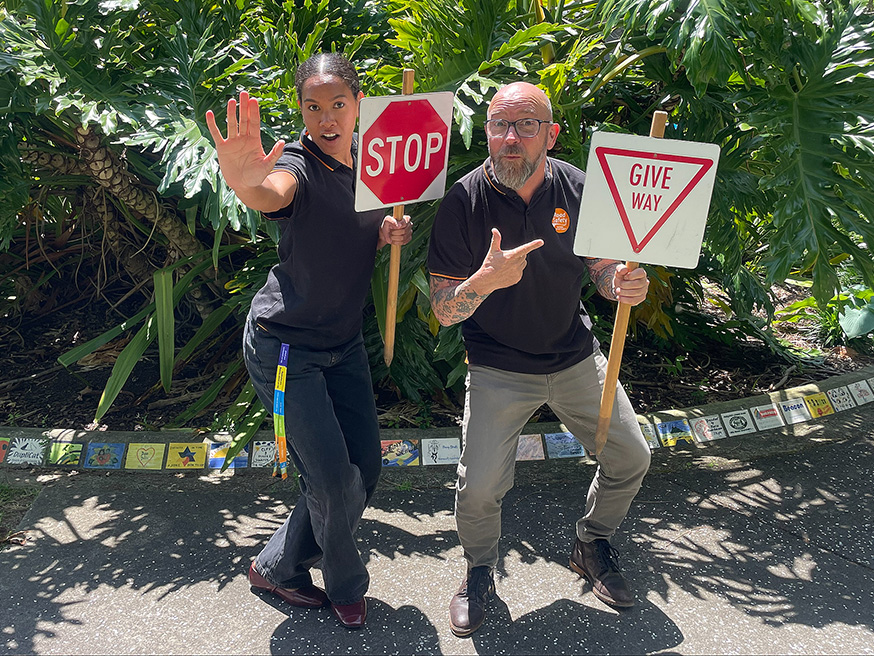
FATIGUE STOP: Whakatāne District Council community safety adviser Richard Hamer and intern Annelle Prince are ready for road safety fun this summer. Photo supplied
Diane McCarthy
Helping people to stay safe on the roads is a big part of Whakatāne District Council community safety adviser Richard Hamer’s job and he has a full programme of events planned for this summer aimed at doing just that.
New Year’s Day will see him co-ordinating a host of volunteers manning two fatigue stops to help refresh weary drivers – in particular, young people travelling through Ōpōtiki and Whakatāne districts on their way home from Rhythm and Vines music festival in Gisborne.
The New Year’s Day fatigue stop in Matatā has been a staple for many years, aiming to prevent crashes caused by exhausted drivers, but this year the event will also be held in Ōpōtiki.
"Whakatāne district councillor Gavin Dennis who is the Matatā Volunteer Fire Brigade’s chief fire officer, helps run the fatigue stop with Blue Light in Matatā.
He has also put us in touch with the Ōpōtiki brigade who are holding the fatigue stop on St John Street, alongside Ōpōtiki Lions.
“It’s going to be right opposite Ōpōtiki College, near the intersection, where the vehicles slow down naturally anyway,” Mr Hamer said.
In running an event that is double the size of previous years, he has had to look at ways to save costs as central Government has heavily cut funding for road safety events this year.
Across the country, New Zealand Transport Authority – Waka Kotahi cut the budget for road safety programmes from $50 million a year to $20 million.
“We’ve had our budget cut by 60 percent,” Mr Hamer said, of the Eastern Bay Road Safety Programme.
“We used to cover 10 areas of road safety. We’ve now really tried to narrow our focus to where we’ve got three main areas, alcohol, speed and seatbelts.
“We felt the fatigue stops were too important not to do. Last year, there was a fatal accident with people who had travelled through Whakatāne and Ōpōtiki from Rhythm and Vines headed to Rotorua.
“It’s just about looking at how you can save money, reduce costs and work with the community.
“For example, in Ōpōtiki, Waiotahi Contractors have come on board doing a free traffic management plan, setting it up and operating it for us. That’s probably going to save us $3000, so we’re really grateful to those guys.
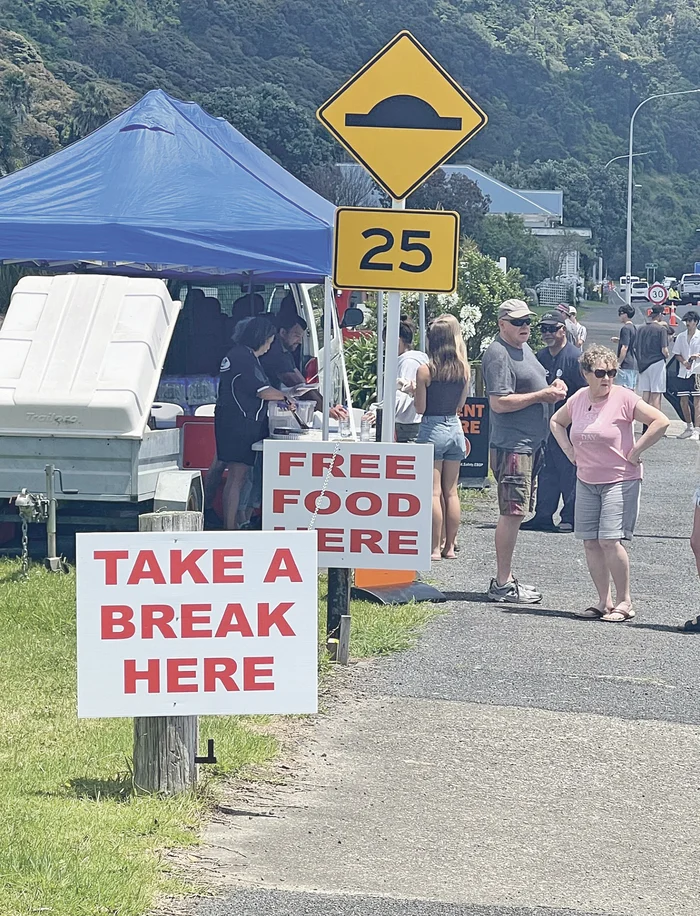
“In Matatā, we won’t be needing a traffic management plan as we will be keeping all the activities off the road, in the reserve areas. The two rumble strips are slowing traffic down to about 20kmh anyway.”
Data from previous years has been used to optimise the highest number of drivers travelling through the district.
“This year we’ve looked at what routes people were taking.
“We’ve looked at the traffic data for those areas – from traffic counters – and looked at what are the high traffic times in the past, so we know where and what time to get the best bang for the buck.”
Another programme being rolled out in January is the Road Safety Summer Roadshow.
Fun activities and spot prizes will be had throughout the Eastern Bay from January 14 to 17 in Matatā, Ōhope, Ōpōtiki, Te Kaha, Ruatāhuna, Tāneatua and Kawerau.
February will mark Mr Hamer’s two- year anniversary as a council employee, which he described as “extremely busy, but lots of fun”.
Since moving to Whakatāne in the early 2000s, Mr Hamer has become well known in the district for his cheeky humour and for involving himself in a variety of community organisations, particularly anything that involves mountain biking.
Originally from Portsmouth, in England, he left school at a young age with low aspirations, but turned his life around after becoming involved with a church youth group.
His experiences led to a life-long interest in youth work and he began voluntary work for his local city council, organising camps for children who had been abused.
A Diploma of Higher Education in Youth and Community Education and a Certificate in Education led to eight years as community education officer for the Cardiff County Council.
Travel in Europe and Africa for international youth projects inspired him to look abroad for new challenges and New Zealand’s reputation as a great place to raise a family eventually brought him and his wife Angela, with their new baby, to Whakatāne.
The couple’s two children are now aged 21 and 23, but their dad is still enjoying this country’s great outdoors lifestyle.
Since moving here he has held positions at Whakatāne High School, Child Youth and Family, and even tried dairy farming. He worked for Eastern Bay REAP for four years, then returned to Whakatāne High as an adult and community education officer before joining Whakatāne Blue Light.
In between, he tried a few careers, studying to become a primary school teacher, starting a coffee cart as “The Hitman” and even working part-time for the Beacon.
That varied career was a bonus when applying for his current role.
“A couple of years ago I saw the advert for the role of community safety adviser.
“It was predominantly running the Eastern Bay Road Safety Programme, which I’d been involved in for years through my involvement with cycling.
“It was also responding to homelessness in the Whakatāne district. When I was studying, back in the UK, I did my main academic paper on Attitudes and Responses to Homelessness.
“I worked in a homeless centre and in children’s homes, and you got a real sense of what it is all about, and, back then, I had been quite taken with working in the homelessness field.
“So when the job came up I was probably one of the only candidates that had experience in both road safety and in homelessness and had done some study in it as well.
“Part of my role is that I pull together a homelessness response group, which includes all our (council) departments, and we talk about what’s going on in the community and how we can respond to the issues and situations.”
He said a lot of New Zealand’s homeless population was hidden.
“We see people in town on the street. We might see people who have mental health issues or drug addictions.
“People sometimes get fearful because of some of the behaviours that come from that.
But much of it is hidden homelessness that we don’t always see.
“The number of parents with kids living in cars is really quite disheartening. There are people who are working but living in vehicles. They’ve got no access to housing. They’ve got no deposit.
“The average rental price is like $640 a week which is a huge amount on any income.”
He describes his position as “full on”, and different every day.
“Actually, that really suits me, for where I’m at in my age, experiences and knowledge. I really enjoy it.”
One day he can be organising road safety campaigns, the next, in the bush, working alongside the police with homeless groups camping around reserves.
“We try to offer help, by providing details of where they might go to get support.
“Another part of it is looking at what the risks are. We’ve had fires on the escarpment in the past, caused by campfires.”
He said the council was a “really supportive organisation” to work for.
“The role I have in community safety, it fits in with every department so I work right across the council.