
Fishing Club votes to move
Diane McCarthy
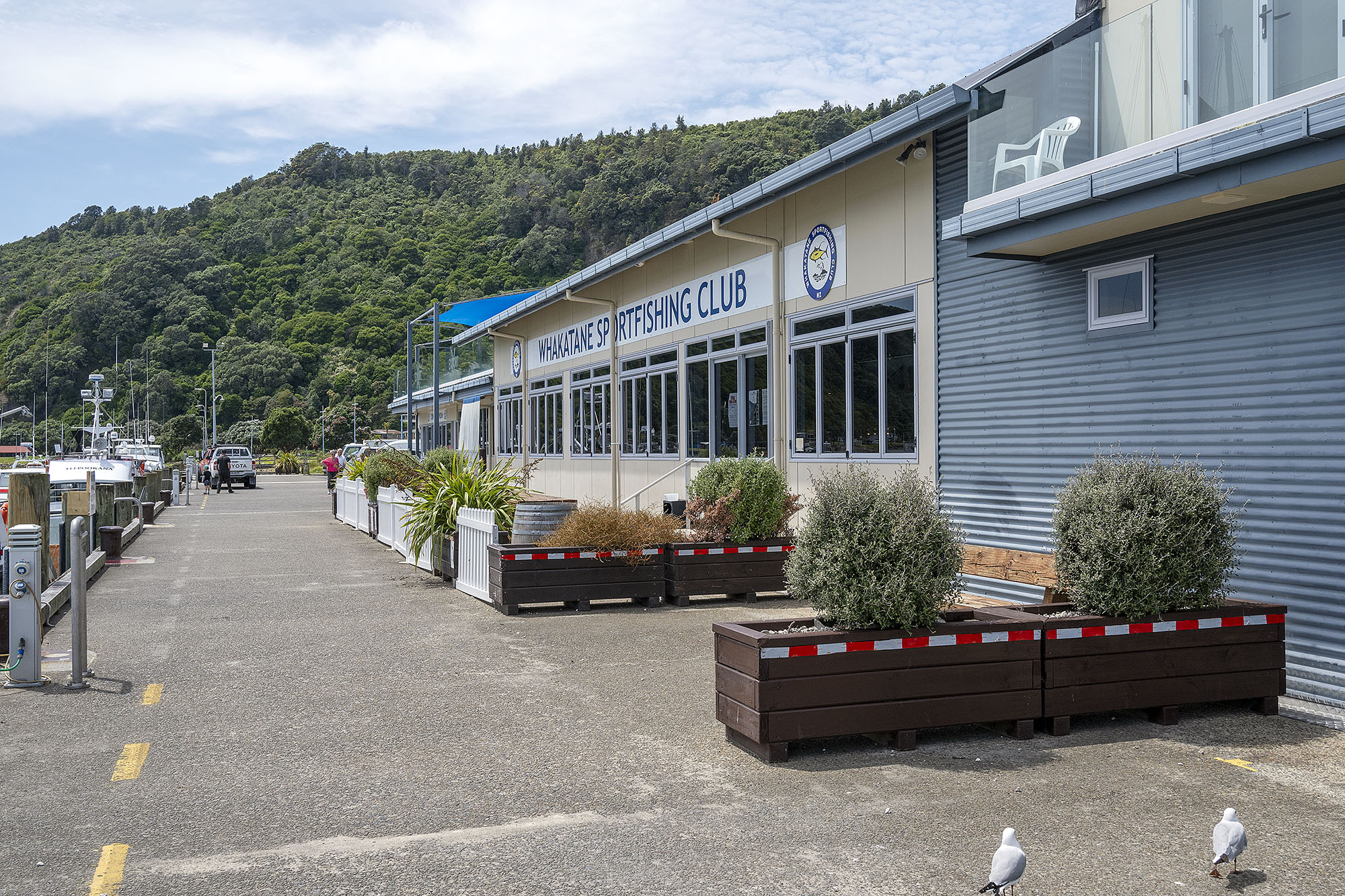
Whakatāne Sportfishing Club senior members have voted overwhelmingly to reposition their club building elsewhere on the site, with Whakatāne District Council expected to pick up much of the tab.
Club president Heyden Johnston said more than 100 people attended the special meeting on Tuesday night with 80 percent of votes supporting a move within the site at 2 The Strand.
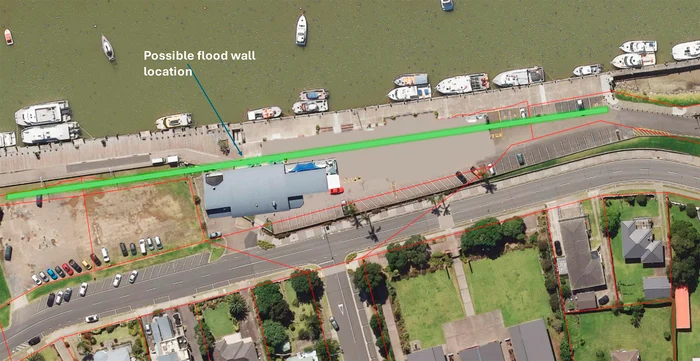
The club will be moved west of its current position and further back from the wharf, in front of the current car park entrance.
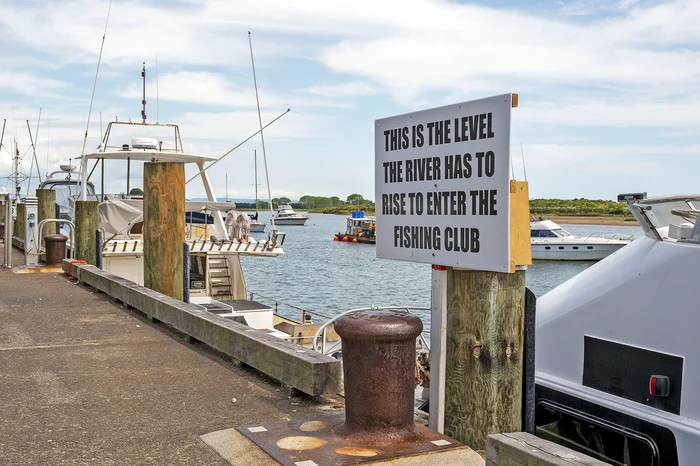
It will also be raised so the floor level will be higher than the new floodwall to be built by Bay of Plenty Regional Council as part of its multistage Project Futureproof, to improve resilience of Whakatāne’s town centre.
The stage of the project affecting the club is expected to take place late next year.
Mr Johnston said the floor level of the club would be 1.2 metres higher than it is now.
He said the cost of moving the club would be less than $2.5 million.
The Beacon has been told by club members that Whakatāne District Council, which owns the land, will need to pay $1.6 million to the club to help pay for the relocation due to a clause in the ground lease.
The council’s strategic property manager, Vanessa Fergusson, said negotiations with the club were ongoing, but confirmed the terms of the existing lease did require the council to compensate the building owner on termination of the lease.
“Since the terms of the lease and any potential compensation are commercially sensitive, it’s our practice to keep these discussions confidential. We can, however, advise the community that there will be no rating impact as a result of any compensation council is required to pay.”
Mr Johnston said the council had also agreed, if required, to help further fund the move through a loan. This is consistent with a letter from Ms Fergusson to Mr Johnston disclosing decisions made at a public-excluded meeting on October 17, made available on the club’s website.
The club has been in discussions with the council over arrangements for renewal of its long-term ground lease since April.
Mr Johnston said there had been an option for the club to stay in its current position and for the regional council to build the floodwall along the back of the club, following the course of the existing wall. This would have left the club unprotected from floods.
Mr Johnston said staying outside the floodwall would have resulted in the eventual demise of the club.
“That opportunity did exist, but it posed a significant amount of risk to the club and its ability to have a future.”
He said the highest risk to the club was its ability to obtain insurance.
“If we weren’t able to obtain insurance in the future because of the location and the risk to the club, then that would have been it; we’d have been all over.”
Other disadvantages presented to members at Tuesday’s meeting were not being able to renew a long-term lease on the land, potential for flooding and inability to lease equipment and apply for grants.
The plan to reposition the club will allow the wall to be built through the area where the club, and the neighbouring council-owned building, now stands.
Mr Johnston said the repositioned club would be an asset for the whole Whakatāne community.
“What the community will get from this is a fantastic area for everybody.”
A steering committee will be created to take control of the repositioning.
“Then we begin the exciting process of growing this club and making it the best club in New Zealand,” he said.
Historic wharfshed likely to be demolished
Among those against the decision to reposition the Whakatāne Sportfishing Club are the owners of two iconic Whakatāne businesses whose premises neighbour the club and are earmarked for demolition.
Brian “Gibbo” Gibbons, owner of the popular waterfront fish and chip shop Gibbos on The Wharf, and Graham “Millsey” Mills, of fishing supplies store The Iceman, say the Whakatāne District Council-owned building their businesses occupy is of historic value, harking back to the time when Whakatāne was a busy trading port.
The building was used to store products, such as butter from local dairy factories, awaiting loading onto boats.
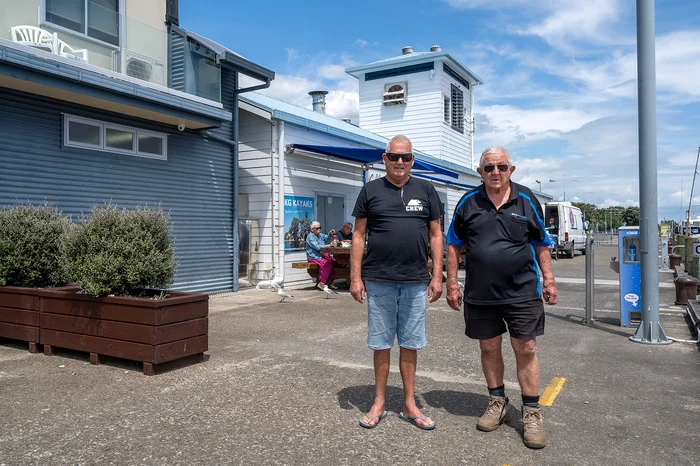
They said it was also a financial asset for the council as both businesses paid a lease.
Historic photographs show a wharf and storage buildings have been on the site since before 1919. The wide beam native wood flooring, which can still be seen in The Iceman fishing supplies store, is an indicator of the building’s heritage.
“This building is an asset for the council that has been here longer than any person in this town, and is earning them income,” Mr Gibbons said. “So many people would have walked through this building over the past hundred years.
“We need drawcards like this in Whakatāne now that White Island tours are not going anymore.”
Whakatāne District Council strategic property manager Vanessa Fergusson said the building dated back to the period following World War I and was one of the original wharfshed structures.
“It carries a lot of local history from that era, reflecting the style and purpose of early 20th-century waterfront buildings,” she said.
Council staff were exploring the possibility of relocating the building and were working closely with the tenants to consider all options.
“However, it’s important to note the building has been identified as earthquake-prone, which may impact relocation plans,” Ms Fergusson said.
If the building cannot be relocated, it will need to be demolished to make way for the regional council’s flood wall works, which are scheduled to begin in October 2025.
Mr Mills said it would be difficult to find a new location that was as suitable for fishermen as his current location, which allowed people with boat trailers to pull off Muriwai Drive on the way to the boat ramp at The Heads and stock up on everything they needed without having to clog up traffic in town.
Both business owners had been happy with the plan to allow the regional council to build its floodwall around the buildings.
Mr Gibbons said he had offered to buy the building off the council to take any responsibility for earthquake proofing or other upkeep, but his offer had not been taken up.
Whakatāne Sportfishing Club president Heyden Johnston said he sympathised with the business owners’ position.
“I completely get that they’re unhappy,” he said.
He said the council would have needed to remove the building regardless of what decision the club made because it was unsafe.
“They lease that from Whakatāne District Council, and it has been earmarked as unsafe.”
He said the club hoped to have both businesses involved in the repositioning of the club.
“They are our friends; they are great supporters of the club and we will do whatever we can to support them, ensuring that they remain part of the culture of what we have down there at the wharf at Whakatāne.”